
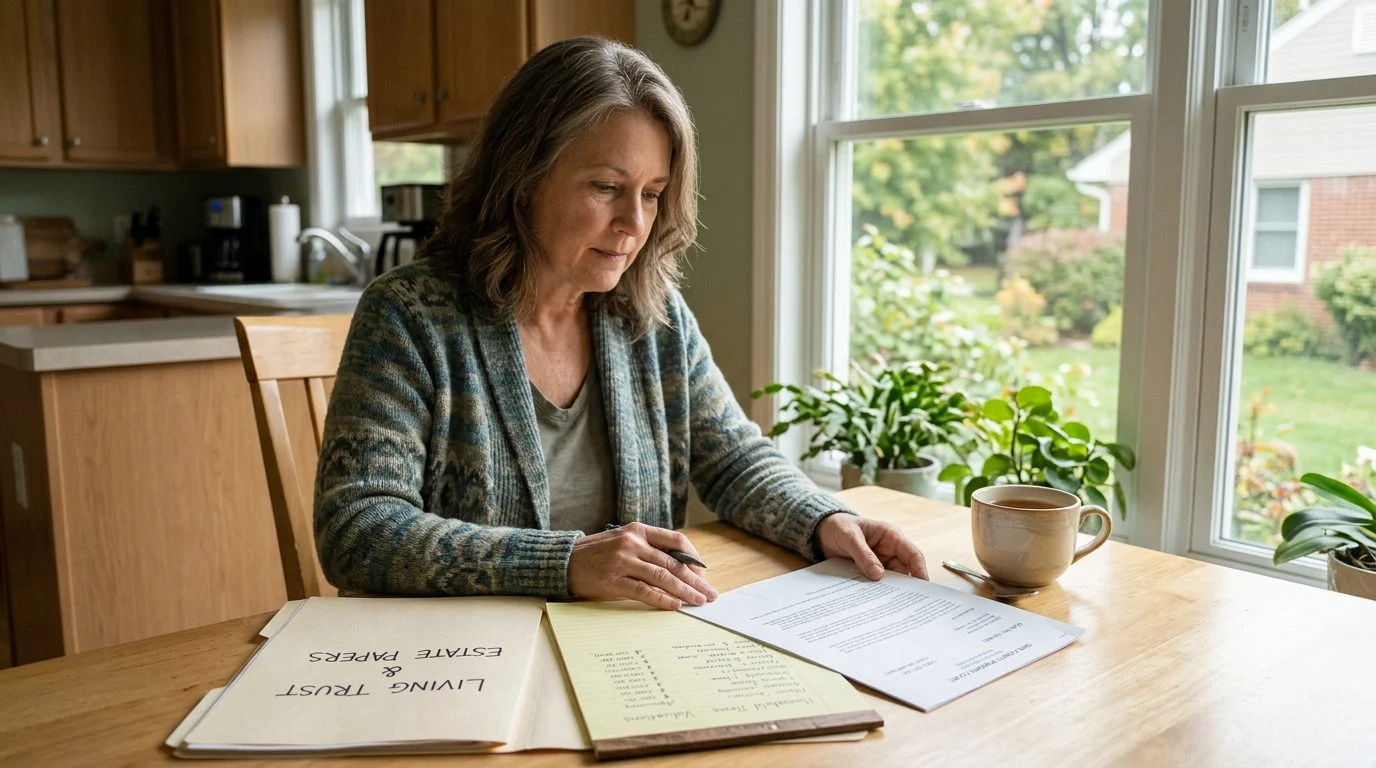
Living trusts and probate planning in Ohio
Keep Your Home Out of Probate: Living Trusts in Ohio
A plain-language guide for Ohio families who want a clear plan for the house they love, from a firm that walks you through each step.
By Timothy Jarvis · Published November 21, 2026
If you own your home outright and want it to pass to your children without a court process, you are asking the right question.
Many couples think a living trust is only for people with large estates, so they put planning off. A living trust can help keep your home out of probate, and the size of your estate is not what decides it. Here is how it works, what to expect, and how our team guides you through it.
Why a modest estate can still end up in probate
A modest estate can still go through probate when the home stays in one person’s name at death and no plan moves it outside the court process.
For many retired couples, the home is the biggest asset. Probate is the court process for property still in a person’s name when that person dies. Without a plan, a paid-off home can be one of the things that must go through that process.
For example, imagine a couple, Harold and Doris Kern, in a small town in Hocking County. Their home is paid off, and their savings are modest. They had always thought a simple will was enough, and they worried their two children would face a slow, costly court process after they died. A conversation helped them see that a living trust, with the home titled to it, could let their children receive the house without probate. Every family’s facts are different, so the results of planning will vary with each family’s own situation.
If you want your home to reach your children without a court process, you do not have to work out the rules alone, and a free discovery call is a good place to start. Talk it through with Jarvis Law Office — the first discovery call is free, confidential, and carries no obligation.

What probate asks of a family, and what it costs
Probate asks a family to settle an estate through the court, and that usually takes time, paperwork and patience. After a loved one dies, the family often has to file papers, list what the person owned, pay debts and wait for the court before property changes hands.
Costs can add up. Court and legal fees, along with the delay, can shrink what is left for your heirs. Disagreement among siblings can slow things further, especially when no one is sure what a parent wanted.
Your children will be grieving while they handle all of this. You do not have to master these rules yourselves. Staying on top of them is the firm’s job, and our team explains each step in plain words.
How a living trust can keep your home out of probate
A living trust is a document you create during your life that names who manages your property and who receives it.
Whether a trust fits your home depends on your family’s own situation, and we would review those facts with you before recommending anything. Many families ask how a revocable living trust works and what it could mean for the assets they own, and we walk through those questions with them one step at a time. Real estate is one of the assets we review carefully when we work out how a trust fits a family’s situation. Whether a living trust could keep your home out of probate depends on how it is set up and funded for your family, and we will walk through that with you. The answer depends on how the trust is set up and funded for your family, and we will walk through it with you.
The person you name as successor trustee steps in to carry out your wishes when you can no longer manage, or after you die. Choosing that person ahead of time spares your children from guessing what you wanted.
Careful planning can help a family skip probate later. Whether that happens depends on how the plan is built and kept up to date, and no particular outcome is assured.
What a plan for a modest estate includes
A plan for a modest estate from our firm usually pairs a living trust with the core documents that cover you if you can no longer decide for yourself. In every plan we prepare, we include:
- A general durable power of attorney for finances
- A health care power of attorney
- A living will
- A HIPAA release
A strong financial power of attorney is one of the tools our planning uses to protect a family’s assets. It lets someone you trust handle money matters if you cannot.
A small trust for a grandchild works in plain terms. You name a trustee, who holds the grandchild’s share and manages it until the age or milestone you choose. Our team builds these documents around your wishes, and we walk through the details and exceptions with you in person.
What to expect, step by step
The process starts with a free discovery call and moves through a strategy meeting, document preparation and funding, with ongoing help after that.
- Free discovery call: we learn about your family, your home and your goals.
- Strategy meeting: we explain your options, and you choose the plan.
- Documents: we prepare the trust, the financial and health care powers of attorney, the living will and the HIPAA release.
- Funding: we title the home and accounts to match the plan.
- Ongoing guidance: we stay with you as needs change, such as a move or a new grandchild.
Funding is more than paperwork. A trust that is signed but never funded will not hold your home, and the plan will not work the way you intended. Titling the home and accounts correctly is the step that is easy to overlook.
Our fee is a flat fee, with no recurring insurance-style fees. We talk through timing at the start, based on your family’s situation.
Why families come to Jarvis Law Office
Jarvis Law Office is an Ohio elder law and estate planning firm with offices in Lancaster, Dublin and St. Clairsville. We serve families in every Ohio county. The firm concentrates its practice in elder law, Medicaid planning and estate planning. Timothy Jarvis is the responsible lawyer for this page.
Planning with us is often about staying in control of your own decisions, protecting what you have built, and leaving something for your children and grandchildren. Our team guides you step by step, so you are not left to sort out each rule alone.
When a family needs help with the health care system, our Care Navigators can help find a way through it on your behalf. Care Navigators are not lawyers and do not give legal advice. Our attorneys handle the legal planning.
Not sure what your next step is?
Talk it through with Jarvis Law Office — the first discovery call is free, confidential, and carries no obligation.
Questions families like yours ask
Here are short answers to common questions about living trusts and probate in Ohio.
Is a living trust only for wealthy families?
No. Whether a trust helps depends on how your home and accounts are held, not on how large your estate is.
Do we lose control of our home if we set up a trust?
A revocable living trust is often set up so that you can serve as your own trustee and stay in charge of your property during your lifetime, though how that works for you depends on the type of trust and how it is written, which we would walk through with you.
How changes to a trust are handled depends on how it is written, and we will explain how changes to your trust work before you sign anything.
What happens if one of us dies first?
The plan is written to cover both spouses and the successor trustee. We walk through what happens at each stage with you.
Can a trust stop family disagreement?
A clear plan leaves less guessing about who manages what and what you wanted. It cannot control how people feel, but it can reduce the questions your family must answer while grieving.
How much does it cost?
Cost is explained up front. The free discovery call is confidential and carries no obligation to continue.
Your next step
The next step is a conversation, and you do not have to decide anything yet. This page is written for you, who own a paid-off home and modest savings and want your children and grandchild spared the expense and delay of probate. Gathering information first is a sensible place to start.
If you want your home and savings to reach your children and grandchild without a court process, book a free discovery call with our team. We will take your situation one step at a time, and you will hear the options before you choose anything.
What a well-funded living trust can help with
Easing the load on your family
A clear plan means your children are not left guessing what you wanted or searching for the right papers.
A trust needs its assets too
Signing a trust is the first step. We check this with you as part of the plan.
Questions to bring to your free discovery call
How is our home titled today?
Bring the deed and mortgage papers if you have them. We will explain what they mean for a trust.
Which accounts name a beneficiary?
We will look at each one with you.
Who should step in if we cannot manage?
Think about a successor trustee and a financial power of attorney, and whether your family is ready for those roles.
You do not have to sort this out alone. Start with a conversation about your home.
Related practice areas
- Asset Protection in Ohio
- Ohio Parent With Dementia: Is Someone Taking Their Money?