
Elder law and estate planning · Serving families across Ohio
Your parent had a stroke, and the house is in her name. Here is where to start this week.
A calm first-week guide for adult children, written by the Jarvis Law Office team, so you can focus on your parent while we help with the paperwork.
By Timothy Jarvis · Published November 23, 2026
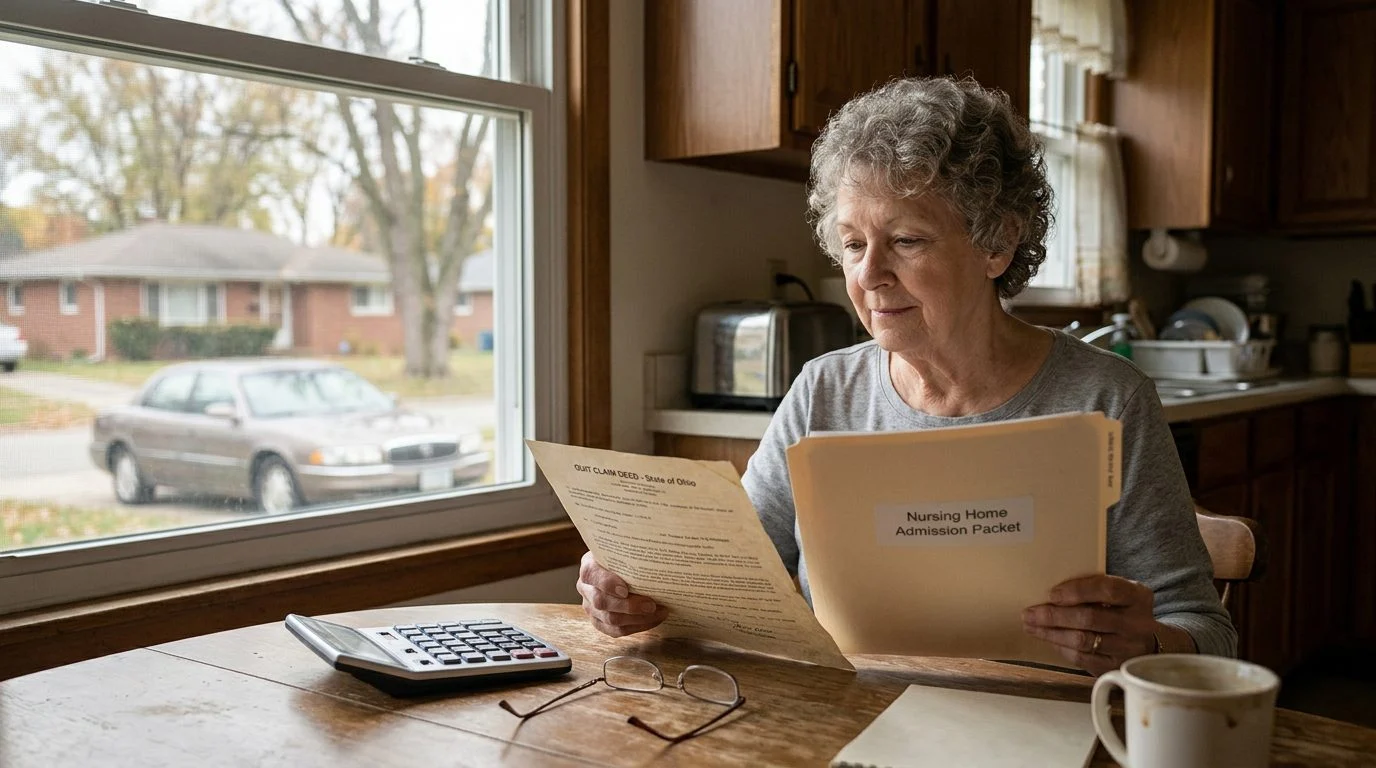
Your parent has had a stroke, and the house is in her name alone. You want to know what to protect first, and what to do now.
The short answer: in the first week, protect your parent’s own choices and her home. Find out which papers exist, who can act for her, and whether anything has already been signed, before money moves or the title changes.
What to protect in a parent’s first week after a stroke
In the first week, the most important things to protect are your parent’s own decisions and the home in your parent’s name. Those are the things that get harder to protect once confusion sets in.
For example, imagine a daughter named Lisa in Chillicothe whose father, Frank, moved from the hospital to a rehab unit after pneumonia. The house is in Frank’s name alone, and no one had ever signed a power of attorney. Lisa’s brother wanted to move Frank out of the house right away, and Lisa felt she had no say at all. A calm review of the papers and the options helped the family see what they could do before any decision was made. Every family’s facts are different, so your results will vary.
You don’t have to work all of this out alone. Keeping on top of the rules is our job. We guide families step by step, starting with what needs protecting this week.
If your parent's house is still in her name and no one has been named to act for her yet, you don't have to sort it out alone: book a free discovery call with our team. Talk it through with Jarvis Law Office — the first discovery call is free, confidential, and carries no obligation.

Why a house in your parent’s name changes what you can do now
If your parent can’t sign or speak for herself or himself, the family often has no clear way to act, and everyone may be left waiting.
Whether a house passes through probate depends on how it is titled and which documents are in place. Probate is expensive, drawn-out and stressful for a grieving family. Planning can help a family avoid that later, which is one reason to start now.
Many families also worry about a nursing home bill and whether the house will have to be sold. According to the Administration for Community Living, almost 70% of people turning 65 are likely to need some long-term care. Medicaid planning is one of the tools we use when a parent may need paid care, and we cover those details below.
The first-week checklist: papers, titles and who can act
Start by gathering the papers you can find this week:
- The deed, or proof of how the house is titled
- Your parent’s ID, Social Security card and Medicare card
- Insurance policies and recent bank and account statements
- Any will, power of attorney or health care document
- A list of your parent’s doctors and medications
Then ask the hospital or rehab team who your parent has named to speak for them. Ask, too, whether a HIPAA release has been signed. A HIPAA release is the form that lets doctors share health information with the people your parent names.
A strong financial power of attorney matters here. In our plans, we include one, because it is one of the main tools our planning uses to protect a family’s assets. Every plan we prepare includes a general durable power of attorney for finances, a health care power of attorney, a living will and a HIPAA release. The health care power of attorney and the living will are the documents people usually call advance directives. The financial power of attorney and the HIPAA release are not.
Before anyone signs papers, moves money or changes the house title for your parent, talk with us first. That way, your parent’s wishes are written down and protected.
Care decisions, rehab and paying for care
The first care choices, such as rehab, a hospital discharge, home care or a nursing home, shape the cost questions that come next. Our Care Navigators can help your family find a way through the health care system when that help is needed. They are not lawyers and do not give legal advice.
Ohio Medicaid can help pay for nursing homes, for many (not all) assisted living and memory care settings, and for care at home. The Ohio Department of Medicaid explains who qualifies, including residency and financial rules. Staying home longer is often possible, which most families prefer, and a move later stays an option.
Timing matters. For a parent who is an institutionalized individual seeking Medicaid long-term care payment, giving the house or other assets away for less than fair market value on or after the look-back date, which is sixty months (five years) before the parent’s baseline date, is presumed improper and results in a restricted Medicaid coverage period (Ohio Adm.Code 5160:1-6-06). Timing matters a great deal in Medicaid planning, so the sooner a family starts the conversation, the more options there are to review together.
The details and exceptions are something we walk through on the discovery call.
When the house is part of the picture, the home equity limit matters. For 2026, Ohio’s home equity limit is $752,000, and it rises every January.
Estate recovery is the other piece to understand. We walk families through how this works so they know what to expect. Ohio’s Medicaid estate recovery rule limits when recovery can happen, including whether a surviving spouse or certain children are living, and we walk each family through how those limits apply to them. If a spouse is still at home, planning can often keep that spouse in the home, financially secure and with quality of life intact.
Keeping the house out of probate later
Probate is the court process that settles a person’s estate after death. For a grieving family, it can be expensive, slow and stressful.
A plan set up and funded correctly can let a family skip probate later. That means the right documents, with assets titled and coordinated to match the plan. This is what careful planning can do for many families, though no result is certain. Getting the planning right is our part, including how your parent’s house title fits into the plan.
Common questions families ask in the first week
Can I sign for my parent if she or he cannot sign?
It depends on which papers exist and what your parent already put in place. We review that with you on the discovery call.
Will the house have to be sold to pay for a nursing home?
The answer turns on your family’s own facts. Planning often starts well before care is needed, so the earlier the conversation, the more options can remain.
My sibling and I disagree. What do we do?
Start with your parent’s wishes, written down. One calm conversation with our team can help everyone understand the plan, instead of a family argument.
Do I need to act right away?
Not every decision has to be made this week. The first week is for gathering papers, protecting your parent’s wishes and bringing the right people in.
Not sure what your next step is?
Talk it through with Jarvis Law Office — the first discovery call is free, confidential, and carries no obligation.

How Jarvis Law Office helps, and what happens next
We help one step at a time. The first step is a conversation to understand your parent’s situation. Next is a strategy meeting to choose a plan, followed by the plan documents and the assets, funded and coordinated to match that plan. Ongoing guidance continues as your parent’s needs change.
Our fee is a flat fee, with no recurring insurance-style fees. The first discovery call is free, confidential and carries no obligation to continue.
Our offices are in Lancaster, Dublin and St. Clairsville, and we serve families in every Ohio county. Timothy Jarvis is the lawyer responsible for this page’s content.
If your parent has had a stroke, the house is still in your parent’s name, and no one has been named to act yet, the first step is a conversation. Book a free discovery call, and we’ll start with the papers you already have.
Before anyone signs or moves anything
Being her son or daughter does not by itself settle who can sign for your mother or change how the house is titled. Please check with us before you sign a form or transfer a property for her.
Your first-week checklist
Take care of your parent first
The hospital and rehab team will lead her medical care. Write down the names of her doctors, the discharge plan and the phone numbers you will need. The legal steps can wait a few days.
Find the papers she already has
Look for any power of attorney, health care directive, living will, will, trust, deed, and bank or retirement account statements. Note where they are kept. Do not worry if you cannot find everything yet.
Keep a simple record
Start a notebook or folder with dates, names and what was said. Note which bills arrive and which accounts are in her name. This makes the next conversation with us much easier.
Book a free discovery call
The free discovery call is confidential and carries no obligation to continue. We will listen to your family's situation, explain the options in plain words, and tell you what we would need to review.
How Jarvis Law Office helps your family
You do not have to do this alone
The attorneys and team at Jarvis Law Office guide your family step by step, so you are not left sorting out Ohio's rules on your own.
Protecting your parent's home and savings
Where planning is still possible, we look at how her home and savings are titled and coordinated, and whether her existing documents still match her wishes.
Care Navigators for the health care system
When your family needs help with the health care system, our Care Navigators can help you find your way through appointments, facilities and paperwork on your parent's behalf. They do not give legal advice.
A flat fee, not a string of charges
We explain our flat fee at the start, so you know what planning will cost before any work begins.
Ongoing guidance as things change
Recovery moves in stages. We stay available as your parent's needs and your family's circumstances change.