
Ohio estate planning for your home
Decide who receives your Ohio home, and keep that choice on track
A transfer-on-death designation is one tool among several. We help you see whether it fits your family and set it up alongside the rest of your plan.
By Timothy Jarvis · Published November 25, 2026
If you want your Ohio home to pass to the people you choose without a slow, costly court process, you’re asking the right question. A transfer-on-death designation names who receives a home when its owner dies, and it can keep that home out of probate when it’s set up correctly and fits the rest of your plan. You do not have to work out alone which of these options fits your family.
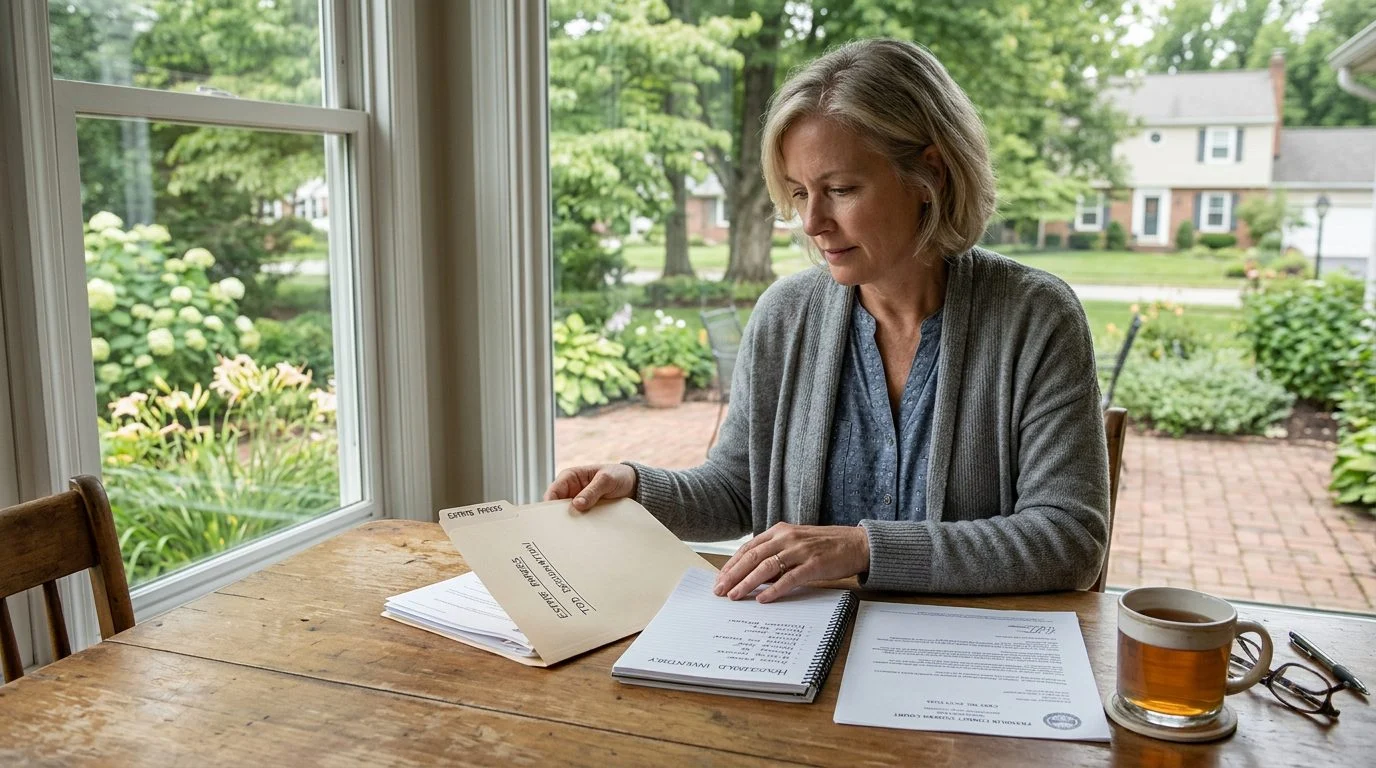
For example, imagine a couple, Dale and Joan Pruitt, who live outside Chillicothe in a home they paid off years ago. They have two sons and a granddaughter, and they assumed the house would simply go to the boys. Dale heard a neighbor describe a probate case that dragged on for months, and it worried him. Joan wanted the house kept in the family without any arguing over it. After a conversation with a lawyer, they saw how a designation could name their sons and how a trust could hold their granddaughter’s share.
What a transfer-on-death designation is, and whether it fits your home
A transfer-on-death designation is a written choice that names who receives your home when you die. It works outside the probate process, but only when it’s set up correctly.
Many people with modest estates assume this kind of planning is only for the wealthy. A home you own outright is often the biggest thing a family owns, though, and it can still get stuck in probate. Timing matters more than most people expect. The designation only works if the affidavit is recorded with the county recorder before the owner dies (Ohio’s transfer-on-death home law).
Whether it fits turns on how your home is titled, whether a mortgage remains, and who you want to receive it. We look at those facts with you before anything is signed.
If you're working out how your Ohio home should pass to your children and grandchild, we can talk it through on a free discovery call, with no obligation to continue. Talk it through with Jarvis Law Office — the first discovery call is free, confidential, and carries no obligation.

What it covers, and what it leaves to other documents
Naming a beneficiary on the affidavit does not change who owns the home today, and the beneficiary has no ownership interest in it until the owner dies (Ohio’s transfer-on-death home law).
Savings and bank accounts usually need their own beneficiary forms, and belongings may need a written plan or a trust. We sort these out with you so the whole plan fits together.
In our plans, we include a general durable power of attorney for finances, a health care power of attorney, a living will and a HIPAA release. The financial power of attorney is one of the tools our planning uses to protect your assets. It matters if you ever need someone to handle money for you.
How the planning works, step by step
Our team walks with you through each stage, from the free discovery call to the planning meeting and the paperwork that follows, explaining each step before we move on.
- Free discovery call. The first call is free, confidential, and with no obligation to continue. We learn about your home, your family, and what you want for the people you love.
- Strategy meeting. We compare the options, such as a designation alone, a designation with a will, or a revocable living trust, and choose together.
- Documents. We prepare the plan documents that fit your choice.
- Funding. We confirm the home and other assets are titled and coordinated to match the plan. This takes more than paperwork.
- Ongoing guidance. As your family changes, we update the plan with you.
Timing varies with how quickly deeds, account details and other records are gathered. We set a schedule once we know your facts.
Where it fits with a will, a trust and a grandchild’s share
A designation passes the home outright, while a revocable living trust can hold the home and manage a grandchild’s share for them.
If your grandchild is young or not yet ready to handle money, a trust can hold that share and name a successor trustee to manage it.
The goal isn’t finding the simplest tool. It’s finding the planning that can help the people you love skip probate when the time comes. We can walk through trust options for your home on the call.
Probate, delay and family disagreement
Probate is the court process that settles an estate, and it can be slow, costly and hard on a family that is grieving. A home can end up there without a plan. If none of the named beneficiaries survives the owner and no contingent beneficiary was named, the owner’s interest in the home passes through probate (Ohio’s transfer-on-death home law). That’s why naming a backup beneficiary matters.
Plans change as families change. The owner can revoke or change a named beneficiary at any time, without that beneficiary’s consent, by recording a new affidavit before the owner dies (Ohio’s transfer-on-death home law).
A clear written plan leaves less room for children to disagree about who gets what and when. Careful planning can also help your family skip probate for the home later, which is a strong reason to plan while you can make your own decisions.
Why families plan with Jarvis Law Office
We help families plan so their home passes the way they intend, and we explain each choice in plain words.
Jarvis Law Office concentrates its practice in estate planning, elder law and asset protection. We serve families in every Ohio county from our offices in Lancaster, Dublin and St. Clairsville.
Our approach is to coordinate the home designation with the rest of your plan, so your home, savings and documents work together. You don’t have to figure this out by yourself. We guide you step by step, and the first step is a conversation.
Not sure what your next step is?
Talk it through with Jarvis Law Office — the first discovery call is free, confidential, and carries no obligation.
Questions you may be asking
Here are short answers to common questions about this tool.
Does a transfer-on-death designation keep the house out of probate?
It can, when it’s set up correctly and matches the rest of your plan. We review your specific situation on the free discovery call.
What if one of our children dies before we do?
If none of the named beneficiaries survives the owner and no contingent beneficiary was named, the owner’s interest in the home passes through probate. That is why we name alternate beneficiaries in the strategy meeting.
Can we just fill in a form ourselves?
The right approach turns on how your home is titled and what else needs to pass, so review those facts before you decide.
Will planning cost a great deal?
Our fee is a flat fee, and we explain what it covers before work begins; the free discovery call is confidential and carries no obligation to continue.
Can a trust help our grandchild?
It can, by holding the grandchild’s share and naming a trustee to manage it, depending on age and goals.
How we help you plan for the home
Keeping the home where you want it
We look at who you want to inherit the house and whether a designation can carry that choice to them without a court process.
A plan that fits the whole family
A home designation has to match your will or trust, your accounts and your health care and financial documents. We check that they all point the same direction.
The right papers, prepared correctly
In our plans we include a general durable power of attorney for finances, a health care power of attorney, a living will and a HIPAA release, so your wishes are documented if you cannot speak for yourself.
Plain answers, step by step
You do not have to sort out the details alone. We explain each option in everyday language and walk you through it at a pace that suits you.
Review it after life changes
A designation reflects the choices you made when you set it up. A marriage, a new grandchild, a move, a serious illness or a death in the family are good moments to look at it again with us.
Questions to bring to your free discovery call
Who should receive the home?
Name the person or people you have in mind, and tell us what you want them to do with the house, if anything.
What if a named person dies first?
Life is unpredictable. We talk through backup choices so the home still goes where you intend.
How does this fit with a will or trust?
We look at everything you own together, so one document does not quietly undo another.
What else needs attention now?
Bank accounts, vehicles and other assets may need the same care. We help you decide what to review first.