
Dementia and wills | Ohio families
Worried about a parent's will after a dementia diagnosis? You don't have to sort it out alone.
Jarvis Law Office helps Ohio families understand what a diagnosis means for a will, and guides them through the next steps one at a time.
Where we work
3
Ohio offices in Lancaster, Dublin and St. Clairsville
Every county
We serve families across Ohio
By Timothy Jarvis · Published November 14, 2026
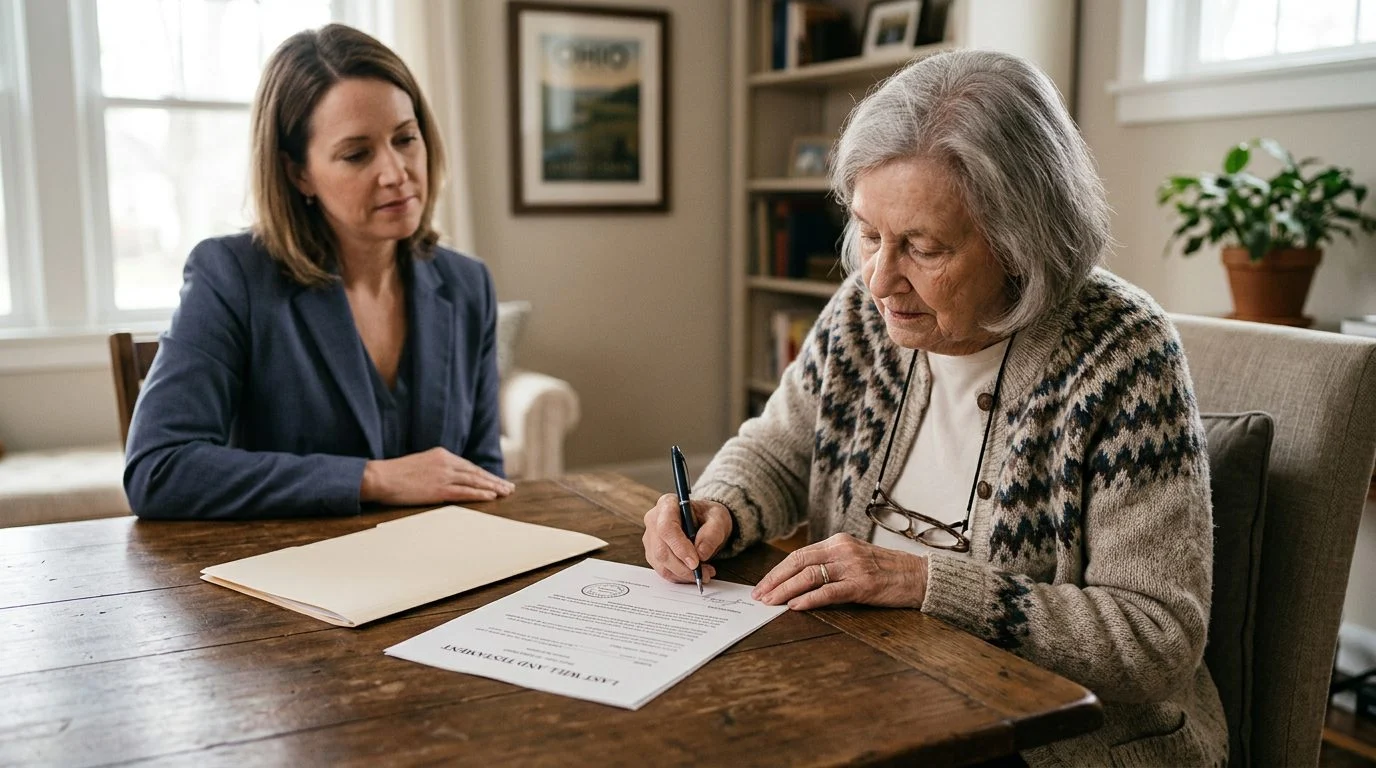
If your mom has dementia, you may be asking whether someone with dementia can still sign a will in Ohio. Ohio law asks whether a person making a will is of sound mind and memory, which is a question about her own situation. That makes this a question worth looking into now, while she can still take part in the decisions.
If you are caring for a parent, the paperwork can feel like too much on top of everything else you are already handling. You do not have to work this out by yourself. Here is how to think about the question and which steps to take first.
Can your mom still sign a will in Ohio?
A dementia diagnosis is a serious change, but it is the start of a plan, not the end of one. Many families wait until a hospital stay or a missed bill forces the issue. By then, fewer choices may be left.
The Administration for Community Living explains how much long-term care people may need as they age. Our long-term care and memory care planning work offers a broader guide to the choices ahead.
If you are caring for a parent while keeping up with work and your own household, you may be feeling stretched. Staying on top of the rules and the paperwork is our job, and we guide families step by step.
If your mom has dementia and you are carrying her care and paperwork on top of your own family, a free discovery call is a calm place to start, and you do not have to face the legal steps alone. Talk it through with Jarvis Law Office — the first discovery call is free, confidential, and carries no obligation.

What a family in this spot often faces
Families in this spot often share one worry: a parent who still wants a plan in place, and a child who does not know where to begin.
For example, imagine a daughter, Karen, and her father, Walt, who live in a small town in Perry County. Walt receives a dementia diagnosis, and Karen notices he is missing bills and forgetting appointments. Walt still wants his wishes written down, but Karen fears it is already too late. When they sit down with a lawyer, they learn which documents matter most now and which questions to answer first. Walt’s health care wishes and a financial power of attorney come into focus before anything else, and Karen feels less alone with what comes next.
Every family’s facts are different, so what planning looks like, and how it turns out, will vary from one family to the next.
What a will does and does not do
A will tells your family who should receive property that passes through it. Signing details matter, so small mistakes can cause trouble later.
In Ohio, apart from oral wills, a will must be in writing, typed or handwritten, and signed at the end by the person making it or by someone else in their conscious presence and at their express direction, then witnessed the way the law requires (Ohio’s will signing law).
Your mom’s will is only one piece of her plan. Bank accounts, retirement accounts and the house may each need their own titles or beneficiary designations to match the plan. A will by itself may not reach all of them.
Probate is the court process for settling a person’s estate, and for a grieving family it can be expensive, drawn out and stressful. Careful planning, with the right documents and assets titled and coordinated to match, can help a family skip probate later. That is a large part of the planning we do, though every family’s situation is different.
Why your mom’s condition on signing day matters
A central question in whether your mom can sign a will is whether she is of sound mind and memory, and we can talk through what that means for her.
In Ohio, a person may make a will if they are eighteen or older, of sound mind and memory, and not under restraint (Ohio’s will-making law).
A diagnosis tells you about the illness, but it does not tell you how your mom thinks and decides on a given day. Her doctors’ records, her recent condition and what she understands about her family and property are all part of the picture. We look at those facts with you, rather than asking you to guess.
Witnesses matter too, and this is a practical point you can plan for. Being present by phone or video does not count. We will walk through exactly how that works on signing day (Ohio’s will signing law). That means signing day needs planning, with the right people in the room and enough time for a calm, unhurried signing.
Care Navigators can help you gather medical information and find your way through a fragmented health care system when you need that help. They are not lawyers and do not give legal advice.
The documents that matter most right now
For many families with a parent who has dementia, the powers of attorney and health care documents come before the will.
In every plan we prepare, we include a general durable power of attorney for finances, a health care power of attorney, a living will and a HIPAA release. The health care power of attorney and the living will are the advance directives in our plans. The financial power of attorney and the HIPAA release are separate documents that work alongside them.
In our planning, the financial power of attorney is one of the key tools we use to protect a family’s assets. It names someone your mom trusts to handle money matters for her, which can keep bills and accounts from stalling when she can no longer manage them alone.
Money problems can also invite scams and financial exploitation. The Ohio Attorney General’s seniors resources explain how to spot these risks and where to report them. Our guide to comparing a power of attorney with a health care power of attorney can help you sort out the differences.
Paying for your mom’s care and protecting her home and savings
Ohio Medicaid can help pay for nursing home care, many assisted living and memory care settings, and care at home.
Staying home longer is possible for many families, and a move to a care setting later remains an option. Staying at home with help is what many families hope for, and the Ohio Home Care Waiver is one program we may review with you when care happens at home.
Planning started well before care is needed can often shield some assets from the spend-down and from Medicaid estate recovery. Even when care is needed now, some planning options may still protect part of the amount that would otherwise be spent down, depending on your family’s situation. In many cases, options remain well before everything is spent. These are possibilities, not assurances, and they turn on the details of your family’s situation.
Many children in your position worry they will end up paying for care themselves. For your family, planning might look like reviewing your mom’s income, savings and home together, so a plan is in place before the money is needed.
Not sure what your next step is?
Talk it through with Jarvis Law Office — the first discovery call is free, confidential, and carries no obligation.
How Jarvis Law Office helps you and your mom
We guide families through this step by step, so you are not holding every piece at once. The first step is a conversation about your mom’s situation and what matters most to her. Next, we meet to choose a plan that fits her goals. Then we set up the plan documents and coordinate her assets so they match the plan, which takes more than paperwork. We stay with the family as needs change.
For you, that means someone else tracks the rules, the forms and the timing. You can spend your energy on your mom and on your own family. We work on a flat fee, with no recurring insurance-style fees.
When the health care system feels like a maze, our Care Navigators can help you find your way on your mom’s behalf. They do not give legal advice.

Take the next step: a free discovery call
Caring for a parent with dementia while raising your own family is a lot to carry. You do not have to decide what comes first by yourself.
A free discovery call is a confidential first step, with no obligation to continue. On that call, we can talk through where your mom stands and which documents to look at first. Book your free discovery call when you are ready to talk.
Questions families ask
Can someone with dementia sign a will in Ohio?
A person who is eighteen years of age or older, of sound mind and memory, and not under restraint may make a will. Whether your mom can sign depends on her condition at the moment she signs.
Do witnesses need to be in the same room as the person signing?
A will must be attested and subscribed in the conscious presence of the person making it by two or more competent witnesses who either saw that person sign or heard that person acknowledge the signature, and “conscious presence” means within the range of that person’s senses, excluding sight or sound sensed by telephonic, electronic, or other distant communication.
Is a power of attorney a substitute for a will?
They do different jobs. A power of attorney helps with decisions during life, and a will directs property after death.
How we help families facing this question
A calm first conversation
In a free discovery call, we listen to your family's situation and explain the questions that matter most. The call is confidential and comes with no obligation to continue.
Plans that fit your parent's wishes
We focus on documents that reflect what your parent wants, so the family is not left guessing later about what was intended.
Care Navigators at your side
When the health care system feels fragmented, our Care Navigators can help your family find their way through appointments, providers and care decisions. They do not give legal advice.
Steady guidance as needs change
Memory changes can come in stages. We stay with the family over time, so the plan keeps pace with what your loved one needs.
Talk to us before anything is signed
If you are unsure whether your parent can make a will, call us before a signing is scheduled. Bringing the question to us early gives your family more time to think and more options to consider.
Steps families often take first
Gather what you already have
Bring any existing will, the names of key people in your parent's life, and a list of what they own. This gives us a clear starting point.
Note what your parent has said
Write down your parent's own words about how they want things handled, including any wishes they shared before the diagnosis.
Keep the family talking
Brothers, sisters and other family members often see things differently. We can help the family work through those differences with care.
Plan for the whole picture
A will is one part of a plan. We also look at powers of attorney, health care decisions and how assets are titled, so the pieces fit together.