
Ohio Nursing Home Planning | Families in every Ohio county
Keeping the Home Safe When One Spouse Needs Nursing Home Care
A calm, step-by-step way to see where the house fits, from the Jarvis Law Office team in Lancaster, Dublin and St. Clairsville.
By Timothy Jarvis · Published November 13, 2026
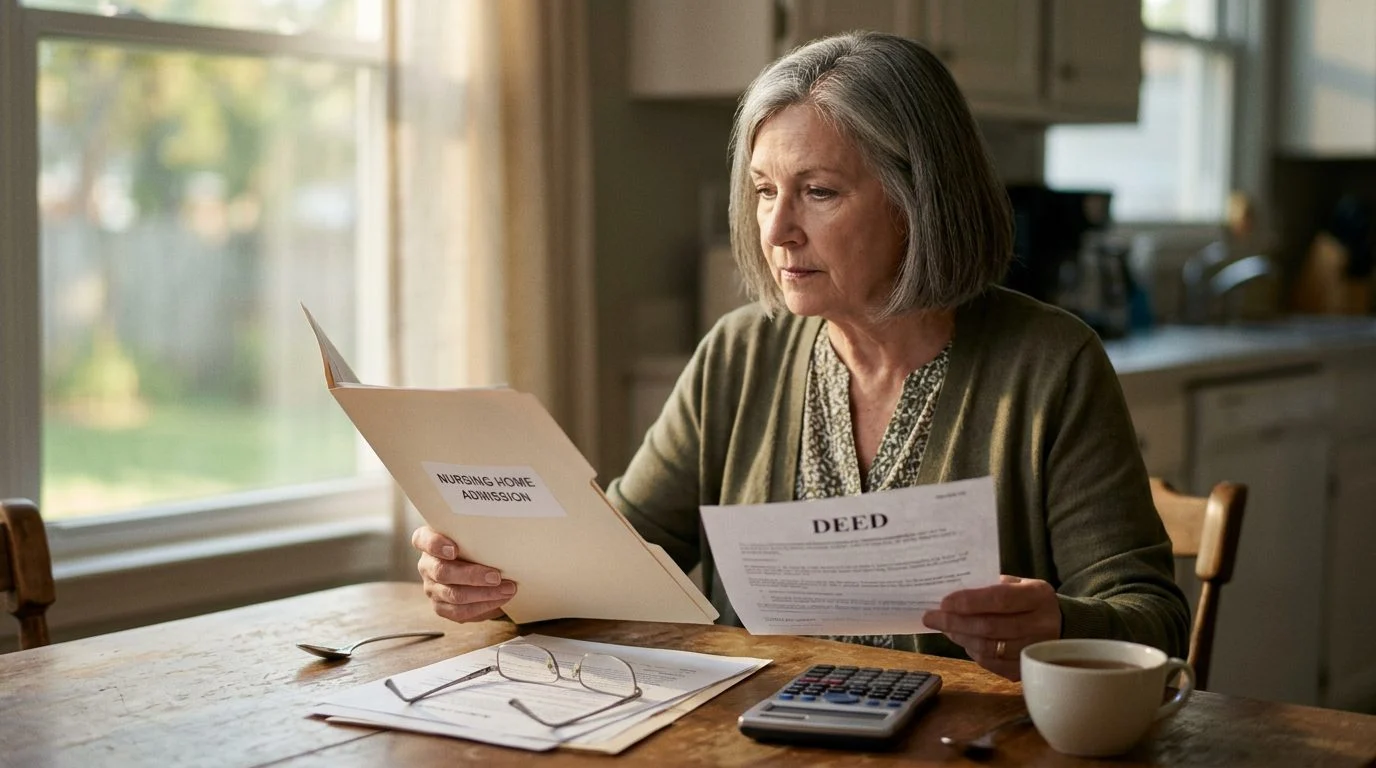
If your house is in one spouse’s name, you may wonder what happens to it if the other one needs a nursing home in Ohio. The short answer: the home, the savings and the income all come into the picture, and planning made before care is needed often gives a couple more choices.
You and your spouse likely worked hard for a paid-off home and modest savings. You want those savings to last, and you want something left for your children. This page explains the questions in plain words and shows what planning can look like.
Why the name on the deed worries so many couples
Many couples put a home in one name for simple reasons, then later wonder whether that choice affects care costs.
For example, imagine a couple, Ray and Linda Hostetler, who live in Chillicothe. Their home is paid off, and the deed is in Ray’s name. Linda worried that a nursing home bill for either of them could drain their savings and force a sale of the house they meant for their daughter. They sat down with a lawyer while both were healthy, and planning helped them see their choices clearly. Every family’s facts are different, so results vary from one family to the next.
The name on the deed is only one question. Savings, income, account beneficiaries and what your children will inherit all matter too. You don’t have to sort them out alone. Staying on top of the rules is our job, and we guide you through them one step at a time.
If one of you may need nursing home care someday, you do not have to work out the house and savings alone; our team can walk you through your options on a free discovery call. Talk it through with Jarvis Law Office — the first discovery call is free, confidential, and carries no obligation.

What happens to the house when one spouse needs a nursing home
When one spouse needs nursing home care, the couple’s combined countable resources, such as savings, are totaled together, but income paid only in one spouse’s name is counted only as that spouse’s, unless it comes from a trust or other document that sets up ownership differently. How the deed is written can change how a home is viewed, so the details matter a great deal.
Two couples with the same house can end up in very different places. Account titles, beneficiary forms and documents signed years earlier can all shape the outcome.
That is why a plan coordinates these pieces together. We look at how the house is titled, who is named on each account and what your documents say. Then we make sure they all match what you want for your family. A plan is more than paperwork, because the assets must be titled and coordinated to fit it.
Keeping the at-home spouse in the home
The spouse who stays home, called the community spouse, has protections that planning can build on.
After the month the institutionalized spouse is determined eligible for medical assistance, no resources of the community spouse are considered available to the institutionalized spouse, for as long as eligibility continues without a break in coverage (Ohio Adm.Code 5160:1-6-04).
Planning can often keep the at-home spouse in the home, financially secure and with quality of life intact. The starting point is knowing the current numbers. The federal Medicaid guidance for 2026 sets the maximum community spouse resource standard at $162,660. Figures like this change, so a plan built on last year’s numbers can miss.
Timing: the look-back period and why earlier planning helps
Timing matters a great deal in this planning. Transfers made in the past can affect what Medicaid will consider.
A transfer of assets for less than fair market value by the institutionalized individual or his or her spouse, made on or after the look-back date, is presumed improper and results in a restricted Medicaid coverage period, and the look-back date is sixty months (five years) before the individual’s baseline date (Ohio Adm.Code 5160:1-6-06).
A spend-down is the amount a couple uses on care before Medicaid helps. If care is needed now, or the look-back would not work for your situation, a significant part of the spend-down amount can often still be protected. Options often remain well before all of your savings are used up.
Estate recovery and what your children could inherit
Estate recovery is worth understanding early. Justice in Aging’s estate recovery guide explains why a home can matter after death, even when it was protected during care.
Ohio may seek recovery from a Medicaid recipient’s estate only after the death of the surviving spouse, if any, and only when the person has no surviving child who is under age twenty-one or is blind or permanently and totally disabled (Ohio Adm.Code 5160:1-2-07).
Planning can often help protect the home and savings from this claim, but the details are personal to each family. Not every asset that skips probate is safe from the claim, so titles need careful review.
A plan set up and funded correctly can help a family avoid probate. Probate is expensive, drawn out and stressful for grieving children. Avoiding it is one of the main reasons families plan with us.
Ohio’s home equity limit and what it means for your home
Many couples have heard of a home equity limit but aren’t sure what it means for them. Here is the current figure.
For 2026, Ohio’s home equity limit is $752,000, and it rises every January.
The home equity limit does not apply to an individual when the individual’s spouse is lawfully residing in the home (Ohio Adm.Code 5160:1-6-02.1).
What this means for your house depends on who lives in it, what else you own and how the rules apply to your household. We’ll walk through your own numbers on the free discovery call, so you aren’t left guessing.
Not sure what your next step is?
Talk it through with Jarvis Law Office — the first discovery call is free, confidential, and carries no obligation.
Where Ohio Medicaid can help pay for care, and staying home longer
Ohio Medicaid can help pay for nursing home care, many assisted living and memory care settings, and care at home. Not every facility or setting qualifies, so the specific setting matters.
Staying home longer is possible, and most families prefer it. A move to a care setting later remains an option, so planning now doesn’t close any doors.
Our Care Navigators can also help your family find a way through the health care system when that help is needed. They guide families through care decisions, but they are not lawyers and do not give legal advice.
How Jarvis Law Office helps couples plan ahead
We guide couples step by step, from the first conversation through a finished plan and ongoing help as needs change. The first step is a conversation about your family, your home and your goals.
Next, we meet to choose a plan that fits. In every plan we prepare, we include a general durable power of attorney for finances, a health care power of attorney, a living will and a HIPAA release. In our plans, the financial power of attorney is a key asset-protection tool.
We work for a flat fee, with no recurring insurance-style fees. Our guidance continues as your needs change. Timothy Jarvis is the attorney responsible for this page.
Questions couples ask before they call
Most couples ask the same few questions. Each one has a plain answer to start with.
Will we lose the house if one of us needs a nursing home?
The answer turns on your own facts, but planning can often help protect the home.
Do we have to spend all our savings before Medicaid can help?
Planning can often protect a significant part of your savings. Options often remain well before all of it is spent.
Can the children inherit anything?
Planning can often help more of what you built reach your children. The first step is a conversation to see what fits.
Is it too late to plan?
Options often remain, and a family can still qualify for Medicaid-paid care well before spending everything. An early conversation gives you more room to choose.

Take the next step with a free discovery call
The next step is a free discovery call, which is confidential and has no obligation to continue. You’re planning for a future neither of you chose, and you want the house and savings to stand for your children. You don’t need every answer before you call.
If your house is in one spouse’s name and you want a clear plan, start with a conversation. Book your free discovery call with Jarvis Law Office, and we’ll go through your situation with you step by step.
How Jarvis Law Office guides your family
Plain-language planning
We explain what the rules mean for your home and savings in everyday words, so you can make decisions with confidence instead of guessing.
A flat fee
Our planning is offered for a flat fee, with no recurring insurance-style charges, so you know the cost before the work begins.
Care Navigators
When your spouse's care needs change, our Care Navigators can help you find your way through the health care system. They support your family but do not give legal advice.
Guidance as needs change
Care needs, health and family circumstances shift over time. We stay available to review the plan with you as things change.
Before you change the house title
Moving the house into a child's name, adding someone to the deed or signing a new title can have lasting effects on your spouse's care and on your family. Please call us before you sign anything.
What helps at your free discovery call
The deed and mortgage
Bring the current deed and any mortgage or home equity papers so we can see how the house is titled today.
A simple list of savings
Note bank, retirement and investment accounts, and whose name is on each one. Rough figures are fine to start.
Your spouse's current care
Tell us where your spouse lives or receives care now, and what that care costs each month.
Your questions
Write down what worries you most, such as keeping the home or staying financially secure, so we can start there.