

Medicaid Home Care for Dementia in Ohio: Waivers Explained
By Timothy Jarvis · Published November 15, 2026
You are caring for your spouse at home, and their dementia now needs close watching most of the day. You want to know whether Ohio Medicaid can help pay for that care, and when or how to move them to professional care if the time comes.
For a family like yours, which care settings Medicaid may help pay for depends on the family’s own situation.
Can Ohio Medicaid help pay for dementia care at home?
Staying home longer is possible, and most families prefer it. A move to a facility later stays an option.
Two state programs are worth knowing about. The PASSPORT waiver is Ohio’s Medicaid waiver for eligible older Ohioans, and it provides services at home and in the community. The Ohio Home Care Waiver services document describes in-home care, respite, personal care and equipment. Which services fit depends on your spouse’s needs and your family’s situation, and we walk through those details with you step by step.
Many caregivers feel they should already know all of this. You don’t have to. The Administration for Community Living reports that almost 70% of people turning 65 will need long-term care, so these questions are common.

What planning can look like for one couple
Imagine a couple, Ruth and Walt Hollis, in a small town in Ohio. Ruth has dementia, and Walt has cared for her at home for a long stretch. He spends most nights awake, listening for her when she wanders. He worries about the nursing home bills he keeps hearing about, and he fears one wrong move with their money could cost Ruth her Medicaid eligibility. At a free discovery call, the firm asked about their home, their savings, and what Ruth needs each day. The team then laid out their choices one step at a time, so Walt could decide what to settle first. That first conversation did not solve everything, but it gave Walt a clear picture of his options.
This is only an example. Every family’s facts are different, so results vary, and what helped Ruth and Walt may not fit your household.
Respite care: time away for the spouse who is caregiving
Respite care means short breaks that give the family caregiver time to rest, sleep and tend to their own health. It is a real need, not a luxury. When the caregiver is worn down, the quality of care can suffer, and your health matters to the person you love.
The Ohio Home Care Waiver services list includes respite. Whether a particular respite stay is paid for depends on the program, and we work through that question with you, program by program.
Our Care Navigators can also help you find your way through the health care system on your spouse’s behalf when you need that help. Care Navigators are not lawyers, and they do not give legal advice. The legal side stays with our attorneys.
One practical step helps every conversation about care. Keep a simple written log of your spouse’s daily needs, including meals, bathing, medicines, nights and any wandering. Doctors, facilities and our team can all use it.
The look-back and the spend-down: the mistake to avoid
A costly mistake is moving money or property before anyone has checked how Medicaid will read the move.
If a person in care or their spouse disposes of assets for less than fair market value on or after the look-back date, which is sixty months (five years) before the baseline date, the transfer is presumed improper and will result in a restricted Medicaid coverage period (Ohio Adm.Code 5160:1-6-06).
Here is one point that matters for couples. Transfers directly to the spouse can fall outside the improper-transfer rules, and so can transfers to another person for the spouse’s sole benefit when the trust or document holding the funds provides for spending them for the spouse on a schedule that is actuarially sound based on the spouse’s life expectancy. If it does not, the exemption is void (Ohio Adm.Code 5160:1-6-06).
The spend-down is the stretch when savings go toward care before Medicaid can pay. Planning can often change how much is left to protect. When planning starts five or more years before care is needed, planning can often shield assets from the spend-down and from the estate recovery lien, the later claim against property after a person dies.
We will walk through the exceptions and the challenge process with you. An undue hardship exemption may be requested when that restriction would cause undue hardship. Options remain well before everything is spent. We can walk you through how far back Ohio Medicaid looks for your family.
Protecting the home and savings for the spouse who stays home
Planning can often keep the spouse at home in the home, financially secure, with quality of life intact. A home is often a family’s largest asset, so what happens to it matters when one spouse needs care.
When the person in care leaves the home with no intent of returning, the home remains an excluded resource for as long as a spouse continues to live in the home while the person is receiving long-term care services (Ohio Adm.Code 5160:1-3-05.13).
The spouse at home has protections for savings, too. The community spouse is permitted to keep a certain amount of the couple’s combined countable resources, called the community spouse resource allowance, and the institutionalized spouse is resource eligible when the remainder after deducting that allowance from the couple’s current combined countable resources is two thousand dollars or less (Ohio Adm.Code 5160:1-6-04). For 2026, the maximum community spouse resource standard is $162,660, according to federal Medicaid guidance.
In our plans, a strong financial power of attorney is one of the key tools for protecting assets. Every plan includes a general durable financial power of attorney, a health care power of attorney, a living will and a HIPAA release. The health care power of attorney and the living will are the advance directives we prepare. The financial power of attorney and the HIPAA release are separate plan documents, not advance directives.
Avoiding probate and leaving something for the children
Probate is the court process for settling a person’s estate after death. It can be expensive, drawn out and stressful for a grieving family, and that is one reason many people plan ahead.
Careful planning can help a family skip probate later. In our plans, the right documents come first, and each asset is titled and coordinated to match the plan. A plan set up and funded correctly can help a family avoid probate. That is a possibility, not a promise, and it is central to the work we do.
Many couples also want what they have built to go to their children and grandchildren, not to care costs. Planning is one way to pursue that goal. No one can promise how any family’s plan will turn out, but a clear plan gives your family a map.
How Jarvis Law Office helps you take the next step
Jarvis Law Office guides you step by step, so you do not have to work through these rules alone. Staying on top of the rules is our job. We have offices in Lancaster, Dublin and St. Clairsville, and we serve families throughout Ohio. We focus on elder law, Medicaid planning and estate planning.
The first meeting is a free discovery call, which is confidential and carries no obligation to continue. In it, we learn about your spouse, your home and your savings. A strategy meeting then helps you choose a plan. Next, we set up the plan documents and fund and coordinate your assets to match the plan, which is more than paperwork. When a Medicaid-paid care setting is in view, we handle the Medicaid application as part of that step.
We work on a flat fee, with no recurring insurance-style fees. Our ongoing guidance continues as your needs change. If you also need help with the health care system, our Care Navigators can help with that, separate from legal advice.
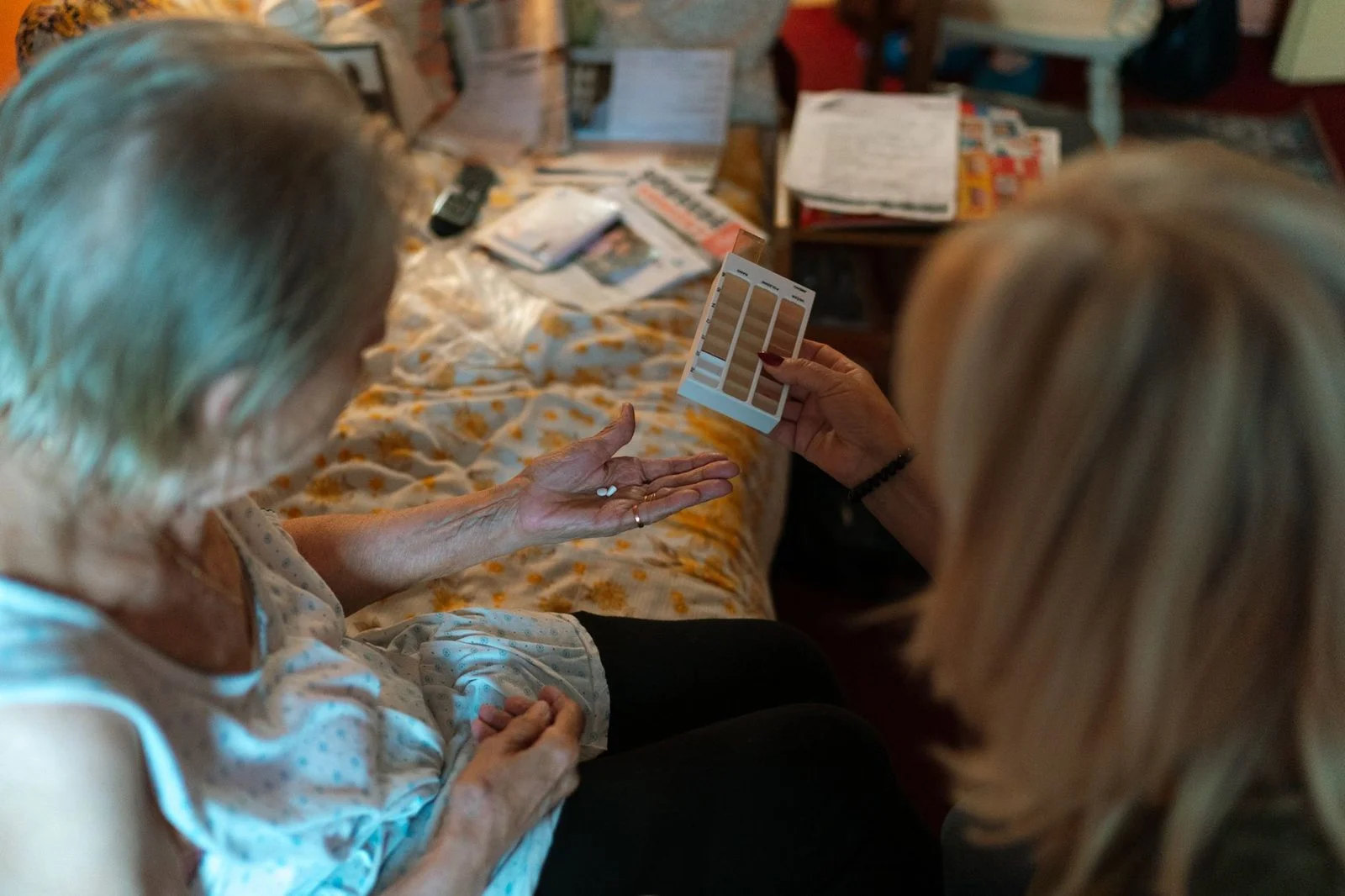
Talk with us about your spouse’s care at home
The simplest next step is a conversation about your spouse’s care at home.
Can Ohio Medicaid pay for in-home care for someone with dementia?
Ohio Medicaid can help pay for care at home, and a conversation can show which services may fit your family.
Can I keep our home if my spouse moves to a nursing home?
When the person in care leaves the home with no intent of returning, the home remains an excluded resource for as long as a spouse continues to live in the home while the person is receiving long-term care services.
How far back does Ohio Medicaid look at money transfers?
If a person in care or their spouse disposes of assets for less than fair market value on or after the look-back date, which is sixty months (five years) before the baseline date, the transfer is presumed improper and will result in a restricted Medicaid coverage period.
If your spouse now needs near-constant watching and you are unsure when or how to move them to professional care, you do not have to decide alone. Book a free discovery call with Jarvis Law Office, and we will talk through your options with you.