
Medicaid planning in Ohio
Getting Ready for Your Medicaid Interview for Nursing Home Care
Know which records to gather, what the caseworker will ask, and how to answer with confidence, so the family can focus on their loved one.
Where we are
3
Offices: Clairsville
By Timothy Jarvis · Published November 13, 2026
You are at home now, and your spouse has moved into a nursing home. The bills, the savings and the house may be weighing on you, and the next steps may feel unclear.
The Medicaid interview is the county’s review of your spouse’s money, property and care during a Medicaid application. Ohio Medicaid can help pay for nursing home care, and a well-prepared file helps the review move along. This page explains what to gather, what gets asked and how to protect the income and home you need.
What the Medicaid interview is, and why it matters to the spouse at home
The interview is where the county checks what your spouse owns, what income comes in and what care is needed. Its answers shape the whole application, including what happens to you at home. Every family’s situation is different, and we can walk you through how Medicaid’s rules might apply to your own circumstances.
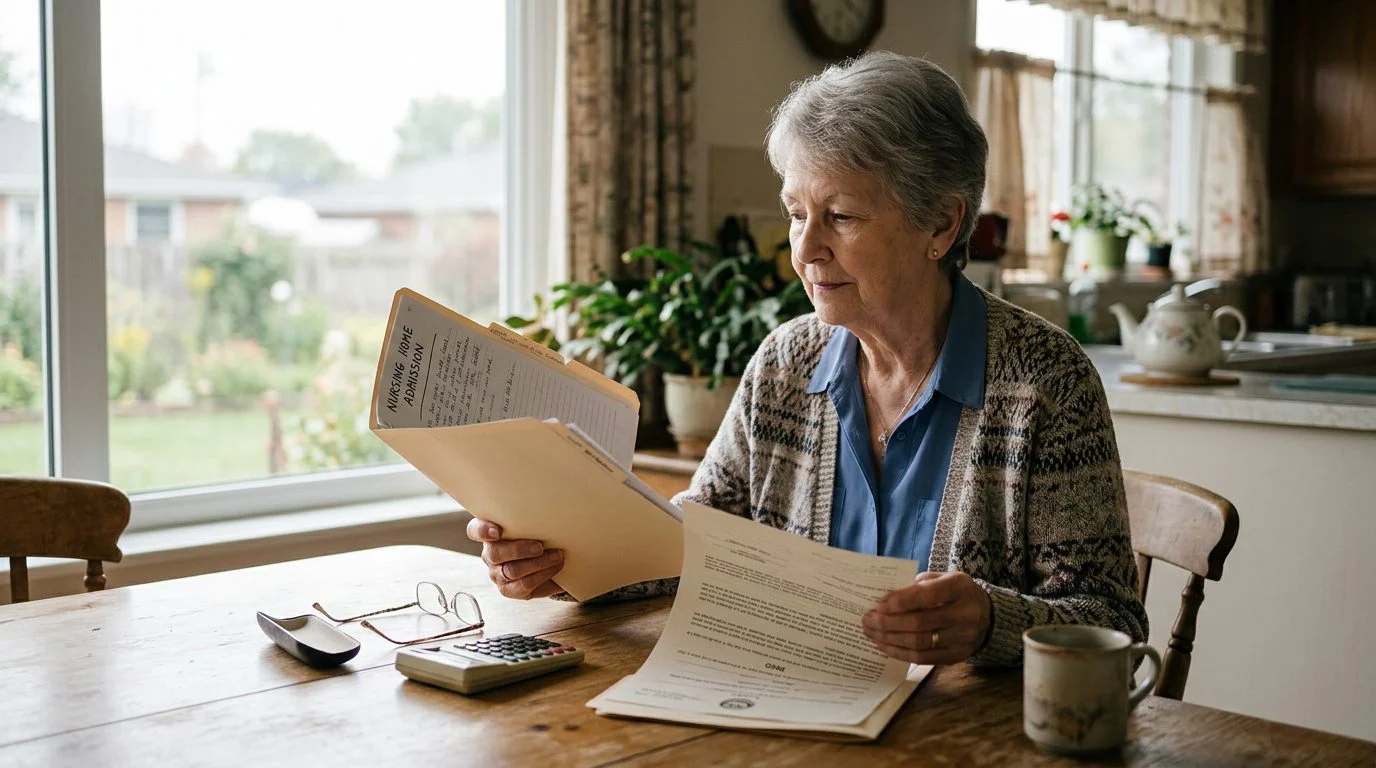
For example, imagine a couple, Ruth and Walter, in a small town in Hocking County. When Walter’s memory loss became more than Ruth could manage at home, he moved into a nursing home. Ruth was afraid the savings would run out and she would have to sell the house they had kept for decades. Before the county’s questions began, she and a lawyer gathered bank statements, income papers and the admission papers into one binder. With the records ready, Ruth could answer each question plainly and see the choices she still had. Every family’s facts are different, so results will vary with each family’s own situation.
You do not have to work out these rules alone. Keeping up with them is the firm’s job, and we guide families through each step.
If your spouse is in a nursing home and the bills and the house are weighing on you, our team can guide you step by step in a free discovery call. Talk it through with Jarvis Law Office — the first discovery call is free, confidential, and carries no obligation.

What to bring: the records to gather before the interview
Gather your spouse’s and your own financial records before the county’s questions begin, because the county looks at what the two of you hold together.
For the nursing home spouse to be approved, the couple’s combined countable resources must be equal to or less than the community spouse resource allowance plus two thousand dollars, when the nursing home spouse is subject to a resource limit (Ohio Adm.Code 5160:1-6-04).
That is why every account matters, even the small ones. Ohio’s application guide explains the steps for applying, and it is worth reading before you start. Bring these records:
- Bank, savings and investment statements for both spouses, covering the months the county will ask about.
- Income records, such as Social Security, pension checks and retirement account payments, for both of you.
- Property papers for the home and any other real estate, including the deed and any mortgage.
- Nursing home papers: the admission agreement, the monthly bills and the medical records that show your spouse’s care needs.
- Insurance cards and statements, including any Medicare information.
- Records of gifts or large payments from recent years, each with a short written note explaining it.
Tip: keep everything in one binder with tabs for each account and each month, so nothing has to be hunted for during the review.
What gets asked, and how to answer it plainly
Expect questions about your spouse’s accounts and income, the property you own, any recent transfers and the care your spouse needs now. Answer only what is asked, and back each answer with the records you have. If you do not know an answer, say so, and say you will find out.
The county also looks back at money moved in the years before the application. A gift, a property transfer or a large payment from that time can come up, so be ready to explain each one with a written note and any paperwork you have.
Be honest about your own income and household costs too. The spouse at home’s situation is part of the picture, not a side issue. Once the records sit in one place, each question is much easier to answer. Which questions come, and how each answer is weighed, is something we walk through with you in advance, step by step.
Protecting the home and the income the spouse at home needs
Planning can often help the spouse at home keep the house, stay financially secure and keep their quality of life intact.
During any month the spouse in the nursing home is eligible for long-term care services in a medical institution, no income of the spouse at home is considered available to the nursing home spouse (Ohio Adm.Code 5160:1-6-04).
Ohio also uses a home equity limit. For 2026, Ohio’s home equity limit is $752,000, and it rises every January.
The home equity limit does not apply when the nursing home spouse’s spouse is lawfully living in the home (Ohio Adm.Code 5160:1-6-02.1).
The home equity limit is the maximum equity an individual could have in the home and still become or remain eligible for LTC services, but it does not apply when the individual’s spouse is lawfully residing in the home; the amount the at-home spouse may keep is set by a separate formula, and it works like this:
The community spouse resource allowance is the greatest of: one half of the couple’s combined countable resources or the CMS maximum standard, whichever is less; the CMS minimum standard; an amount set by a state hearing decision; or an amount set under a court order (Ohio Adm.Code 5160:1-6-04).
For families who begin planning five or more years before care is needed, planning can often protect assets from the spend-down and from later estate recovery. Options often remain even after a family has started late. Planning can still help your spouse qualify for Medicaid-paid care well before the savings are used up.
Many families worry about estate recovery, the claim that can reach an estate after death. Justice in Aging on estate recovery explains how it can affect a home. We look at that question as part of your plan, not after it.
Mistakes that slow an application, and how to avoid them
Missing records, unexplained transfers and waiting too long are the mistakes that slow an application or narrow the options a family has. Watch for these:
- Gaps in bank records or missing statements, which can slow the review and bring requests for more information.
- Gifts or transfers made without a written explanation, which the reviewer will ask about.
- Waiting until the savings are nearly gone before asking for help, which leaves fewer options.
- Signing documents or changing account or property titles before checking how the change affects the application and the house.
- Planning only for the application and forgetting what happens to the home and savings after your spouse dies.
That last mistake matters most for the house. A plan with the right documents, and with assets titled to match, can help a family avoid probate later. Probate is often expensive, slow and hard on a grieving family, so careful planning is worth doing early.
How Jarvis Law Office helps you prepare for the interview
Our team guides you through the application step by step, so you are not left to sort out the records and the rules alone. Your first step is a free discovery call. It is confidential and carries no obligation to continue. On that call, you describe your situation, and we explain the next steps in plain words.
After that, we walk through a records checklist with you and organize what you have, so the paperwork is ready before the county’s questions begin. We also prepare you for the questions the review is likely to raise and how to answer them accurately. For the application step itself, we work for a flat fee, with no recurring insurance-style fees.
Our Care Navigators can also help you find your way through the health care system on your spouse’s behalf when that help is needed. They are not lawyers and do not give legal advice. Our guidance continues as your family’s needs change.
Not sure what your next step is?
Talk it through with Jarvis Law Office — the first discovery call is free, confidential, and carries no obligation.

Common questions before the interview
You do not have to prepare for this alone, and the firm can help you get ready one step at a time.
Do we need a lawyer before the interview?
You can gather records on your own, but the firm can guide you through preparation and the application so you know what to expect.
What if records are missing, or a statement confuses us?
We help you organize what you have and track down what is missing, one step at a time.
Can the spouse at home keep the house?
The home equity limit does not apply when the nursing home spouse’s spouse is lawfully living in the home. Planning often can help, though what it looks like depends on the facts of your family.
What about powers of attorney and other planning documents?
In our plans, we include a general durable power of attorney for finances, a health care power of attorney, a living will and a HIPAA release. The financial power of attorney is one of the main tools we use to protect a family’s assets.
If your spouse is in a nursing home and the bills and the house are weighing on you, you do not have to work it out alone. Book your free discovery call, a confidential first conversation with no obligation to continue, and bring your questions about what you want for your spouse, your home and your savings.
How we help your family prepare
Records, organized
We help you sort bank statements, income records and property papers so nothing important is left out when the interview comes.
Questions, answered beforehand
We walk through the questions you are likely to hear, so the interview does not feel like a surprise.
Steps, one at a time
When a record is missing or a form confuses you, we help you track it down and explain what it means.
Care Navigators on your side
Our Care Navigators can help your family work through the health care system when care decisions are weighing on you.
Answer what you know, and ask about the rest
If you are unsure how to answer a question, say so and ask for it to be explained. Guessing can create problems later, and we can help you check the facts before the interview.
Before, during and after the interview
Before the interview
Gather the records you have, write down your questions, and bring your loved one's care history. We help you decide what to bring.
During the interview
Stay calm, answer what you know, and take notes. You can ask the caseworker to repeat or clarify anything you do not understand.
After the interview
Review what was discussed and follow up on any missing items. We can help you understand the next steps and what they mean for your family.