
My Parents Have No Plan: Documents Before a Crisis in Ohio
By Timothy Jarvis · Published November 22, 2026
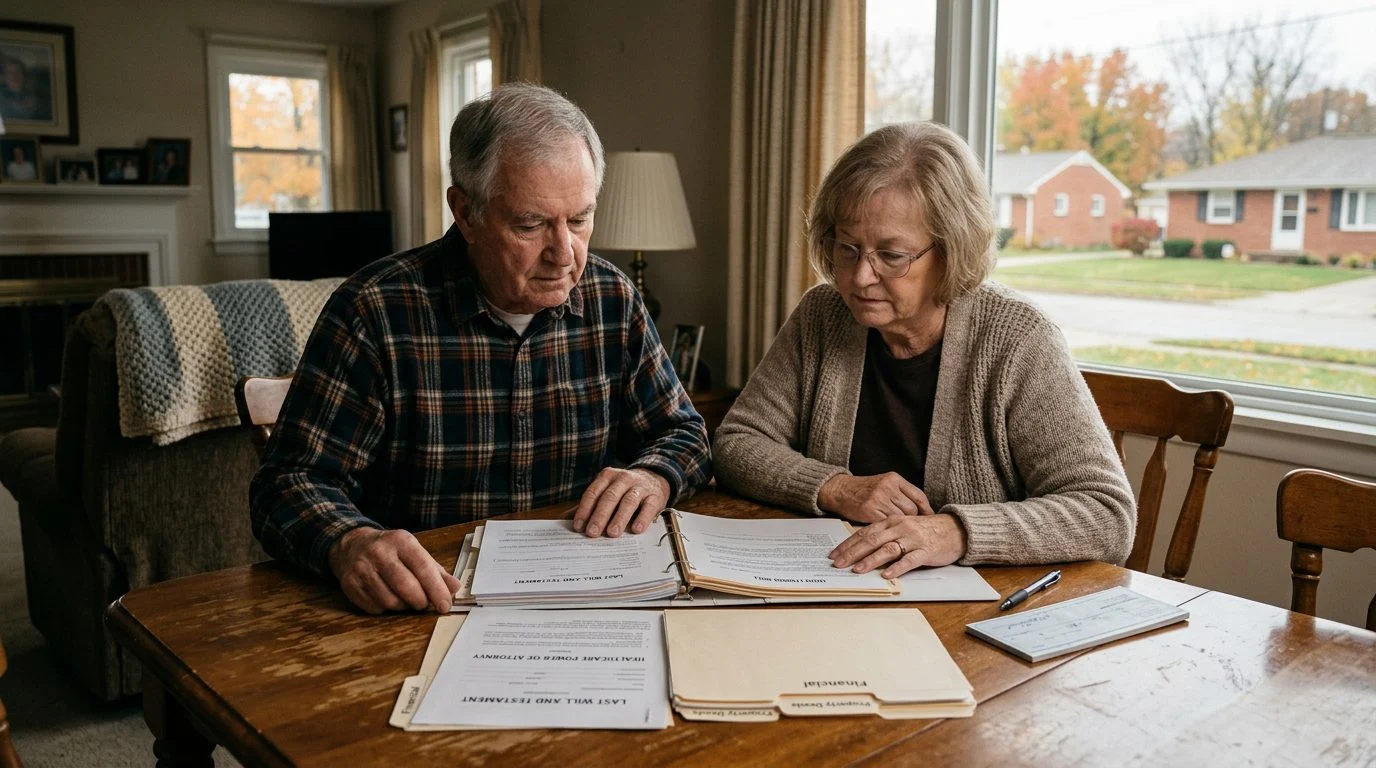
If your parents have no will, no power of attorney and no clear plan, you probably already feel the weight of what could come next. When a parent dies without a will, Ohio’s inheritance law decides who receives the property, and our team walks you through what that means step by step. A few plain documents can change that, and the first step is a conversation, not a stack of forms.
When your parents have no plan, what does Ohio do?
Without a will, Ohio law sets the order for who inherits, and the answer depends on the family.
In Ohio, if a parent dies without a will and has no surviving spouse, the property generally goes to the children, and to a child’s own children if that child has died (Ohio’s inheritance law).
When a person dies intestate (without a will), Ohio’s distribution rules change depending on whether a spouse survives.
If a parent dies without a will and leaves a surviving spouse, the whole estate passes to that spouse only if every child of the parent is also a child of that spouse, counting both living children and children who have died but left descendants who are still living (Ohio’s inheritance law).
The court process for this is probate. Many families find probate slow, expensive and stressful while they are grieving, and careful planning is one way to help a family avoid it.
For example, picture a brother and sister, Ben and Dana, whose father died in Chillicothe without a will. Dana wanted to keep the family home for the grandchildren, while Ben needed cash for his own bills. Neither could say what their father wanted, because he had never written it down. Months of disagreement strained a relationship that had always been close. Every family’s facts are different, and yours won’t match this story exactly.
The documents that make up a complete plan
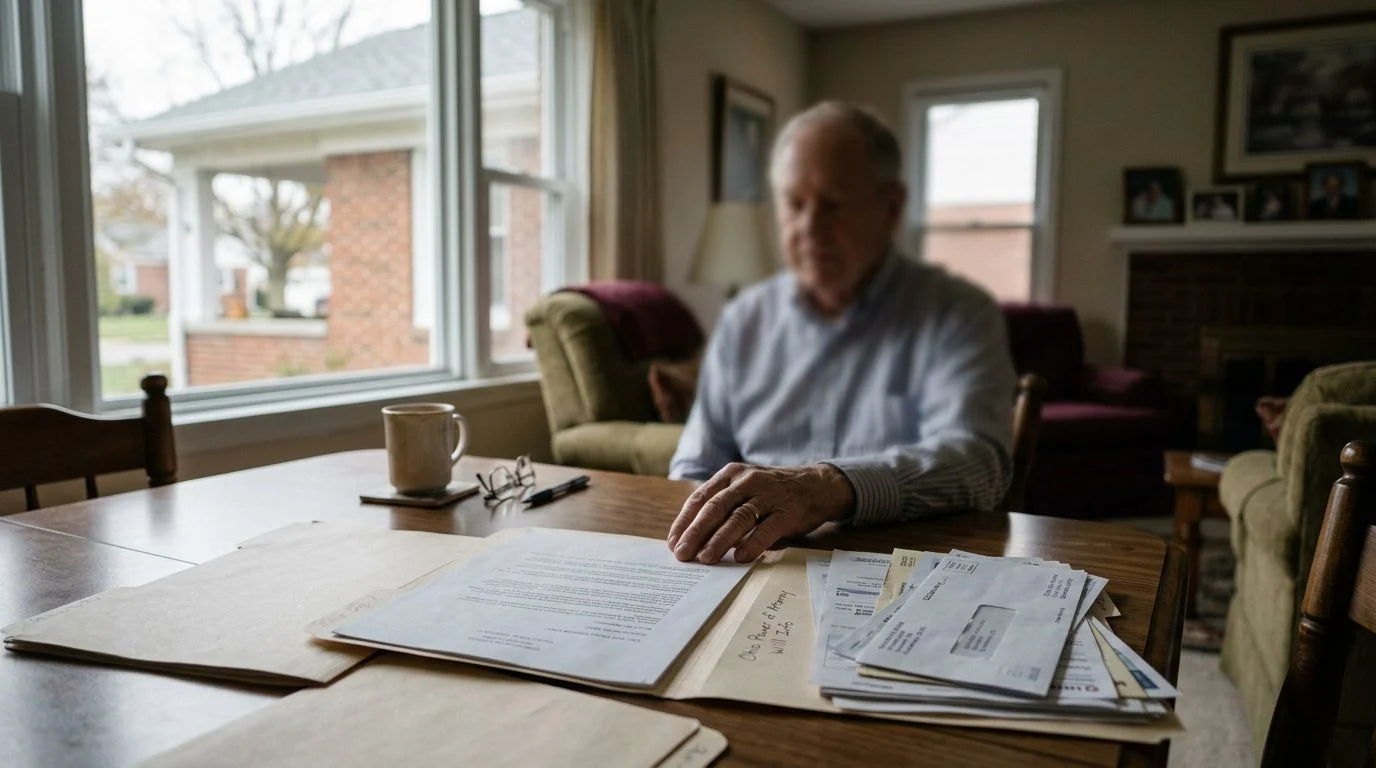
A complete plan is a small set of documents that work together, and we include the core set in every plan we prepare.
- General durable power of attorney for finances: names the person who handles bills, bank accounts and money matters if your parent cannot.
- Health care power of attorney: names the person who speaks with doctors and makes care decisions if your parent can’t speak for themselves.
- Living will: puts your parent’s wishes about life-sustaining treatment in writing.
- HIPAA release: lets doctors and hospitals share health information with the person your parent names.
- A will or trust: fits your parent’s own situation and sets out how property passes.
These documents support one another. We set them up to match what your parent wants, and we explain each one in plain words, so you and your parent know what each paper does before anything is signed.
Why a financial power of attorney matters before anything happens
A financial power of attorney lets someone your parent trusts handle money matters if your parent cannot, and without one, the family may have no clear authority to act.
For example, imagine a daughter, Carla, whose father, Walt, is slowing down at home in Zanesville and has no power of attorney in place. Carla needs to pay his mortgage and talk with his bank, but she has no document that lets her sign for him. Walt always said she would help, yet nobody had put that in writing. Carla spends weeks asking what the bank will accept while bills pile up. Every family’s facts are different, and the details that matter for yours will be different too.
In our plans, a strong financial power of attorney is one of the key tools we use to protect a family’s assets, and it keeps your parent’s money in the hands of a person your parent chose. Start by asking your parent who they trust with money, then bring that answer to us so the document reflects it. Financial exploitation of older adults is a real concern, and it is one reason the financial power of attorney matters in the plans we prepare.
Health care decisions when your parent cannot speak for themselves
A health care power of attorney names the person who speaks for your parent to doctors when your parent can’t, and a living will records what your parent wants about life-sustaining treatment.
Under Ohio law, the health care power of attorney and the living will are the advance directives. The living will is where your parent states those wishes.
An adult of sound mind can put in writing whether life-sustaining treatment should be used, continued, withheld or withdrawn, and Ohio’s living will law sets out how that writing must be properly witnessed or notarized.
Our plans also include a HIPAA release. A living will declaration can name one or more persons your parent wants the attending physician to notify if life-sustaining treatment is withheld or withdrawn under that declaration, so that person isn’t left guessing during a hospital stay.
Our Care Navigators can help families find their way through a complicated health care system on a client’s behalf, when that help is needed. They are not lawyers and do not give legal advice. The legal documents are the firm’s work.
Protecting the house and savings, and keeping the family out of probate
Careful planning can help a family avoid probate later, because the right documents and assets titled to match the plan can move without a court process. This is what planning can do, not a guarantee.
Funding is the step that makes this work. Funding means checking how the house, bank accounts and other assets are titled, then lining them up with the plan. It is more than paperwork, and we walk through each asset with the family so nothing is left out.
If your parent later needs long-term care, planning made early can leave more choices open for the home and savings. For your parent, that can mean protecting the home and keeping a secure footing. These are possibilities that depend on your family’s situation, and no particular result is promised.
How the firm helps your family get the plan in place
The firm guides your family step by step, so you don’t have to work out each rule on your own. The first step is a free discovery call, which is confidential and carries no obligation to continue.
From there, we meet for a strategy meeting to choose the plan that fits your parent’s wishes. Next, we prepare the documents and fund the plan by coordinating the assets to match. We stay with you as needs change, because a plan made today still needs guidance later.
Our fee is a flat fee for the plan we prepare, with no recurring insurance-style fees. We serve families in every Ohio county from our offices in Lancaster, Dublin and St. Clairsville.
If brothers and sisters disagree, the family can talk through their concerns together with us. Your parent’s wishes are the starting point, so everyone hears the same plan.
Common questions from adult children about parents’ documents
The short answers below are a place to start, and any question can be taken up in your free discovery call.
Can we set up these documents while my parent is still managing well?
Yes, planning while your parent manages well is often easier, because your parent can make the choices directly.
Does my parent have to sign everything at once?
No, we walk through the documents in an order that fits your family and your parent’s comfort.
Do I have to be named in the documents?
Your parent chooses who is named, and we explain what each role involves.
What if my siblings disagree with the plan?
We can help the family talk through concerns, and your parent’s wishes remain the starting point.

Start with one conversation about your parents’ wishes
A free discovery call is the simplest first step toward getting your parents’ wishes written down. You are raising your own family and watching a parent slow down, and you shouldn’t have to figure out these rules alone.
On that call, bring your parent’s situation and your family’s questions. The goal is to understand what your parent wants and which documents fit, before a crisis forces the choice. Raising your own family while helping a parent who is slowing down is a lot to carry, and staying on top of the rules is our job. Start with a free discovery call, confidential and without obligation to continue.