
Ohio Medicaid planning | Serving families in every Ohio county
Facing nursing home care on your own? Ohio Medicaid planning, explained in plain words
Living alone, with no spouse at home, you still have choices. We help you see them clearly, one step at a time.
By Timothy Jarvis · Published November 12, 2026
Ohio Medicaid Planning for a Single Adult in Nursing Home
If you live alone and have no one named to decide for you, you may be wondering what would happen if you could not decide for yourself. You can put your choices in writing now, while you’re able to make them. Medicaid planning for a single adult in an Ohio nursing home means naming the people you trust, protecting your home and savings where the law allows, and keeping your own wishes in charge. You don’t have to work all of this out on your own. Staying on top of the rules is our job.

Imagine a widow with no one named to decide for her
Planning ahead gives you more choices than waiting for a crisis does.
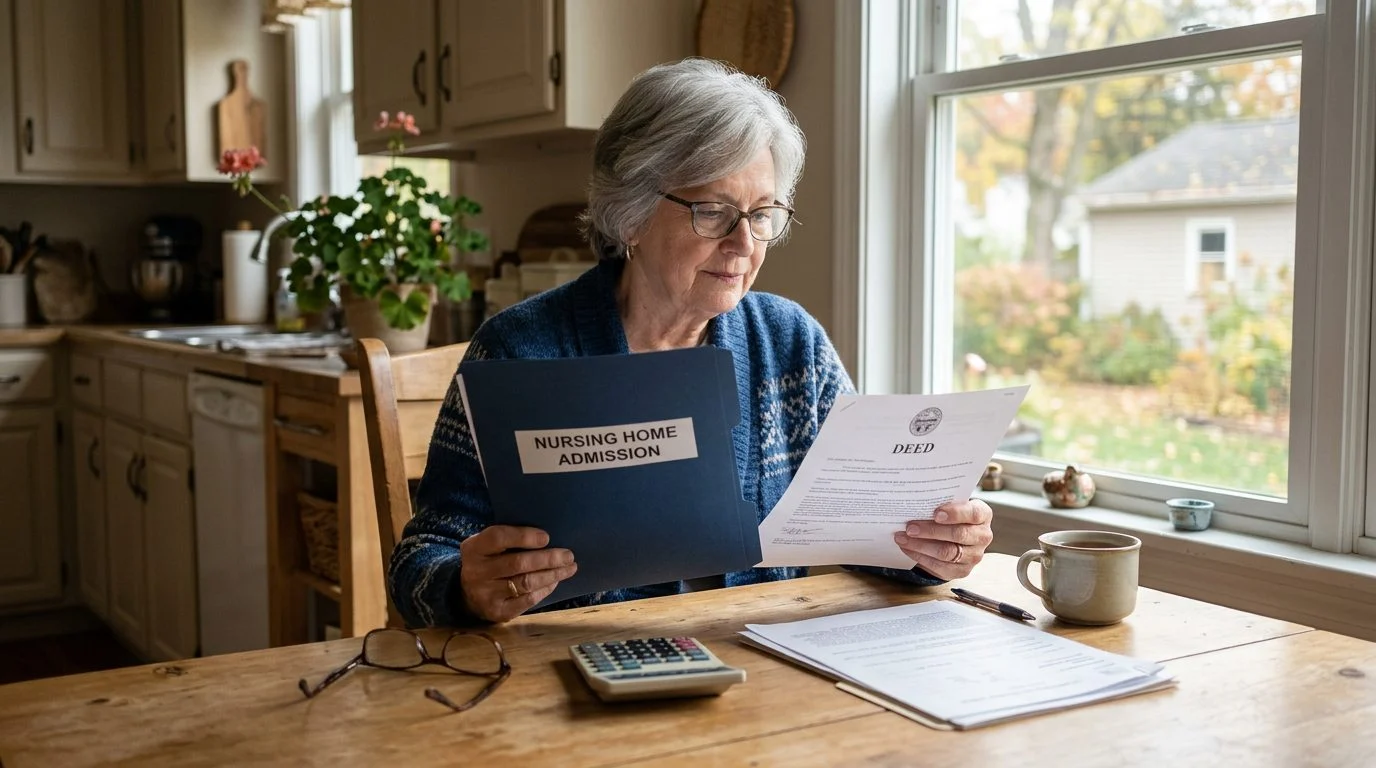
For example, imagine Carol, a widow in a small town in Hocking County, who had a health scare last spring. She feared that if she could not speak for herself, she might be moved into a nursing home she did not want. She had no one named to handle her money, and she worried her children would be left with bills and a tangle of paperwork. Her advisors walked her through the documents, helped her name people she trusted, and showed her how her home and savings fit a plan. Carol still had choices, and she made them while she could. Every family’s facts are different, and results vary with each family’s own situation.
Carol’s situation is easy to fall into, because most of us never write down who should decide for us. The rules matter, but the choices you make now matter more. We help you make them clearly, and we keep track of the rules so you can focus on what you want.
Who decides for you if you cannot: the documents that name your people
Four documents do most of the work, and each one answers a different question about who decides and what you want.
- General durable power of attorney for finances: names a trusted person to handle your money and property if you can’t.
- Health care power of attorney: names someone to make medical decisions with your doctors when you can’t.
- Living will: puts your wishes about life-sustaining treatment in writing.
- HIPAA release: lets the people you name get your health information.
The health care power of attorney names someone to speak for you about medical decisions, and a living will puts your wishes about care in writing. Every plan we prepare includes a financial power of attorney, a health care power of attorney, a living will and a HIPAA release. A strong financial power of attorney is also one of the key asset-protection tools in our plans.
Choosing the right people is often the hardest part. We help you think it through, and we don’t rush you. A written plan makes your wishes easier for others to follow.
What Ohio Medicaid can help pay for, and how staying at home fits
Ohio Medicaid can help pay for nursing home care, many assisted living and memory care settings, and care at home. Not every setting qualifies, so the kind of care matters as much as the cost.
For many people, staying at home longer is a real possibility worth exploring, and a move to a care setting later remains an option.
Medicaid eligibility turns on your income, your assets and your care needs. We check each one against your own records. Planning ahead can give families more choices when long-term care becomes necessary.
The look-back and estate recovery: what planning can look like for you
Two Ohio rules shape what planning can do for your home and savings: the look-back and estate recovery.
Ohio’s look-back reaches back sixty months from a starting date that depends on your own situation, and figuring out which date applies to you is something we will walk through together. A gift or a sale for less than fair value within that window, made by an institutionalized individual seeking Medicaid payment for long-term care (or by that person’s spouse), is presumed improper and can lead to a period when Medicaid will not pay for long-term care services; these transfer rules apply only to institutionalized individuals (Ohio’s rules on transfers of assets).
The look-back covers gifts and other transfers made at any point inside that sixty-month window, even ones made before Medicaid was on anyone’s mind, and it is separate from estate recovery after a Medicaid recipient dies. Estate recovery is a separate question that follows its own rules.
After a Medicaid recipient dies, the state may seek to recover Medicaid benefits paid for that person’s care from the estate, and the details depend on the person’s age and circumstances, which we walk through in the first conversation. After a Medicaid recipient dies, the state can in some cases seek repayment from the estate, and who survives the person, such as a spouse or a child, can change the answer; we walk through those details with you in the first conversation (Ohio’s estate recovery rules).
Planning looks different for each family. The spend-down is the stretch when your savings go toward care before Medicaid steps in. When care is needed sooner, or the look-back window will not work for your situation, some planning options can still help protect part of the assets that would otherwise go toward care. Options often remain, and many people can qualify for Medicaid-paid care well before they spend everything.
Your home is treated differently under Ohio’s rules, and one number to know is the home equity limit. For 2026, Ohio’s home equity limit is $752,000, and it rises every January.
Each family’s facts decide what fits, and nothing here promises a result.
Keeping your home and savings out of probate and out of the wrong hands
A plan set up and funded correctly can help your family avoid probate and guard against people who might take advantage of you.
Probate is the court process for settling an estate after death. It can be expensive, slow and stressful for a grieving family. Careful planning puts the right documents in place and makes sure your assets are titled to match the plan. Done well, this is what can let your family skip probate later. It is a possibility, not a promised result, and avoiding probate is one of the main reasons families plan with us.
Financial exploitation is a fear many older adults share. Choose a financial agent you trust, write down what you want, and keep your records in order. A written plan makes your choices clear to anyone who needs to follow them.
How planning with us works, step by step
Planning with us starts with a free discovery call and then moves through a few steps, one at a time.
- Strategy meeting. We review your options and choose a plan together.
- Plan documents set up. We prepare the documents you choose, including the four described above.
- Assets funded and coordinated. We match your property, accounts and titling to the plan. This takes more than paperwork.
- Medicaid application. Only if paid care is needed, we prepare the application with you.
- Ongoing guidance. We stay with you as your needs change.
Our planning work is billed as a flat fee, not as recurring insurance-style charges. We move at a pace that fits you, and each step builds on the one before.
How Jarvis Law Office helps you stay in charge
We help by guiding you step by step, so you don’t have to sort out the rules on your own.
Jarvis Law Office concentrates its practice in elder law, Medicaid planning and estate planning. We have offices in Lancaster, Dublin and St. Clairsville, and we serve families in every Ohio county from those offices. Timothy Jarvis is the lawyer responsible for this page.
When health care decisions get tangled, our Care Navigators can help you find your way through a complicated health care system, if and when you want that help. They are not lawyers and do not give legal advice.
Our aim is to keep your wishes, your independence and your home in your hands. We also want to spare your children the burden of guessing what you wanted. We can’t promise a particular outcome, but we can help you prepare for the choices ahead.
Questions you may be asking
Here are three questions you may have, answered briefly.
Can I stay in my own home and still get Medicaid help in Ohio?
Ohio Medicaid can help pay for care at home, and staying home longer is possible. Whether it fits your situation is something we review with you.
What if I need nursing home care now?
Options can remain, and a significant part of the spend-down amount can often still be protected. We look at your own facts first.
Do I have to give away my house to qualify?
We don’t recommend giving away your home to qualify, and we review every past transfer before any move. If a Medicaid coverage delay caused by an improper transfer would result in an undue hardship, Ohio allows the person seeking Medicaid for long-term care to ask for an undue hardship exemption, and we explain how that request works (Ohio’s hardship exemption rules).

Your next step: a free discovery call
The next step is a free discovery call, which is confidential and has no obligation to continue. If you’ve had a health scare and no one is yet named to decide for you, now is a good time to talk. On the call, we listen, review any documents you already have, and explain your options in plain words. We talk about a strategy meeting only if you want one.
Book your free discovery call and let us help you put your wishes in writing.
How Jarvis Law Office guides you
We start by listening
Your first conversation with us is about your health, your home and what matters most to you. We learn your situation before we suggest anything.
You choose the plan
We lay out the possible paths and what each could mean for your savings, your home and your family. The decision stays with you.
Your documents, set up right
Your plan includes a financial power of attorney, a health care power of attorney, a living will and a HIPAA release, so someone you trust can act for you if you cannot.
Your assets, lined up with the plan
Setting up a plan is only part of the work. We help coordinate how your property and accounts are held so they match what you intend.
Care Navigators, when you need them
Our Care Navigators can help you find your way through a complicated health care system if and when you need that help. They do not give legal advice.
Ongoing guidance as things change
Care needs and rules shift over time. We stay with you so your plan keeps pace with your life.
Planning early can leave more options open
Starting before care is needed often gives the most room to plan. A later start can still leave options, and we will walk you through what may fit your situation.
What planning can look like for a single adult
Staying home longer
Ohio Medicaid can help pay for care at home, and many people prefer to stay in their own home as long as they safely can. A move to a care setting later remains an option.
Looking at the spend-down
Before care begins, planning may protect part of what you have built. Whether that is possible depends on your timing and your own facts, and we review them with you.
Protecting your home and savings
Careful planning can sometimes shield assets from the spend-down and from estate recovery. Every family's situation is different, so the options are something we work through together.
Keeping your wishes in charge
Your plan can name the people you trust to make financial and health decisions for you, so your choices are followed even if you cannot speak for yourself.