
Elder law and estate planning | Lancaster, Dublin and St. Clairsville
Review your transfer on death deed before nursing home costs arrive
A deed can be one useful step. We look at it alongside the rest of your family's plan, so the decisions you make now fit the care you may need later.
By Timothy Jarvis · Published November 13, 2026
If you own your home outright and worry that nursing home costs could take what you meant to leave your children, a transfer on death deed review in Ohio is a sensible place to start. A transfer on death deed names who receives your home when you die. A review checks whether that gift fits with the rest of your plan.
What a transfer-on-death deed is, and who it is for
A transfer on death deed names the person who receives a home when its owner dies. In Ohio, the form is called a transfer on death designation affidavit.
A transfer on death designation affidavit must be recorded with the county recorder before the person who signed it dies to be effective, although it does not have to be delivered to the named beneficiaries, as Ohio’s transfer on death affidavit law explains.
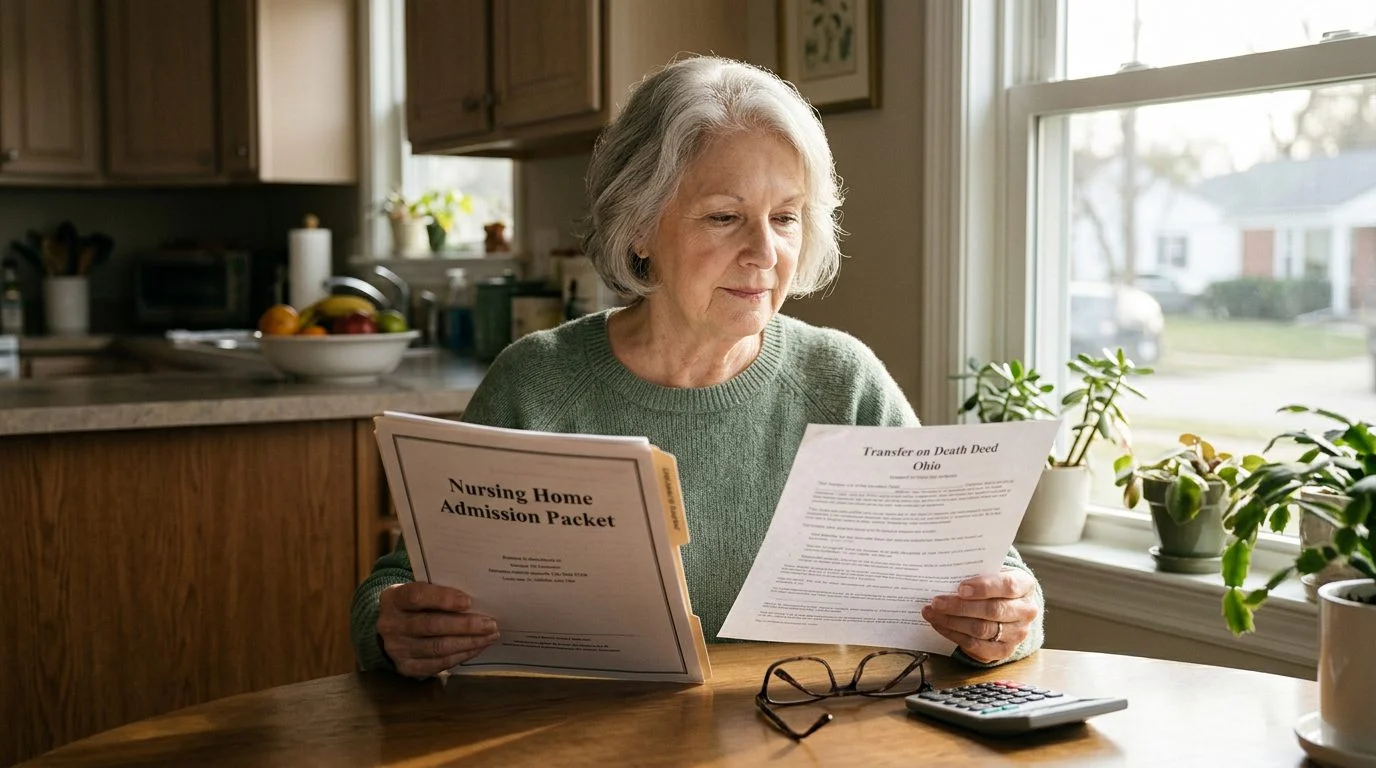
Imagine a couple, Ray and Ellen, in a small Hocking County town. They were in good health and busy with their grandchildren, but they wanted to be sure their savings and the home they had paid off would still be there for their children. Their goal was simple: their three children should inherit something. A review showed them that a deed alone would not answer every question, but that planning early would leave more room to choose. Every family’s facts are different, and results vary.
A paid-off home often feels like the safest thing you own, yet it is often the biggest item on the list when long-term care comes up. Whether to add your children to the deed now is a fair question to ask, and a deed is one piece of the plan, not the whole plan.
This page is for a healthy couple planning ahead who want their wishes followed.

What a review covers
A review looks at the whole picture, not only the deed. We check how your home is titled today, who is named to receive it, and what happens if one spouse dies first.
We also check how the deed fits with your will or trust, so one document does not undo another. In our plans, the general durable power of attorney for finances is a key asset-protection tool. Every plan also includes a health care power of attorney, a living will and a HIPAA release.
Savings, bank accounts and beneficiary forms can pass outside the deed, so we review them together. A review can catch gaps, such as an old will that names someone you no longer intend to inherit.
Why a paid-off home raises long-term care questions
Ohio Medicaid can help pay for nursing homes, many (though not all) assisted living and memory care settings, and care at home. Medicaid also looks at your finances, and your home is part of that picture.
Home value is one of the numbers that matters in Medicaid planning. For 2026, Ohio’s home equity limit is $752,000, and it rises every January.
Recovery can be sought only after the death of any surviving spouse, and only when the person has no surviving child who is under 21 or blind or permanently and totally disabled (Ohio’s Medicaid estate recovery rules).
Timing matters with transfers, so it is worth talking with us before moving assets around.
If the hardship came from moving or encumbering assets to avoid estate recovery, the state will not waive recovery, even when the hardship is real, so we walk through these exceptions with you (Ohio’s undue hardship rules).
Options usually remain well before savings run out, and planning can often keep the spouse at home financially secure.
How a review works, step by step
Our work with you starts with a free discovery call and moves at a pace you set, from the first conversation through ongoing help as your plans change.
- Free discovery call. You share your home, savings, family and goals. The call is confidential, with no obligation to continue.
- Gathering papers. We collect your current deed, will or trust, powers of attorney, and account and beneficiary information.
- The review. We explain how each document fits with the others and what, if anything, should change.
- Strategy meeting. You choose the plan in your own words, and we explain the options in plain terms.
- Documents and funding. We prepare the documents and title the home and accounts to match the plan. That is more than paperwork.
- Ongoing guidance. We stay with you as health, family or finances change.
Timing depends on your family’s facts, so we’ll give you a realistic picture on that first call.
How planning helps a family avoid probate
Probate is the court process for settling a person’s estate after death. It can be expensive, slow and stressful for a family that is already grieving.
We focus on getting the planning right, so your family can skip probate later. A plan set up and funded correctly, with the right documents and assets titled to match, is what can make that possible.
Careful planning can support that result, but no one can be certain of it in advance. A transfer on death deed alone does not settle long-term care costs, estate recovery or tax questions, so we look at the whole picture.
How Jarvis Law Office helps
We guide your family through planning step by step, so you do not have to work out Ohio’s rules alone.
For a couple with a paid-off home and modest savings, the first conversation focuses on what you want to protect and what you want to pass to your children. Then we explain which pieces of your plan need attention.
Our offices are in Lancaster, Dublin and St. Clairsville, and we serve families in every Ohio county. Timothy Jarvis is the lawyer responsible for this page’s content.
When the health care system is the harder part, our Care Navigators can help your family find a way through it. Care Navigators do not give legal advice, and the attorneys handle the legal planning.
Questions people ask about transfer-on-death deeds
Does a transfer on death deed avoid probate?
It can, when the home and other assets are titled and coordinated to match the plan. A deed alone is not a full plan.
Does it protect the home from nursing home costs?
A deed alone does not answer that question. Planning ahead can open more options, and a review shows which steps fit your family.
Can we change the deed later?
Whether a deed can be changed later depends on how it is written now, so bring your current deed to our conversation and we will look at it with you.
A transfer on death designation affidavit must be recorded with the county recorder before the person who signed it dies to be effective, although it does not have to be delivered to the named beneficiaries.
Do we need a deed if we have a will or trust?
Not every family needs the same documents. The review checks whether each piece works with the others, so nothing works against your wishes.
What does a review cost?
We charge a flat fee with no recurring insurance-style fees. The first call is a free discovery call, with no obligation to continue.

Talk with us about your home and your plans
If you’re a healthy couple who wants your children to inherit your home, not a nursing home bill, planning while you’re healthy can leave more room to choose.
You don’t have to sort this out alone. Book a free discovery call, and we will walk through your home, your savings and your goals one step at a time.
How we review your deed with your family
Documents reviewed together
We look at the deed alongside your power of attorney, will and any trust, so that every document points the same direction.
Family included, if you wish
If you want your adult children or other loved ones in the conversation, we welcome them at the table.
Care decisions in view
When care decisions arrive, our Care Navigators can help your family work through the health care system on your behalf.
Options before a crisis
Planning while you have time can open more choices than a deed signed in a hurry.
A flat fee you can plan around
We charge a flat fee with no recurring insurance-style charges, so you know the cost before we begin.
A deed alone is not a complete plan
A transfer on death deed is one tool among several. Whether it fits your family depends on your home, your savings and how care may be paid for, so we review the whole picture before anything is signed.
What a review looks at
Your home and how it is titled
We look at who owns the home today and how the title is written, so the deed matches what you intend.
Your savings and income
We look at the accounts and income your family relies on to see how they fit into the plan.
Your documents
We check your power of attorney, will and trust so the pieces work together rather than against each other.
Care costs ahead
We talk through the care your parent or spouse may need and what planning ahead can make possible.