
This past Saturday, I found myself in a hotel room after a long day of outlet shopping and meeting my significant other’s family for the first time. I was winding down for the evening and ready to relax with some YouTube.
Unfortunately, after turning on the hotel TV, I quickly realized I couldn’t stream anything to it. My choices were to watch YouTube on my phone or go old-school and watch regular television. Since my eyes aren’t quite what they used to be, I opted for the latter.
As I flipped through the channels, I noticed Saturday Night Live was on, hosted by one of my favorite comedians, John Mulaney.
Perfect!
The show was pretty standard, with the usual mix of funny sketches and a few that didn’t quite land. But then came a parody commercial that really caught my attention.
It was called “Sister.”
And while I found myself laughing, I also realized that the sketch was hitting a little too close to home.
When One Sibling Does All the Work
The premise was simple. Mulaney’s character has an aging father who is beginning to show signs of dementia. Like so many adult children, he’s concerned about his dad’s well-being and wants to make sure he’s getting the care he needs.
But rather than take on the responsibility himself, he’s discovered the perfect solution: Sister!
Sister will handle the doctor’s appointments, medications, insurance companies, meals, cleaning, and even helping Dad in the bathroom. She’ll sacrifice her career, move away from her home, and put her entire life on hold.
Meanwhile, her brother can enjoy quality time with Dad without having to deal with any of the difficult stuff.
After all, isn’t caregiving supposed to be the woman’s job?
Obviously, that’s part of the joke. But the uncomfortable truth is that this happens in families every single day.
According to AARP’s 2025 Caregiving in the US report, three out of five family caregivers are women. And six in ten family caregivers are also employed, meaning many are balancing their careers with the demands of caring for a loved one.
Even more concerning, AARP research published in 2026 found that caregivers of adults age 50 and older spend an average of 26 hours per week providing care.
Think about that. That’s more than three additional eight-hour workdays every single week.
And that’s on top of everything else life throws at us.
It’s Not Just a Women’s Issue. It’s a Family Issue.
I could spend this entire article talking about gender roles and why society so often expects daughters to step up when their parents need help. It’s certainly a conversation worth having.
But I think there’s an even bigger issue here.
Too many families simply don’t have a plan for what happens when Mom or Dad can no longer care for themselves.
And when that day comes, someone has to step up.
Sometimes it’s a daughter. Sometimes it’s a son. Sometimes it’s a spouse who is dealing with health challenges of their own.
And often, the responsibility falls on whoever happens to be available, lives the closest, or simply can’t bring themselves to say no.
As someone who helped care for both of my parents when they were terminally ill, I understand just how overwhelming the experience can be.
You want to do everything you can for the people you love. But you’re also trying to balance your career, your relationships, your own health, and all the responsibilities that come with everyday life.
And while spending time with an aging parent can be incredibly meaningful, managing their care can feel like a full-time job.
The good news? It doesn’t have to fall entirely on one person’s shoulders.
The Best Time to Have the Conversation Is Before There’s a Crisis
If there’s one thing I hope people take away from this sketch, it’s that we need to start having conversations about aging and long-term care before something happens.
Talk to your siblings. Talk to your parents. Find out what they want their later years to look like.
Would they prefer to remain in their home as long as possible? Have they thought about assisted living or nursing home care if their needs change?
Do they have money set aside for long-term care? If not, how would they pay for it?
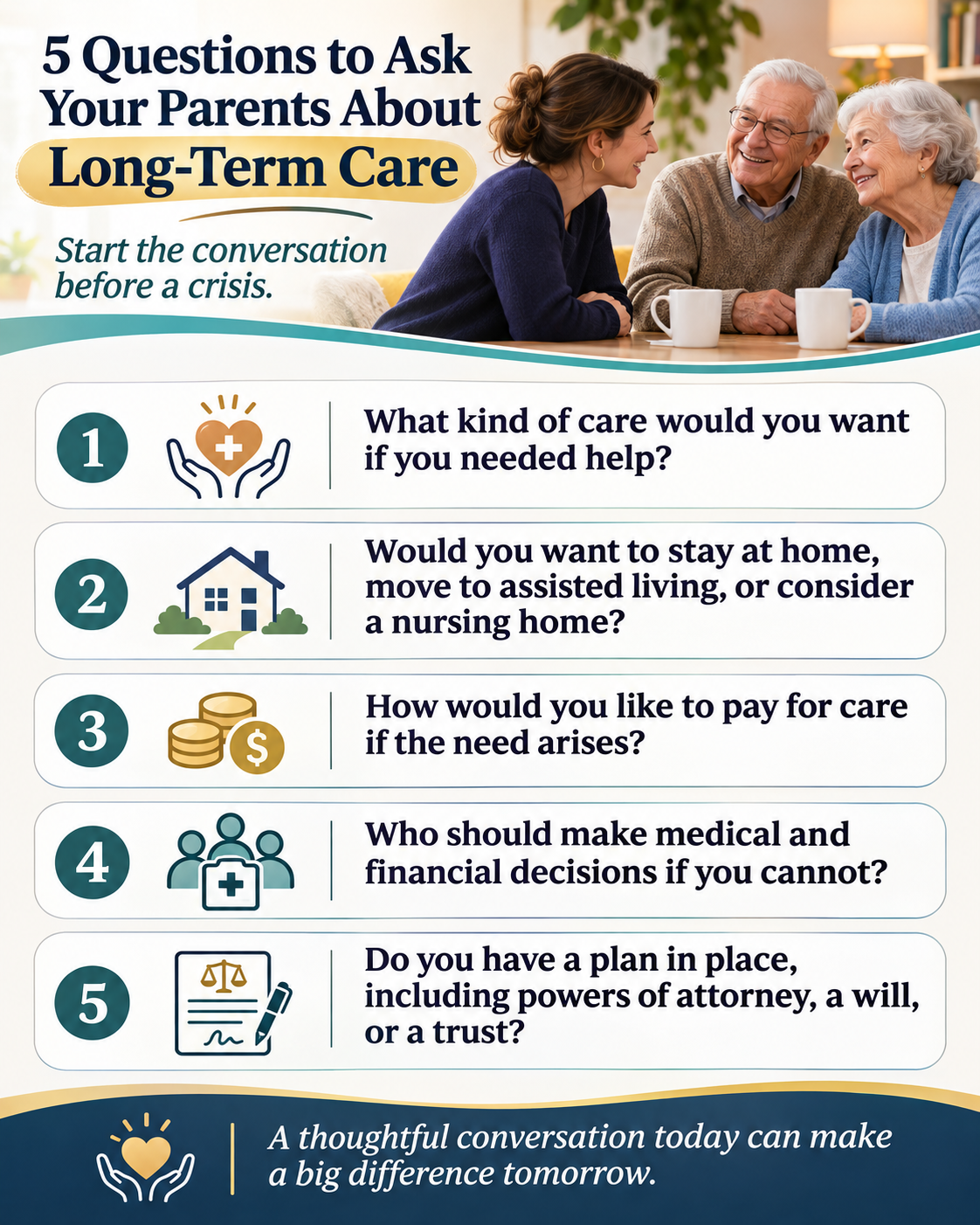
Do they have an estate plan, powers of attorney, or appropriate trusts in place to help protect their wishes and assets?
And perhaps most importantly, who is going to do what when Mom or Dad needs help?
These aren’t always easy conversations. Nobody particularly enjoys talking about a time when their parents may no longer be able to care for themselves.
But having those conversations now can prevent a tremendous amount of confusion, frustration, and family conflict down the road.
And if your family is already dealing with a caregiving crisis, it’s not too late to get help.
You Don’t Have to Navigate Elder Care Alone
This is where something called Care Navigation can make a real difference.
At Jarvis Law Office, our Care Navigators are experienced social workers who have dedicated their careers to helping older adults and their families navigate the challenges of aging.
Whether you’re trying to find the right nursing home or assisted living facility, locate appropriate healthcare providers, understand available care options, or simply figure out what comes next, our team can help guide you through the process.

And because Care Navigation is part of our Elder Law practice, our team can also help families explore the legal and financial considerations that often accompany long-term care, including Medicaid planning and asset protection.
The goal isn’t to take family members out of the equation. It’s to give them professional guidance, a clearer plan, and the support they need to make informed decisions.
A Care Navigator can’t make an unwilling sibling suddenly become a helpful one. But having someone who understands the healthcare and long-term care systems can help take some of the pressure off the family member who’s been trying to figure everything out alone.
Because at the end of the day, your time with your parents should be about more than paperwork, appointments, and worrying about what happens next.
It should also be about enjoying the moments you still have together.
And while John Mulaney’s “Sister” makes for a hilarious three-minute comedy sketch, it shouldn’t be anyone’s actual long-term care strategy.
Sister deserves to enjoy time with Dad, too.
If you’d like to learn more about our care navigation services, click here