
Ohio Elder Law and Estate Planning | Home and Family Land
Protecting the Home and Land Your Family Built, Step by Step
A parent's decline, a care bill, or a farm meant to stay in the family can each raise hard questions. A careful review helps you see the options that may be open to you.
By Timothy Jarvis · Published November 21, 2026
If your home and a parcel of family land make up most of what you own, you may be asking whether nursing home costs could take them. A home and land asset protection review is a plain look at what you own, how it is titled, and which planning steps fit your family.
You don’t have to work this out by yourselves. At Jarvis Law Office, we guide couples step by step, and keeping up with the rules is our job.
What this review is, and who it is for
This review is for married couples whose home and land are most of their assets. It is a conversation about what you own, what care could cost your family, and which planning tools fit your situation.
The Administration for Community Living reports that almost 70% of people turning 65 are likely to need some long-term care. Planning early is a practical step, not a sign of trouble.
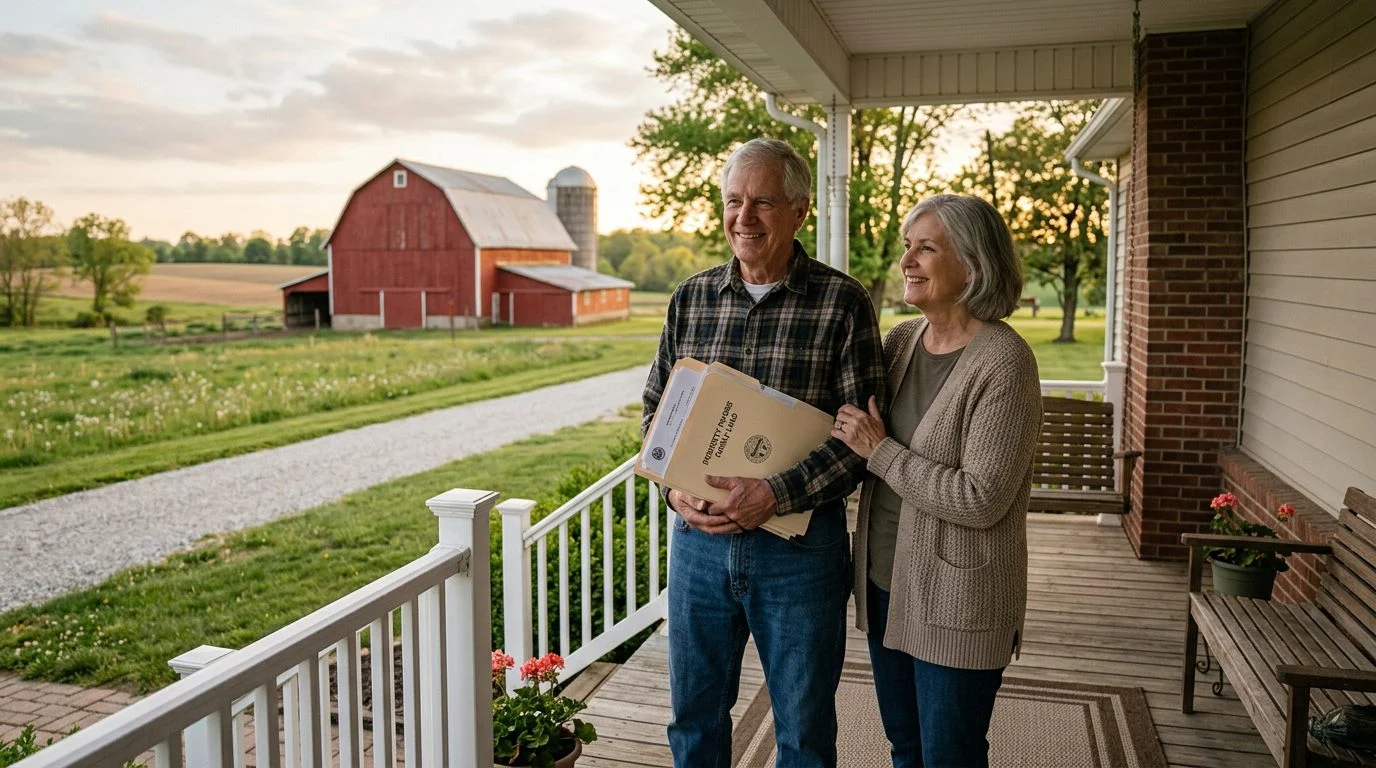
For example, imagine Walt and Ruth, a couple in their early seventies in Perry County. They have lived in the same farmhouse for four decades, with a parcel of family land behind it. Most of what they own is tied up in the house and the land. When Ruth’s memory began to slip, they worried about a nursing home bill and whether their children would have to sell the land to pay it. They chose to plan now, before a crisis forced a decision, and a review helped them see their options. Every family’s facts are different, so the results of any plan depend on those facts.
Like many couples, you may want to protect what you built, stay in control of your own decisions, and pass the home and land to your children without a fight over who gets what.
If your home and family land are most of what you own, you do not have to plan alone; reach out to our team for a free discovery call. Talk it through with Jarvis Law Office — the first discovery call is free, confidential, and carries no obligation.
What the review covers: your home, your land and your savings
The review covers everything you own, how each asset is titled, and who would receive it. We look at four parts:
- Your home: how the deed names you and your spouse.
- Your land: the parcel’s size, how it is used and what it is worth.
- Your savings: bank, retirement and investment accounts, and who is named on each.
- Your health picture: each spouse’s health, and what the spouse at home would need over time.
Land can change the planning conversation. If the parcel is farmed, the Ohio Department of Agriculture explains that its Current Agricultural Use Value program gives relief on farmland property taxes, so we check whether it applies.
Every plan we prepare includes a general durable power of attorney for finances, a health care power of attorney, a living will and a HIPAA release. Our financial power of attorney is one of the key asset-protection tools in our planning, because it lets someone you trust manage money if you cannot.
How Ohio Medicaid can help pay for care, and what it means for your home
Ohio Medicaid can help pay for nursing home care, many assisted living and memory care settings, and care at home. Not every setting accepts Medicaid, so the details matter.
Many couples want to stay home longer, and that is possible. A move to a care setting later stays an option.
For 2026, Ohio’s home equity limit is $752,000, and it rises every January.
The home equity limit does not apply to an individual when that individual’s spouse is lawfully residing in the home (Ohio Adm.Code 5160:1-6-02.1).
That rule is why we ask early who lives in the home.
Here is how that works:
The details and exceptions are something we will walk through with you on your free discovery call.
Planning can often help protect the home and land from that claim. Estate recovery is a separate question from probate, so we look at both.
How planning can keep the home and land with your children, outside probate
Careful planning, with the right documents and assets titled to match, is what can help a family skip probate later. Probate can be expensive, drawn out and stressful for a family that is grieving, and you may want to spare your children that strain.
Careful planning, with the right documents and your assets titled to match the plan, is what can help a family avoid probate later. The American College of Trust and Estate Counsel explains how this works.
Timing matters. Planning that starts well before care is needed gives you the most room to choose. Even when care is needed sooner, a significant part of the spending can often still be protected, and options can remain open well before everything has been spent. For the spouse who stays home, planning can often help that person stay in the house and remain financially secure, and we will walk through how that could apply to your family’s situation.
How the process works, step by step
Our process starts with a free discovery call and moves through planning, documents and ongoing guidance. Here is what to expect:
- Free discovery call. It is confidential and carries no obligation to continue. We hear your situation and the questions on your mind.
- Review meeting. We go over your home, land, savings, titles and health picture together.
- Strategy meeting. You choose a plan, and we explain each option’s pros and cons in plain words.
- Plan documents. We set up the documents for both spouses.
- Assets titled to match. We coordinate deeds, accounts and beneficiaries with the plan. This is more than paperwork.
- Ongoing guidance. We stay with you as health, family and the rules change.
Timing depends on your facts, and we set the pace with you.
Your concerns, answered plainly
Each main worry has a planning response shaped by your own situation.
- Losing the home and land to nursing home costs. This fear drives most planning. We look at what protection could look like for your home and land, as possibilities, not outcomes.
- Not qualifying for Medicaid because of the land. Land beyond the house can count, so we review how your parcel fits your situation before any step.
- Children fighting over the land. Clear titles, clear documents and a shared understanding of the plan lower the chance of disputes. Families still differ, so we help you talk the plan through as a family.
- A costly mistake with the transfer. Timing and form matter when property moves.
A transfer of assets for less than fair market value by an institutionalized individual or his or her spouse, made on or after the look-back date of sixty months (five years) before the baseline date, is presumed improper and results in a restricted Medicaid coverage period, and that presumption can be rebutted (Ohio Adm.Code 5160:1-6-06).
That is why the order of steps matters. We walk through each step with you before any deed or account moves. The exceptions, and how they apply to your land, are details we will walk through with you on the discovery call.
Not sure what your next step is?
Talk it through with Jarvis Law Office — the first discovery call is free, confidential, and carries no obligation.
How Jarvis Law Office helps you
You do not have to carry this alone. Our job is to stay on top of the rules and guide you step by step, from the first conversation through ongoing help.
Our planning work is a flat fee, with no recurring insurance-style fees.
Our Care Navigators can help you find your way through the health care system on your behalf, when you need that help. They are not lawyers and do not give legal advice. The legal planning stays with the firm’s lawyers.
Timothy Jarvis is the lawyer responsible for this page. We have offices in Lancaster, Dublin and St. Clairsville, and we serve families in every Ohio county.
Frequently asked questions
Here are short answers to common questions.
Is this review only for couples already facing nursing home costs?
No. Many couples begin while both are healthy, when planning has more room to work.
Does the home equity limit apply when my spouse still lives in the home?
The home equity limit does not apply to an individual when that individual’s spouse is lawfully residing in the home.
Will our children have to go through probate?
Careful planning, with assets titled to match the plan, is what can help a family skip probate later.
Does our land count the same way as the house?
Land can change the picture, so we review how your parcel counts before any step.
What does the free discovery call involve?
It is a confidential first conversation about your situation, with no obligation to continue.
What if one of us needs care now?
We look at timing first, and options can remain open even when care is needed sooner than planned.

Take the next step with a free discovery call
The next step is a free discovery call with Jarvis Law Office. If your home and family land are most of what you have, and you want them to stay with your children, that call is a good place to start. Tell us about your home, your land and your concerns on a free discovery call. After that call, you decide with us whether to move on to a planning meeting.
What a home and land review looks at
How the home and land are titled
We check who owns the property and how the deed reads, and whether it fits the rest of the plan.
Possible asset protection
Depending on the family's situation, planning may help the home and land stay within reach of the family rather than go to long-term care costs or estate recovery.
Everyone who depends on it
A spouse at home, children who may inherit, and a family member helping with care all have a stake in the plan, and we include them in the conversation.
Care decisions along the way
When care choices come up, our Care Navigators can help your family find a way through the health care system. They help with care, not legal advice.
Planning usually has more room before a crisis
Options tend to be wider before a health emergency forces quick decisions. Our team will walk through what still works for your family at its current stage. The free discovery call is confidential and carries no obligation to continue.
How we help families with a home and land review
We start with your family
The first conversation covers the home, any acreage, the people involved, and what you or your parent hope will happen to them over time.
You choose the plan
At a strategy meeting we explain the options in plain words, so you can decide what fits your family before anything is signed.
The documents are prepared
Every plan includes a general durable power of attorney for finances, a health care power of attorney, a living will and a HIPAA release, along with the planning documents your situation calls for.
Property matched to the plan
We check how the home and land are titled and coordinate them with the plan, which is more than paperwork. We stay available for guidance as your needs change.