
Medicaid and long-term care planning
Wondering whether an irrevocable trust could help protect your home and land?
Take the first step with a team that explains each option in plain words and guides your family one decision at a time.
By Timothy Jarvis · Published November 26, 2026
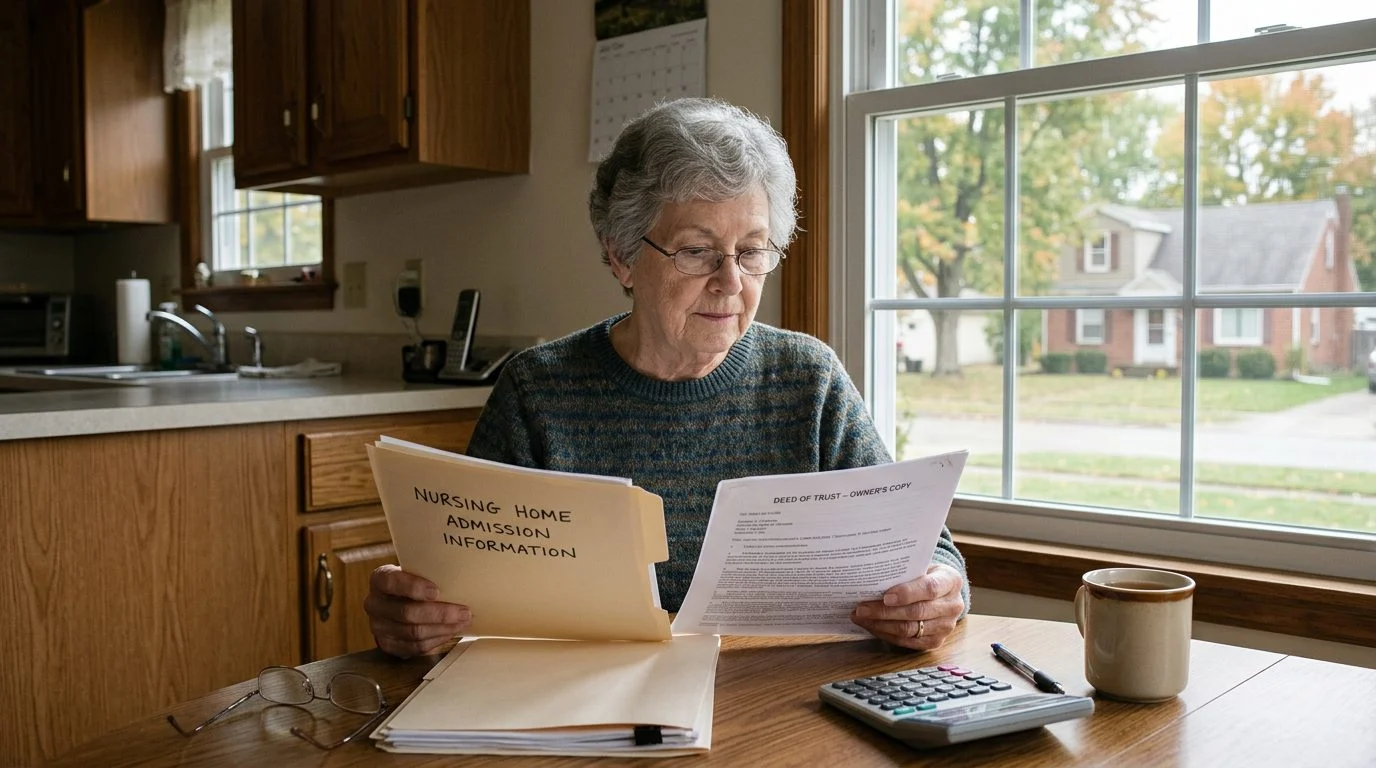
If your home and family land are most of what you own, you may be asking whether an irrevocable trust can keep them from being used to pay for nursing home care. For some families it is a useful tool, but only when it is set up carefully and at the right time.
For example, imagine a couple, Dale and Peggy, in their early 70s outside Chillicothe. Their farmhouse and a parcel of family land are nearly everything they own, and they want both to pass to their two children. They worry that a future nursing home stay could use up what they built. Before either of them needs care, they sit down with a lawyer to see which steps fit their facts. They leave with a clear picture of their choices and a plan they can review as life changes. Every family’s facts are different, so results vary.
What an irrevocable trust is, in plain words
An irrevocable trust is a written arrangement that places property under a trustee’s control for the people you name. You give up direct ownership of that property. Once it is set up, it generally cannot be simply undone, so the choice deserves careful thought before any step is taken.
If you, your spouse or someone acting for you sets up a trust (other than through a will) on or after the look-back date, Medicaid may count assets moved into it without full value in return as an improper transfer, and that can delay coverage. Some kinds of trusts are excluded, and we will walk through those exceptions with you (Ohio’s Medicaid trust rules).
We treat the trust as one tool among several, not the answer for every family.

Who this kind of trust tends to fit
This approach usually fits people who plan before anyone needs nursing home care. Whether your home, your family land or your savings are what you want to pass to your children, planning ahead gives you more control over what happens to them. Timing relative to a future care stay is one of the first facts we review. Your goals matter as much as the rules. For you, the goal may be to keep your home and the family land in the family for your children, and to keep the decisions in your own hands. Planning now can also spare your children from having to make these decisions alone.
What the planning can cover for your home and land
Planning can cover your home, your land, your bank accounts and your other assets. Each one has its own title and beneficiary questions, so each gets its own review. Our plans also include the documents a family needs if a health or money crisis comes: a general durable power of attorney for finances, a health care power of attorney, a living will and a HIPAA release. In our plans, the financial power of attorney is a key asset-protection tool, because a trusted person can then handle money if you cannot. Funding matters as much as drafting. Assets must be titled and coordinated to match the plan, which is more than paperwork. How a parcel of land is treated depends on your facts, and we review it on the discovery call.
How the process works, step by step
The work starts with a free discovery call and moves one step at a time, at the pace your family needs. We first listen to your situation. At a strategy meeting, you choose a plan, and each step is explained in plain words before we take it. We then set up the plan documents, and we fund and coordinate your assets so they match. If paying for care becomes the goal, we walk you through the Medicaid application at that point. Ongoing guidance continues as your needs change. We do not promise a fixed turnaround, because each family moves at its own speed.
Timing: when planning ahead matters most
Planning made well before care is needed gives you the most room to protect your home and savings. The most important thing to know about timing is this.
Medicaid looks back five years from about the time a person is in long-term care and has applied for Medicaid. Giving assets away or selling them below their value during that window is presumed improper and can delay coverage, though there are some exceptions; we will walk through those, and the exact date that applies to you, with you (Ohio’s Medicaid transfer rules).
Planning made early can often protect assets from the spend-down, the savings used first on care, and from estate recovery. Estate recovery is the claim Ohio may make against an estate after a death. Ohio’s estate recovery is generally sought only after the death of a surviving spouse, if there is one, and other conditions apply that we will walk through with you (Ohio’s Medicaid estate recovery rules).
If care is needed now, a significant part of the spend-down amount can often still be protected. Ohio Medicaid can help pay for nursing homes, many (though not all) assisted living and memory care settings, and care at home. Staying home longer is possible, and a later move stays an option. It is not too late to look at your options, because they remain well before all savings are spent. These are possibilities, not promises, and we walk through the look-back and related details in person.
Ohio’s home equity limit and your home
Ohio’s home equity limit is one of the figures Medicaid uses to look at the value of a home. For 2026, Ohio’s home equity limit is $752,000, and it rises every January. In plain terms, the limit shapes how the equity in your home is viewed when eligibility is reviewed. Who lives in the home, how it is titled and what it is worth all shape that review. We look at your numbers together on the discovery call.
Avoiding probate and keeping the children out of disputes
A plan set up and funded correctly can help your family skip probate later. Probate is the court process for settling a person’s estate, and it can be expensive, slow and stressful for a grieving family. Clear written instructions for the home and land can reduce the chance that children disagree about who gets what. No plan removes every disagreement, but clear documents and properly titled assets give your children a roadmap. Getting the planning right now is what makes skipping probate possible later.
How Jarvis Law Office helps, and the care that comes with planning
We guide you through each step, so you do not have to work out the rules alone. Our team keeps track of the rules that apply to your home, your land and your savings, and explains them in plain words as we go. We charge a flat fee with no recurring insurance-style fees, and we explain how it works on the discovery call. Care decisions bring their own complications. Our Care Navigators can help your family find a way through the health care system on your behalf when you need that help. They are not lawyers and do not give legal advice; the legal planning stays with our attorneys. Our offices are in Lancaster, Dublin and St. Clairsville, and we serve families in every Ohio county.
Common questions before you decide
Will an irrevocable trust keep our home safe from nursing home costs?
No plan can promise that. Outcomes turn on each family’s facts, and we explain the limits honestly.
Can we keep living in the house?
Where you live is part of the planning conversation, and we review it with you before any step.
What if one of us needs care before the plan is in place?
The timing section explains that a significant part of the spend-down amount can often still be protected. Each situation is different, so we review it in person.
Do we have to give up control of everything?
Not necessarily: with an irrevocable trust, a trustee you choose, who can be someone you trust such as one of your children, manages what the trust holds, and how much say you keep depends on how the trust is written, which we will talk through with you before anything is signed. In plain words, a trustee manages the trust property, and we review those details with you in person.

Take the next step: book a free discovery call
If you are still researching, you do not need to decide anything yet. You may be looking at this for your own future, and the question may have come up sooner than you expected. The free discovery call is confidential and comes with no obligation to continue. Bring your questions about your home, your land and your goals, and we will take it from there. Book a free discovery call with our team.
What planning can look like for your family
Possibilities, not promises
When planning starts well before care is needed, it can often shield a home and land from the spend-down and from estate recovery. Each family's result depends on its own facts.
Documents that work together
We set up the trust and line up deeds, titles and beneficiary designations so the whole plan fits together.
Staying home longer
Ohio Medicaid can help pay for care at home, and many families want to stay in their home as long as they safely can.
Care Navigators at your side
When your family needs help finding its way through the health care system, our Care Navigators can help on your parent's behalf.
One step at a time
We move at a pace that fits your family, and we explain each choice before you make it.
Know the trade-offs before you act
An irrevocable trust is hard to change once it is funded. Talk through who will control the home and land, and what that means for your parent, before any deed is moved.
You do not have to sort this out alone. Start with a conversation about your parent's home and land.
Related practice areas
- Asset Protection in Ohio
- Asset Protection Planning for the Healthy Spouse in Ohio
- Ohio TOD Affidavit for a House: What It Does and Does Not Do