
Ohio elder law and estate planning | Serving families in every Ohio county
Planning ahead can help protect your parent's home from nursing home costs
You do not have to work out Ohio's rules on your own. Our team guides your family step by step, and a free discovery call is the place to begin.
Where Jarvis Law Office works
3
Ohio offices: Lancaster, Dublin and St. Clairsville
All 88
Ohio counties served from our three offices
By Timothy Jarvis · Published November 27, 2026
Your parent’s house, and the questions you can’t answer yet
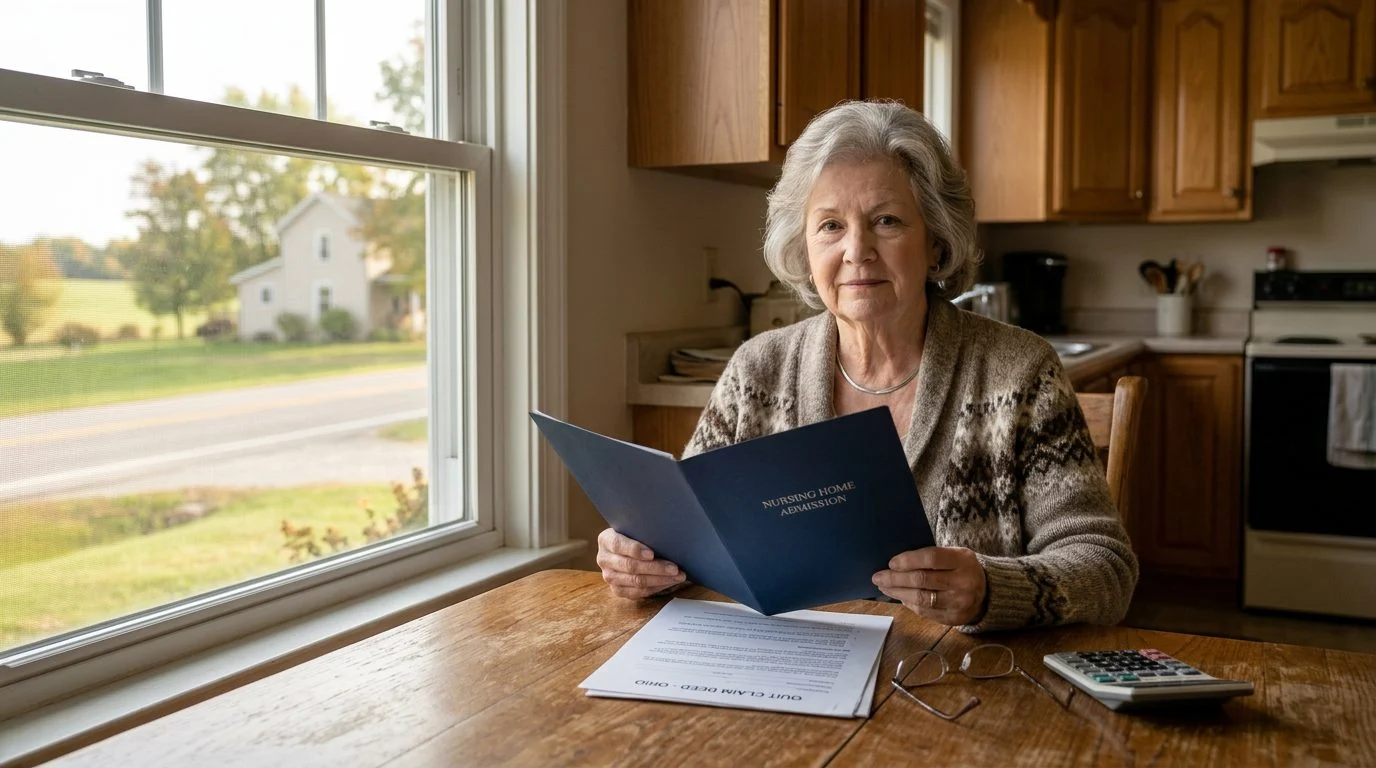
You’re watching a parent slow down, and the home they worked for is now on your mind. You may be asking what happens to that house if a nursing home stay becomes necessary, and whether you could act for them if something goes wrong. Planning done early can often help protect a parent’s house, and the timing matters more than most families expect. This page explains how Ohio looks at a parent’s home when care is paid for, and what you can do now.
You don’t have to work this out alone. Keeping up with the rules is our job, and our team guides families step by step, starting with a conversation. Families in your position usually want the same things: their parent’s wishes written down, the home and savings protected, good care, and no costly mistakes.
For example, imagine Linda, a daughter in Zanesville with two teenagers and a full-time job. Her father, Walt, still lives alone in the house he has owned for decades, and lately he has been missing bills. Linda has no power of attorney on file, and her brother lives hours away and disagrees about what Walt needs. After a short hospital stay ends with a rehab bill, Linda realizes she cannot sign for her father or make any plan. A planning conversation showed her which documents and timing could give her family more choices. Every family’s facts are different, so results will vary.

What a nursing home stay can cost, and what Ohio Medicaid can help pay for
A nursing home stay is usually paid for from your parent’s own income and savings first. Medicaid may help once those funds are used up, but it looks closely at what your parent owns. The money and property your parent holds shape when Medicaid can help, which is why planning should start before the bills do.
Ohio Medicaid can help pay for nursing homes, many (but not all) assisted living and memory care settings, and care at home. Not every facility accepts Medicaid, so ask about a specific setting before you choose it.
Staying home longer is possible, and many families hope for exactly that. If a move becomes necessary later, that option stays open.
How the house is counted, and what estate recovery means for your family
A parent’s home is counted differently from savings, and two rules shape how much it matters: the home equity limit and estate recovery. Here is the home equity rule in plain words.
For 2026, Ohio’s home equity limit is $752,000, and it rises every January.
Your parent’s home value, and who lives in the home, both affect how this rule applies. The look-back is the window Medicaid reviews for past gifts or transfers, so timing matters.
Whether your parent may need Medicaid’s help paying for a nursing home or, in many cases, for care at home, money or property given away or sold for less than it is worth in the five years before they apply for that care can lead to a period when Medicaid will not pay for it. That is why it helps to talk with us before moving savings or the house, and there are exceptions we will walk through with you (Ohio’s Medicaid look-back rule).
Many adult children first hear about it when the house is the main asset left.
The Ohio attorney general may seek repayment of Medicaid benefits correctly paid from the estate of a permanently institutionalized person of any age, or of a person fifty-five or older who is not permanently institutionalized, but only once the individual’s surviving spouse, if any, has died, and only when the individual has no surviving child who is under age twenty-one or blind or permanently and totally disabled (Ohio Adm.Code 5160:1-2-07). For a permanently institutionalized person, the home is also protected from recovery while a spouse or a qualifying child lawfully lives there.
Planning can often reduce this risk, but no plan can promise a particular result. We review the house with you before any decision is made.
What planning can protect before a crisis
Planning done early gives your family the most room to protect the house and savings. Here are the possibilities we see as most important for a family in your position.
- Starting the conversation early gives a family more room to choose, and we can talk through what planning could look like for your parent’s situation.
- If care is needed now, or the look-back would fail, a significant part of the spend-down amount can often still be protected.
- It is not too late in many cases. Options can remain well before everything has been spent.
- If your parent is married and the other spouse is at home, planning can often keep that spouse in the home, financially secure, with quality of life intact.
Each of these depends on your parent’s own facts, and none is a promise. The 2026 federal Medicaid bulletin sets a maximum community spouse resource standard of $162,660, which shows why the spouse’s share matters in planning.
The documents that let you act for your parent in an emergency
Our plans include the documents that let a trusted person act when your parent cannot. In every plan we prepare, we include a general durable power of attorney for finances, a health care power of attorney, a living will and a HIPAA release.
In our plans, the financial power of attorney names a trusted person to help manage money and property if your parent cannot, and it is one of the tools we use to protect a family’s assets. It is also one of the tools our asset planning relies on, which is why we treat it as a priority. In our plans, we include a health care power of attorney and a living will, so your parent’s medical wishes are written down for the family.
The HIPAA release lets doctors and hospitals share health information with the people your parent names. The Ohio Attorney General’s senior resources also cover financial exploitation, which is worth knowing when a parent’s money is handled by family.
Keeping siblings on the same page, and why planning can help skip probate
A written plan that everyone has seen is the simplest way to keep brothers and sisters from arguing in a crisis. When the parent’s wishes are on paper, the family has something to look at instead of guessing.
Probate is the court process for settling an estate. It can be expensive, drawn out and stressful for a family that is already grieving. Careful planning, with the right documents and assets titled and coordinated to match, can let a family skip probate later.
When care decisions come up, our Care Navigators can help your family find a way through the health care system on your parent’s behalf. Care Navigators are not lawyers and do not give legal advice. Their role is to help with the health care side, while we handle the legal planning.
How Jarvis Law Office helps your family plan
We guide your family from the first conversation to a plan that is set up, funded and reviewed as needs change. Our firm focuses on elder law, Medicaid planning and estate planning. The first step is to learn your family’s situation, followed by a strategy meeting to choose a plan that fits your parent’s wishes.
Next, we set up the plan documents, and then we fund and coordinate the assets to match the plan. That second step is more than paperwork, because a plan works only when the titles match it. If your parent needs or may soon need care, we also handle the Medicaid application, and we stay on hand for ongoing guidance as needs change. We work on a flat fee, with no recurring insurance-style fees.
Questions adult children ask before a parent needs care
Can a nursing home take my parent’s house?
The main question is estate recovery after death, and planning can often help reduce that risk. The Ohio attorney general may seek repayment of Medicaid benefits correctly paid from the estate of a permanently institutionalized person of any age, or of a person fifty-five or older who is not permanently institutionalized, and this recovery may be sought only after the surviving spouse has died.
Do I need a power of attorney if my parent is still healthy?
Having one in place before a crisis is easier than creating one in an emergency. Our plans include one.
Does Medicaid pay for every nursing home?
No. Ohio Medicaid can help pay for nursing homes, and for many, but not all, assisted living and memory care settings.
Can my parent keep the house if they move to a nursing home?
It depends on who lives in the home and its value, and planning can often help. Staying home longer is possible for many families.

Take the first step toward a plan your whole family understands
If your parent is still at home, with no plan and no power of attorney yet, you are in the right place to start. A short first conversation can show your family what options exist and which decisions come first.
The free discovery call is confidential and carries no obligation to continue. Bring your parent’s current documents, a list of the house and savings, and the names of the people your parent trusts. Book your free discovery call with our team.
How Jarvis Law Office helps your family
We look at the home early
Our attorneys review your parent's home, savings and income together, so the plan is built around what your family actually owns and what your parent wants.
The right documents in every plan
Our plans include a general durable power of attorney for finances, a health care power of attorney, a living will and a HIPAA release, along with the financial power of attorney that we use as a key tool to protect assets.
Assets set up to match the plan
Planning is more than paperwork. We help make sure the home and accounts are titled and coordinated the way the plan intends, which is also how a family can often avoid probate later.
Care Navigators when you need them
Our Care Navigators can help your family find their way through the health care system on your parent's behalf, from discharge planning to choosing a care setting. They do not give legal advice.
A flat fee and a plain-language conversation
We charge a flat fee for planning, with no recurring insurance-style fees, and we explain each step in plain words so you know what is being decided and why.
Planning before a crisis gives your family more choices
When a nursing home admission happens suddenly, families often have fewer options and less time to think. Many of the choices that help protect a home are easier to make before care is needed, and our team can walk you through what is possible for your situation.
Questions families ask before the bill arrives
Can a nursing home take my parent's house?
Ohio can seek repayment for Medicaid benefits after a death in some situations, which is called estate recovery. Careful planning can often reduce that risk, and we explain how it works for your family.
What if my spouse needs care but I stay home?
The spouse who remains at home often worries about keeping the house and enough income to live on. Planning can often help that spouse stay in the home, financially secure, with quality of life intact.
Where can Medicaid help pay for care?
Ohio Medicaid can help pay for nursing home care and for many assisted living and memory care settings, though not every setting qualifies. It can also help with care at home, and a move later often remains an option.
Is it too late to plan?
Planning is not limited to one moment. Options often remain even when care is already needed, and our team looks at what is still available for your parent's situation.