
Hospital discharge planning · Serving families across Ohio
Facing a Hospital Discharge to a Nursing Home? You Do Not Have to Sort It Out Alone
A discharge date can come sooner than a family expects. We help you sort through the questions, the choices and the paperwork, one step at a time.
By Timothy Jarvis · Published November 14, 2026
Your loved one is in the hospital, and someone just used the words “nursing home.” That news can leave a family scrambling for answers in a hurry.
A hospital can recommend a nursing home or another next step. A recommendation from a hospital or care team is one important voice in the decision, and your family can ask questions about the options before anything is settled. Your loved one’s own voice comes first, followed by the person they have chosen to speak for them.
Can a hospital force a patient into a nursing home? The short answer
A hospital’s discharge recommendation is a starting point, not the final word. The discharge team looks at what your loved one needs to recover safely, and its advice deserves a serious look. Still, the patient and the family are part of the decision.
Medicare can help pay for a short stay in a skilled nursing facility after a qualifying hospital stay. That coverage has eligibility requirements and limits. Medicare.gov skilled nursing coverage explains how the short-term benefit works.
Whether a particular next step fits your loved one depends on their medical needs and your family’s facts. That is why it helps to get the details early. For the wider picture on paying for long-term care in Ohio, see our page on long-term care and memory care planning.
If your parent is in the hospital facing a discharge decision, you don't have to work through every step alone. Reach out for a free discovery call. Talk it through with Jarvis Law Office — the first discovery call is free, confidential, and carries no obligation.

A family’s hospital week, in one example
Families usually see more options when they ask questions early and keep notes on every answer.
For example, imagine a daughter named Karen whose mother, Ruth, is a widow living alone in a small Ohio town. Ruth is admitted with pneumonia, and the staff notice early signs of memory loss. The discharge team says she should not go home alone and suggests a nursing facility. Karen fears her mother will be placed there against her wishes, and the family has no plan in place. Once Karen asks the team for everything in writing, she learns which options are real, who can speak for Ruth, and what each choice would mean. Her brother joins a phone call, and the family stops reacting and starts planning. Every family’s facts are different, and results depend on each family’s own situation.
Karen’s first step was simple. She wrote down the team’s recommendation, the reason behind it, the names of the people she spoke with, and the date. That record helped her compare options without feeling rushed. It also gave her a clear list of what to ask next.
What a hospital discharge plan is, and what to ask for in writing
A discharge plan is the hospital’s recommendation for where your loved one goes next. It might be home with services, a rehab stay or a nursing facility.
You can ask for that recommendation in writing, and you can ask why the team chose it. Good questions are specific. Ask which facilities are being considered, whether they have a bed now, and what each option would cost your family, both now and each month.
Ask whether the team has checked your loved one’s ability to make decisions, and what that check found. Ask who the team should talk to about the plan, and who your loved one wants included.
Write down the answers, the date, and each person’s name and role. Those notes help you compare options. They also show the next team what you have already learned.
A longer stay raises a different question about who pays the nursing home bill. Our page on who is responsible for a parent’s nursing home bill in Ohio covers that in more detail.
Who makes the decision while your loved one can still speak for themselves
While your loved one can take part, their own wishes lead the decision. Your role is to help them understand the options.
Many people in the hospital are tired, scared, or on medicine that makes it hard to think clearly. Speak slowly. Ask the team to explain each option in simple words. Then ask your loved one what matters most to them: home, safety, privacy, their pets, their faith community, or cost.
Their answers are information the team needs. Their choice may not match the family’s plan, and that can be hard to hear. Their voice still carries real weight.
Families often disagree about what is best, and siblings may see the same facts differently. A calm family meeting can help everyone hear the same facts. For more on this, read our page on siblings who disagree about a parent’s care.
When your loved one cannot decide for themselves
When your loved one cannot decide, the documents they signed earlier matter most. A health care power of attorney names the person your loved one trusts to speak for them on medical care.
Ohio’s living will is the document for wishes about life-sustaining treatment. An adult of sound mind may voluntarily sign a declaration about the use, continuation, withholding, or withdrawal of life-sustaining treatment, at any time (R.C. 2133.02).
In our plans, we include a general durable power of attorney for finances, a health care power of attorney, a living will and a HIPAA release. The financial power of attorney is one of the key tools our planning uses to protect a family’s assets, so it is part of every plan we prepare. The HIPAA release helps the people your loved one trusts get the health information they need.
If no documents exist and your loved one has dementia or another condition that affects judgment, the road is harder. A court process may be needed. Before a court appoints a guardian, it must hold a hearing, and the burden of proving that a person is incompetent is clear and convincing evidence (R.C. 2111.02). When establishing a guardianship, the probate court must consider a limited guardianship before establishing a plenary guardianship (Sup.R. 8.34).
Because of that, it helps to talk through the options early, before a crisis forces a fast choice.
Can a family member be forced into guardianship in Ohio?
A probate court may deny a guardianship if it finds that a less restrictive alternative to guardianship exists (R.C. 2111.02). Guardianship is one option to talk through, but it is not the only one.
Do I need a power of attorney before my loved one leaves the hospital?
Having these documents in place early can make the next step less stressful for your family. They let the person your loved one trusts speak for them when it matters most.
Paying for care after the hospital
Ohio Medicaid can help pay for nursing home care. It can also help pay for many, though not all, assisted living and memory care settings, and for care at home.
Medicaid is different from the short post-hospital coverage Medicare may offer. KFF’s nursing facility facts explain how Medicaid helps pay for longer-term nursing facility care.
The CMS nursing home booklet describes how Medicaid covers medically necessary nursing home services.
Many families want to stay home longer, and that can be possible with the right support. A move to a care setting later remains an option.
When cost comes up, the first question is usually what the next setting costs and who pays. The answer depends on your loved one’s care needs, income, assets and the setting itself.
Not sure what your next step is?
Talk it through with Jarvis Law Office — the first discovery call is free, confidential, and carries no obligation.
Planning options that may help protect the home and savings
Planning can sometimes protect part of a family’s home and savings. What is possible depends on the family’s facts and timing.
Planning done well before care is needed can give a family more options, and we can walk you through what those options could look like for your own situation. When care is needed now, a significant part of the spend-down amount can often still be protected.
Options also remain well before a family has spent everything. Where a spouse stays at home, planning can often keep that spouse in the home, financially secure, with quality of life intact.
These are possibilities, not promises. The right path depends on the facts. We work through the details in a conversation, not on a web page.
Feeling torn, guilty or frozen about the decision
Feeling torn or guilty about a nursing home decision is a common reaction to a hard change. It does not mean you have failed your loved one.
It is common to feel guilt when your loved one leaves the hospital for a facility, even when the move is the right step. You may feel frozen, moving from one phone call to the next with no one to explain how it all fits.
You don’t have to figure out every rule yourself. Staying on top of the rules is our job, and we guide families step by step.
Our Care Navigators can also help your family find their way through the health care system on your loved one’s behalf, when that help is needed. The Care Navigators are not lawyers and do not give legal advice. They help with the care side, such as coordinating between providers. Naming the worry out loud, to the team or to each other, often makes the next step clearer.
How Jarvis Law Office helps families through a hospital discharge
We walk families through the process in steps, starting with a first conversation about your loved one’s situation. That conversation is where we learn what is happening at the hospital, who is involved, and what your family needs to understand first.
A strategy meeting follows, where the family chooses a plan. Then we set up the plan documents, including the health care power of attorney, living will and HIPAA release. We also coordinate assets so they match the plan. That step takes more than paperwork. It means titling and coordinating property the way the plan needs.
When a plan is set up and funded correctly, a family can avoid probate later. Probate can be expensive and drawn out for a grieving family. Careful planning can help a family avoid it, though every family’s facts differ.
If Medicaid becomes part of the picture, we handle the Medicaid application when that step applies. Our fee is a flat fee, with no recurring insurance-style fees. Ongoing guidance continues as needs change, so the family does not face the next step alone.

Talk with us before the next decision is made
The next step after a hospital stay is easier to face with a plan and a calm place to start.
You may be standing in a hospital hallway with a stack of papers and a list of questions. Bring the discharge paperwork, the names of the people your loved one has been speaking with, and any documents already signed, such as a health care power of attorney or a will.
Our free discovery call is confidential and carries no obligation to continue. It gives you a calm place to sort out what comes next. Book a free discovery call to talk with us about your family’s situation.
How Jarvis Law Office guides your family
A calm, step-by-step guide
Our attorneys and team walk your family through each decision in plain words, so you know what comes next and why it matters.
Care Navigators when you need them
Our Care Navigators can help your family find a way through a complicated health care system on your parent's behalf. They guide you through care; they do not give legal advice.
Planning ahead for your parent
Documents and savings planned in advance can help keep your parent's wishes at the center and protect what your family has built.
Ongoing help as needs change
A discharge is often the start of a longer road. We stay available as your parent's situation changes, so you are not starting over each time.
Before you sign anything, ask questions
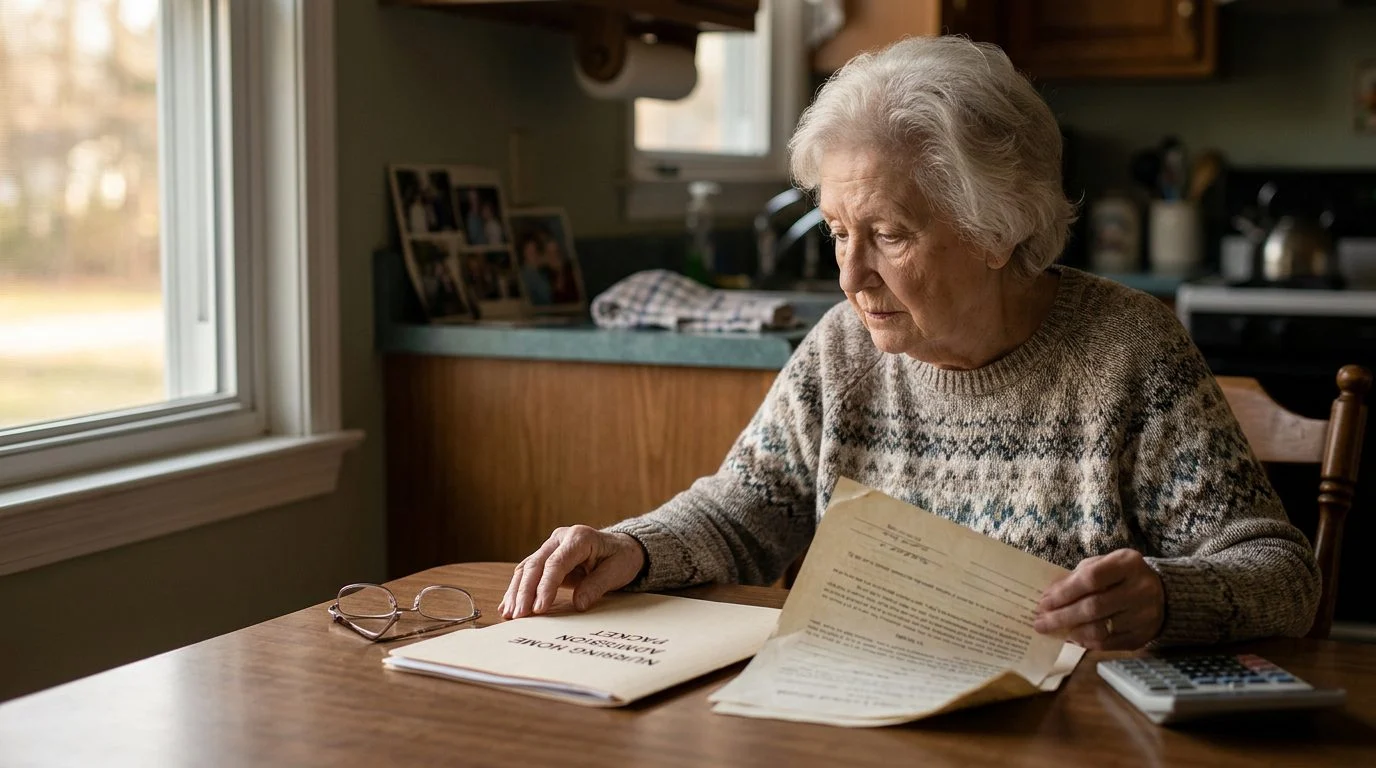
Admission and discharge papers can be hard to read in a stressful moment. Ask what each document means, who is authorized to speak for your parent, and what happens next. Bring the questions to us and we will help you review them.
Questions families ask first
Whose wishes come first?
Your parent's own wishes belong at the center of every decision. Planning made in advance helps make sure those wishes are heard, even when the pressure is high.
Who can speak for your parent?
A financial power of attorney and a health care power of attorney, put in place before a crisis, can make these conversations much smoother for the whole family.
How will care be paid for?
Ohio Medicaid can help pay for many nursing home stays, and planning can often help protect the savings and home a family has worked for. We walk through the options with you.
Is staying home still possible?
Many families want their parent to stay home longer. With the right support in place, that is often possible, and a move later on remains an option.