
Medicaid planning in Ohio
Can My Husband Come Home and Keep Medicaid in Ohio?
Your husband may be ready to come home, and you may be wondering what that means for the bills, the house and your own security. We can walk through it with you one step at a time.
By Timothy Jarvis · Published November 15, 2026
Coming home can be possible, and Ohio Medicaid can still help pay for care at home. Whether your husband’s coverage continues depends on the facts of your family’s situation, and that is the part we work through with you.
Can my husband come home from a nursing home and keep Medicaid in Ohio?
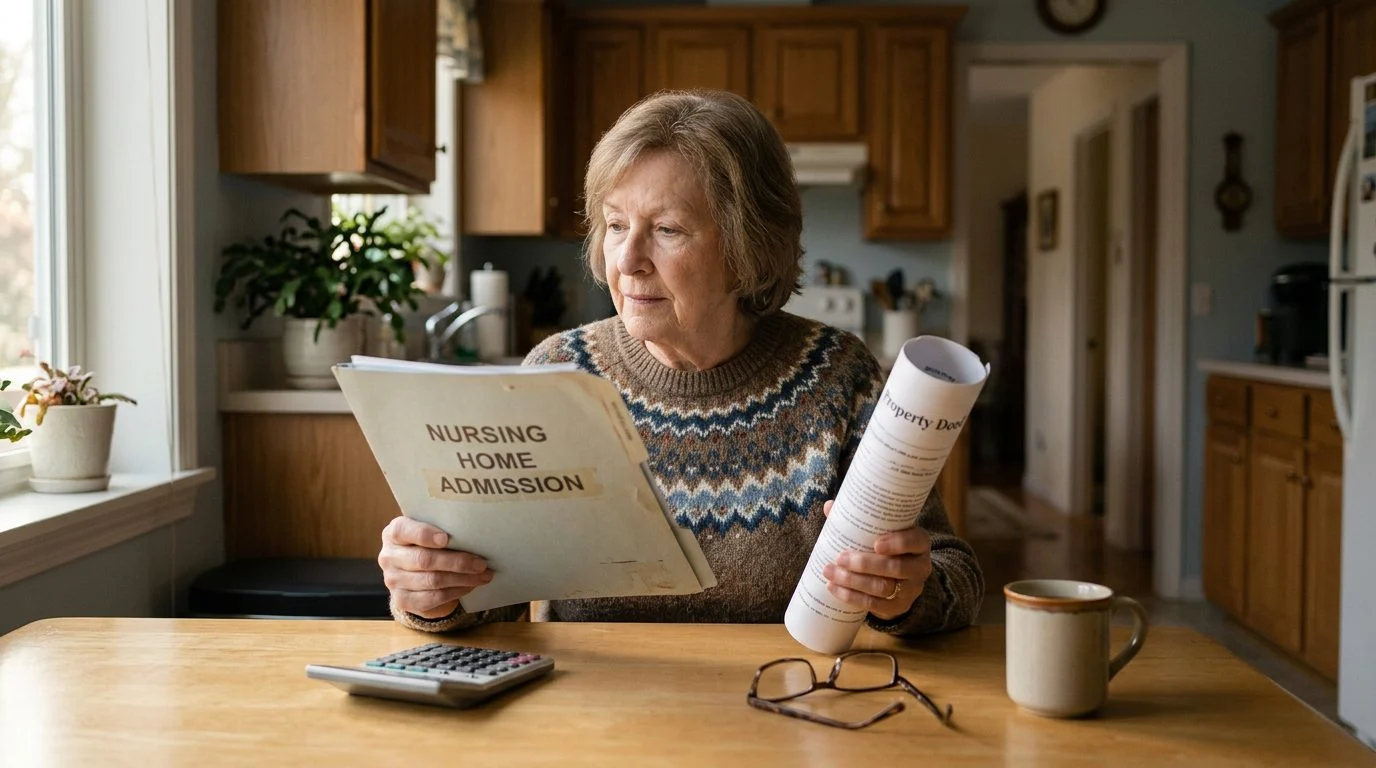
If your husband has moved into a nursing home, you may be at home asking the same questions again and again. Will the savings run out? Will you have enough to live on? Could the house have to be sold? Those are fair worries, and you do not have to answer them alone. The spouse at home has protections worth knowing about, so a return home is not automatically closed off. What matters is how his income, your savings and your house fit the rules today. We focus our practice on elder law and Medicaid planning, and we act as a trusted guide through that process. We look at your family’s full picture, explain each option in plain words, and keep track of the rules as they change. Most spouses in your place want the same few things: his care covered, a home to come back to, and an application that moves forward without costly delays. Those goals are reasonable, and planning is how you pursue them.
If your husband is in a nursing home and you are at home worried about the savings and the house, we can talk through those worries with you on a free discovery call. Talk it through with Jarvis Law Office — the first discovery call is free, confidential, and carries no obligation.

What this can look like for one family
For example, imagine a couple, Ruth and Walt, who live outside Zanesville. Walt’s balance and memory slip over several years until he moves into a nursing home. Ruth stays in their house. She lies awake wondering whether the bills will drain their savings and force her to sell. They meet with our team, which explains what Ruth can keep, how their house is treated, and whether Walt could come home with care later. For Ruth, the biggest relief was seeing each option laid out step by step. Planning could possibly protect part of what they have built, but that turns on their timing, their records and their goals. Every family’s facts are different, and each family’s own situation shapes what is possible.
A family in this position often asks three questions: what the spouse at home keeps, what happens to the house, and what the children may inherit. The sections below take those up one at a time.
How Ohio Medicaid can help pay for care at home
Ohio Medicaid can help pay for nursing home care, many assisted living and memory care settings, and care at home. Not every setting qualifies, so confirm early whether a particular facility participates. Medicare’s guide to nursing home payment notes that Original Medicare generally does not pay for long-term nursing home care. That is why Medicaid is often part of the plan for families in your situation.
Medicaid reviews your husband’s income and your family’s countable assets, because eligibility depends on both. Those numbers are the starting point for every decision we help you make.
Staying home longer is possible for many families, and many prefer it. If care needs change, a move into a facility later remains an option. You do not have to decide everything today.
What the spouse at home can keep
The spouse at home has protections for income and for a share of the couple’s savings. Those protections are the heart of planning for a family like yours.
In any month your spouse is eligible for long-term care services in a medical institution, a home and community-based services waiver, or PACE, none of the at-home spouse’s income is considered available to your spouse (Ohio Adm.Code 5160:1-6-04).
Ask us how this applies to your own income and to your husband’s. Each family’s numbers look different.
The at-home spouse may keep a community spouse resource allowance of the couple’s countable resources, and that allowance is the greatest of several amounts, including one half of the couple’s combined countable resources or the maximum standard, whichever is less (Ohio Adm.Code 5160:1-6-04).
For 2026, the maximum community spouse resource standard is $162,660, according to CMS’s 2026 spousal figures. That figure is set each year, so it is checked against the current year. Your protected share depends on your combined savings and the other rules that apply.
Planning can often keep the spouse at home in the house, financially secure, with quality of life intact. That is a possibility that turns on your family’s own circumstances, not a promise.
What happens to the house
For many couples, the house is the largest asset and the biggest worry. For 2026, Ohio’s home equity limit is $752,000, and it rises every January.
The home equity limit does not apply to a person when that person’s spouse is lawfully living in the home (Ohio Adm.Code 5160:1-6-02.1).
Whether this applies in your family’s case depends on who lives in the home and when. We review that with you, along with the deed and your goals.
Planning can sometimes protect the home from being counted, but the right steps depend on your situation and your timing. We don’t assume a home is safe, and we don’t assume it is lost. We look at the facts first, then build the plan around them.
Estate recovery and what the children may inherit
Many spouses worry about what happens after their husband passes, and that is a fair question to bring to us early.
Ohio does not seek recovery from the estate of a person who received long-term care while that person’s spouse is still living, and the law names other family circumstances that also hold recovery back, which we can walk through with you (Ohio’s estate recovery law).
Planning that starts well before care is needed often gives a family more choices, and what is possible depends on each family’s own situation, which we would review with you.
Careful planning can also help a family avoid a costly, drawn-out probate later. When the right documents are in place and assets are titled to match, many of the steps that lead to probate can be skipped. Helping families do that is part of what we do.
Not sure what your next step is?
Talk it through with Jarvis Law Office — the first discovery call is free, confidential, and carries no obligation.
Mistakes that cause delays or denials
Incomplete applications can slow a process down, so we help you gather what is needed before anything is filed. Moving money or property to a child or a friend without a plan can raise questions that take time to answer. A missed record or an unanswered question can slow an application or send it back for more information.
The exceptions and details are something we walk through with you directly, not something to sort out from articles like this one.
In our plans, we include a general durable financial power of attorney, a health care power of attorney, a living will and a HIPAA release. The financial power of attorney is one of the key tools our planning uses to protect a family’s assets. It also helps keep money decisions moving if your husband cannot sign for himself.
Help with care decisions and the paperwork
Our Care Navigators can help your family find a way through the health care system when that help is needed. They are not lawyers and do not give legal advice, so the legal planning stays with our attorneys.
When a Medicaid application fits your family’s situation, we help prepare it, so the paperwork is complete before it goes in. Our work moves step by step. We start with a first conversation, then meet to choose a plan that fits your family. Next come the plan documents and the work of coordinating assets to match the plan, which takes more than paperwork. We stay with you for ongoing guidance as needs change. Our fee for plan work is a flat fee, with no recurring insurance-style fees. Our offices are in Lancaster, Dublin and St. Clairsville, and we serve families in every Ohio county.
Talk with us about your husband’s care and your home
If your husband is in a nursing home now, you may be sitting at home with the bills, the savings and the house you want to keep. That is a lot to carry alone, and you don’t have to carry it by yourself. We can start with those worries and map out what they mean for your family.
Can Medicaid pay for care at home in Ohio?
Ohio Medicaid can help pay for care at home, and many families prefer staying home longer. Whether it fits your husband’s situation turns on his own needs and records.
Does Medicaid take the house after a nursing home stay?
Planning can sometimes protect the home, but the answer turns on who lives there and on timing. We review those details with you before any step is taken.
How much can the spouse at home keep?
The at-home spouse may keep a community spouse resource allowance of the couple’s countable resources, and that allowance is the greatest of several amounts, including one half of the couple’s combined countable resources or the maximum standard, whichever is less.
If you’re ready to talk through your husband’s care and your home, book a free discovery call. The free discovery call is confidential and carries no obligation to continue.
A first conversation about your husband's situation
We start by listening to what your family is facing: his care needs, what you have saved, and what you want for the years ahead. Nothing is decided on that first call.
Assets organized to match the plan
A plan on paper is only part of the work. We help make sure your accounts and property are titled and coordinated so the plan can do what it is meant to do.
Care Navigators when the health system gets complicated
When your family needs help finding home care, therapy or a path through the health care system, our Care Navigators can guide you. They do not give legal advice; our attorneys do.
Ongoing guidance as needs change
Your husband's needs may change over time. We stay with you so the plan keeps pace, with a flat fee rather than recurring insurance-style charges.
Before you move money or sign anything
Medicaid rules are detailed, and a well-meant transfer or a quick signature can create problems later. Please talk with us before you retitle the house, move savings or sign a form from the nursing home or a bank.
What to bring to your free discovery call
Where he is now
Note where he is living, what care he receives and what the doctors and therapists have recommended.
Your household's money and property
Gather a rough list of savings, accounts, income and the home, including who owns each one.
Existing documents
Bring any wills, trusts, powers of attorney or Medicaid letters you already have, even if you are not sure they are current.
Your questions
Write down what worries you most, whether that is the house, your own income or how to bring him home safely.