
Medicaid planning | Serving families in every Ohio county
Farmland and Medicaid: What Happens to the Land After a Parent's Care Is Paid For
A family farm can carry decades of work and memories. We help you look at the land, the paperwork and your parent's wishes together, one step at a time.
By Timothy Jarvis · Published November 16, 2026
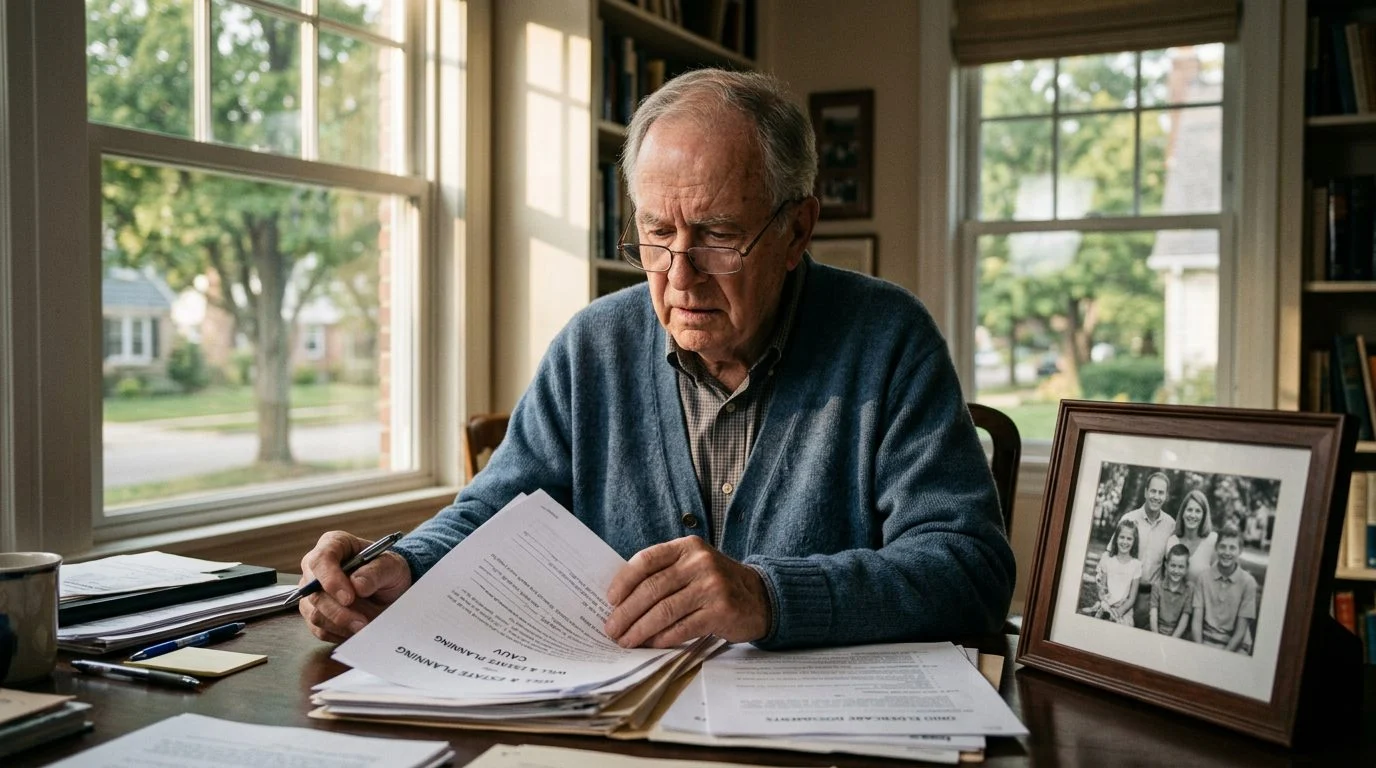
You want your farm and your home to stay in the family. You also want your children to avoid a fight, and you don’t want a future nursing home bill to take it all. Enrolling farmland in CAUV does not, by itself, answer whether that land is protected from Medicaid estate recovery in Ohio.
What decides the answer is how the land is owned and titled, when it changes hands, and how it fits your written plan. You do not have to sort out the farm rules on your own. Keeping on top of them is our job, and we guide you through each step.
For example, imagine a couple, Walt and Ruth Ankney, who farm a few acres outside Circleville. Their savings were small, and the farm and house were nearly all they had. When Ruth’s health began to fail, Walt worried that a nursing home bill could reach the land they wanted their two sons to inherit. The brothers had already started arguing about who would keep the old barn. A planning conversation helped Walt and Ruth see their options, from how the land was titled to when it might change hands. Every family’s facts are different, so results depend on each family’s own situation.
Your question, in your own words: will the land still be yours to pass on?
CAUV is a property tax valuation program for farmland. Enrolling your land is a question about how the land is taxed. It is a separate question from what happens to that land when Medicaid pays for care. Many families assume the two answers are the same, and that assumption is where costly mistakes start. Your home, your farmland and your wishes for the children each need their own look. We’ll sort those pieces out with you, one at a time, so you aren’t left to read the farm rules alone.

What Medicaid estate recovery can reach after care for you or your spouse
Estate recovery is the question that matters most for a home and land. Here is the rule that applies to people your age:
Ohio may seek to recover Medicaid costs paid for a person fifty-five years of age or older who is not permanently institutionalized, from that person’s estate, but not while that person’s spouse is alive (R.C. 5162.21).
Your home and land are likely your largest assets, so this question touches them most. Your children’s roles can matter here too.
Recovery may not be made from a permanently institutionalized person’s home while a son or daughter who provided care that delayed the person’s institutionalization is lawfully living there, if that child lived in the home for at least two years before admission and on a continuous basis since then (R.C. 5162.21).
Advocates at Justice in Aging explain why families often worry about the family home in this program. Ohio’s Attorney General’s estate recovery page describes how the program works.
Why CAUV enrollment alone does not settle the question
Enrollment alone does not settle whether your land is protected from estate recovery. The answer turns on how the land is owned and titled, whether it passes by will, deed or trust, and when it changes hands. Those details shape the answer. Your deed, your recent tax records and your wishes for the children tell the story together. We review them side by side, because one document rarely answers the question alone. The answer depends on your facts, and we’ll explain what they mean in plain words. It helps to gather these papers before we talk. Bring what you have, even if it isn’t complete.
What planning can look like for your land and home
Planning often works best when it starts early, before anyone needs care.
Medicaid looks back sixty months (five years) before the individual’s baseline date, and a transfer of assets for less than fair market value on or after that look-back date is presumed improper (Ohio Adm.Code 5160:1-6-06).
Planning started well before care is needed can often shield assets, depending on your facts. Options often remain well before everything is spent.
Timing matters because moves made in a rush can backfire.
Ohio may, at its sole discretion, waive estate recovery when recovery would cause undue hardship on the individual’s survivors, but no waiver is granted when the hardship was created by estate planning that moved assets to avoid recovery (Ohio Adm.Code 5160:1-2-07).
That is why we plan any transfer slowly and on purpose. Our part is getting that match right.
Keeping the plan in writing so your children know what you want
A written plan tells your children what you want before a crisis. It also tells them who does what.
In every plan we prepare, we include a general durable power of attorney for finances, a health care power of attorney, a living will and a HIPAA release. A strong financial power of attorney is one of the key tools in our planning for protecting your assets.
Writing down who manages the farm, who speaks for you and how the land passes can help ease disagreement between siblings. It gives everyone a map to follow.
Paying for care and staying home longer in Ohio
Ohio Medicaid can help pay for nursing homes, for many but not all assisted living and memory care settings, and for care at home. Staying home longer is possible for many families, and a move to a care setting later remains an option. Ohio Medicaid’s coverage page explains who qualifies and how coverage is renewed each year.
If you want your home in the plan, the home equity limit matters. For 2026, Ohio’s home equity limit is $752,000, and it rises every January.
If one spouse needs care, planning can often help the spouse at home keep the home and stay financially secure, depending on the family’s facts.
How Jarvis Law Office helps you protect the land and the home
You don’t have to do this alone. Our first step is a conversation about your land, your home, your children’s roles and what you want for all of them. At the strategy meeting, you choose a plan, and we explain it in plain words. Our fee is a flat fee, with no recurring insurance-style fees.
Making a plan work takes more than paperwork. We line up titles and assets so they match the plan, and we keep guiding you as your needs change. If care decisions come up, our Care Navigators can help your family find their way through the health care system when that help is needed. Care Navigators guide families through care. They do not give legal advice.
Take the next step toward your plan for the land
The next step is a conversation about what you want for your land and your home. If you are wondering whether your farm and home can pass to your children without probate or disputes, a free discovery call is the place to begin. The free discovery call is confidential and carries no obligation to continue.
Before the call, gather your deed and the most recent property tax notice for the land. When you’re ready, book your free discovery call.
Does enrolling farmland in CAUV protect it from Medicaid estate recovery in Ohio?
Not by itself. CAUV enrollment is a property tax question, and your title and written plan shape the rest.
Does Ohio Medicaid recover from the estate of someone 55 or older?
Ohio may seek to recover Medicaid costs paid for a person fifty-five years of age or older who is not permanently institutionalized, from that person’s estate, but not while that person’s spouse is alive.
Where we start with a family and its farm
Who holds the land today
We begin with how the farm is titled and who owns each piece. That answer often shapes every choice that follows.
Planning before a crisis
Looking at the land while your parent can still take part in the decisions usually leaves more room for choices than waiting until care is urgent.
Keeping the family together
Siblings often see the farm differently. We help everyone understand the options so the conversation stays calm and clear.
Care comes first
When a parent needs care, our Care Navigators can help your family find its way through the health care system, while we handle the legal side.
Do not assume the farm is safe
An arrangement that has worked for years, or a belief that the land is protected, is not the same as a plan. Before you rely on it, have the title and your parent's documents reviewed.
What to bring to your free discovery call
The deed and the land's ownership
Bring what you have on who owns each parcel, including any land held in a name other than your parent's.
Your parent's current plan
A will, trust or power of attorney tells us what your parent has already decided and where the gaps may be.
Where your parent lives and how care is paid
Knowing whether care is at home, in assisted living or in a nursing home helps us see the full picture.
Who will manage the farm
Share who is involved today and who might step in later, so the plan reflects the people who will carry it out.