
Dementia care | Families across Ohio
Time for a Break: Respite Care Options When You Care for a Parent or Spouse with Dementia
You do not have to keep every part of this going alone. Here is how Ohio families look at short breaks, and how planning ahead keeps their choices open.
By Timothy Jarvis · Published November 15, 2026
Respite Care for Dementia Under Medicaid in Ohio
If your spouse has Alzheimer’s or another dementia and you are the one caring for them at home, you may be wondering whether Medicaid can help pay for a break. This guide explains your options and how early planning can protect your home and savings.
Caring for your spouse day after day without a clear next step is a heavy load, and our team can help you sort through your options on a free discovery call. Talk it through with Jarvis Law Office — the first discovery call is free, confidential, and carries no obligation.

Caring for your spouse around the clock is hard to do alone
Respite care is short, planned time when someone else looks after your spouse so you can rest, run errands or see your own doctor. When your spouse needs supervision most of the day, a break can feel out of reach. Many spouses in your position feel worn out, worried about money and unsure when it is time to bring in professional help. Asking these questions does not mean you are failing. Your goals are clear: your spouse safely cared for, some rest for you, the house and savings protected, and the paperwork in place. No plan can promise a particular result, but we can help you work toward these goals one step at a time.
For example, imagine a husband caring for his wife at home
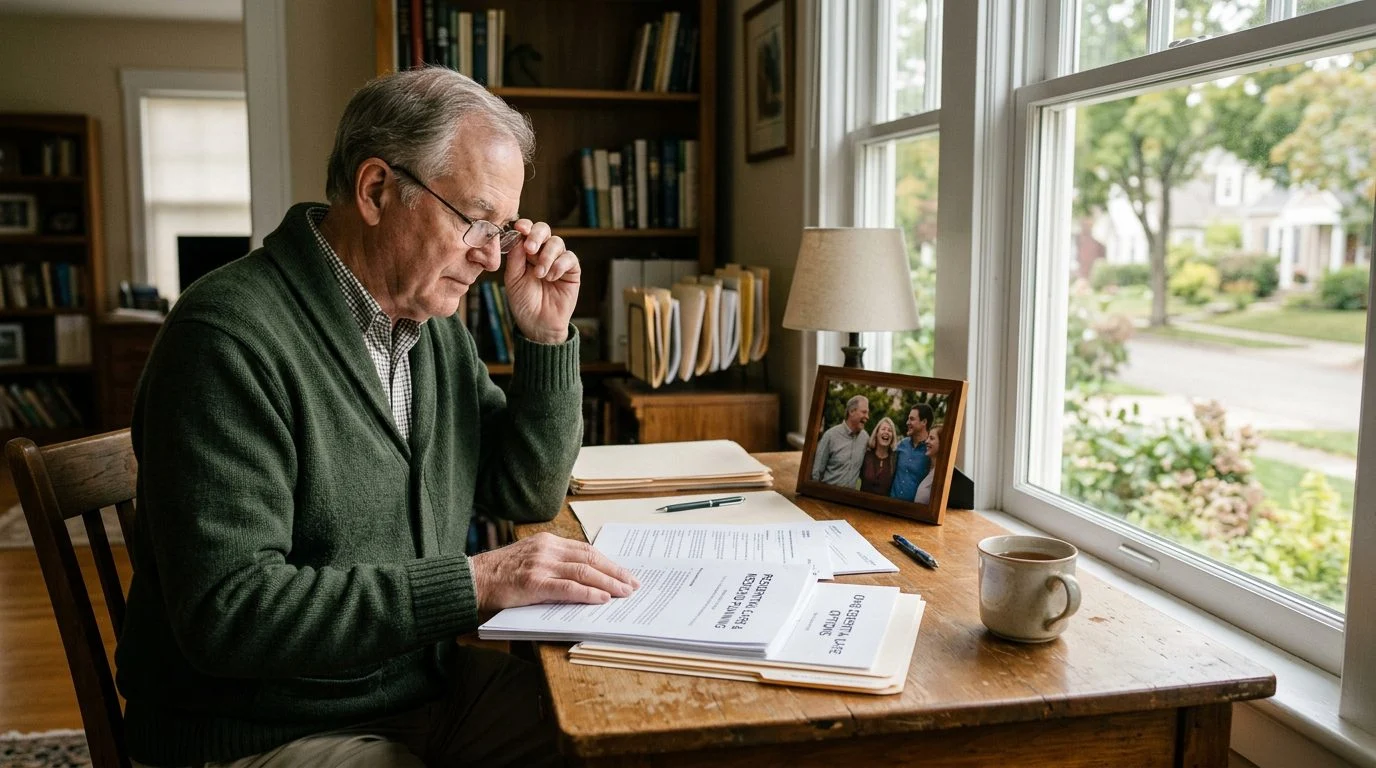
For example, imagine a couple, Walt and Ruth, in a small town in Ohio. Ruth’s memory loss now needs someone close by most hours of the day, and Walt, at 80, is the one providing that care. He worries that his own health is slipping, and he dreads the idea of Ruth in a facility where she might feel forgotten. He also wonders how long their savings would last if care costs began. Walt and Ruth met with a firm that walked them through their choices, including short breaks at home, adult day programs and a plan for a later move if one became necessary. The decisions stayed theirs, made at a pace they could manage. Every family’s facts are different, and results vary with each family’s own situation.
What respite care looks like for a family like yours
Respite care can be a few hours at home, a day program or a short stay in a care setting. Help at home might come from relatives, friends or paid caregivers who learn your spouse’s daily routine. Adult day programs give a person with memory loss a structured day with supervision, while you have time to rest or tend to your own health. A short stay in a care setting gives you a longer break, and it can also show you how your spouse handles a new place. The right mix turns on the time of day your spouse is hardest to manage and how much supervision they need. Care Navigators can help you find your way through the health care system when you need that help. They guide families through care decisions and do not give legal advice, so the legal side is handled by our attorneys.
Can Medicaid help pay for respite care in Ohio?
The state’s PASSPORT program details describe adult day care and respite among PASSPORT’s services for older Ohioans. Medicaid can also help pay for nursing homes, many assisted living and memory care settings, and care at home. Not every assisted living or memory care setting is covered, so the setting matters as much as the program. Your spouse’s own eligibility is one of the first things we review together. Staying home longer is possible for many families, and many prefer it, while a move later stays an option.
When your spouse needs more than a break
Care at home is not always enough, and many families later look at assisted living, memory care or a nursing home. Almost 70% of people turning 65 are likely to need some long-term care, according to the Administration for Community Living. That is one reason early planning helps. A move goes more smoothly when the family has time to visit, compare settings and choose one that feels like home. Isolation and neglect are fears many spouses share. The Ohio Attorney General’s seniors resources cover elder abuse and financial exploitation, and they make a useful checklist when you visit a facility. Estate recovery is a rule to understand before care starts, and it shapes how a family plans for the future.
Medicaid estate recovery cannot be taken from the estate of a permanently institutionalized person while that person’s spouse is alive (R.C. 5162.21).
Not sure what your next step is?
Talk it through with Jarvis Law Office — the first discovery call is free, confidential, and carries no obligation.
Protecting the house and savings while you plan
Planning done early can often protect more of your home and savings than planning after care has already started. Planning done five or more years before care is needed can often shield assets from the spend-down and from estate recovery. When care is needed now, a significant part of the spend-down amount can often still be protected, and options remain well before everything is spent. A common mistake is moving money or deeds in a rush, without advice, and that can work against a family’s plan.
A home that the individual or couple lives in, owns, and considers the principal place of residence can be an excluded resource, as long as the deed is in the name of the individual or spouse, or the home is deeded to a revocable trust while the trust principal remains a resource of the individual or spouse (Ohio Adm.Code 5160:1-3-05.13). For 2026, Ohio’s home equity limit is $752,000, and it rises every January. How the limit applies depends on who lives in the home, and that is something we will walk through with you.
Planning can often also keep the at-home spouse in the home, financially secure and with quality of life intact.
The community spouse may keep a share of the couple’s countable resources, called the community spouse resource allowance, and the institutionalized spouse is resource eligible only if what remains after deducting that allowance from the couple’s countable resources is two thousand dollars or less (Ohio Adm.Code 5160:1-6-04).
Careful planning can also help a family avoid probate later. Probate is expensive, drawn out and stressful for a grieving family, and we explain how a plan set up and funded correctly can help your family skip it.
The paperwork that protects your spouse and you
In our plans, we include a general durable power of attorney for finances, a health care power of attorney, a living will and a HIPAA release. A strong financial power of attorney is also one of the tools our planning uses to protect a family’s assets. Without these papers, a spouse can find it hard to pay bills, deal with the bank or talk with doctors when a loved one with dementia can no longer make those decisions. The health care power of attorney names who speaks for your spouse about medical care. The living will records what your spouse wants at the end of life. The HIPAA release lets doctors and facilities share health information with the person you choose. Each document works best when it matches the rest of the plan, and we walk you through the details during the conversation.
How Jarvis Law Office helps you plan the next step
We start with a first conversation, where we listen to your spouse’s needs and what you want for them and for yourself. Next comes a strategy meeting, where we help you choose a plan that fits your home, your savings and your care goals. We then set up the planning documents and coordinate your assets so the plan works the way it is meant to, which takes more than paperwork. As your spouse’s needs change, we keep guiding you, including the Medicaid application when that is the right step. Care Navigators can help with the health care side when you need that help. We work on a flat fee, with no recurring insurance-style fees.
Take the next step toward a break and a plan
You are caring for your spouse every day and may not yet know what comes next. Our team can talk through your spouse’s situation, the breaks you need and the choices for care and money, and you do not have to work through it alone.
Frequently asked questions
Whether one fits your spouse turns on the program, the setting and eligibility.
Can my spouse keep the home if they need nursing home care?
Often, the home can be an excluded resource when you or your spouse live in it, own it and consider it your principal place of residence, as long as the deed is in your name or your spouse’s name, or the home is in a revocable trust whose principal remains a resource of one of you. It is subject to Ohio’s home equity limit explained above, and how that limit applies depends on who lives in the home, so we will walk through your own situation with you.
Can Care Navigators help with a care decision?
Yes, they can help you find your way through the health care system, though they do not give legal advice.
The free discovery call is confidential and has no obligation to continue. If you would like to talk through your spouse’s situation and your goals, book your free discovery call with our team.
Ways families take a break from dementia caregiving
Help at home
A trained aide or family member can give you a few hours away while your loved one stays in familiar surroundings. Many families start here because routines stay the same.
Adult day programs
Daytime programs offer supervised activities, meals and social time. They give you regular hours to work, rest or handle errands, and they can be a steady part of the week.
A short stay in a care setting
Some families arrange a few days or weeks in a residential setting so the caregiver can recover from illness, travel or simply exhaustion. Options and availability vary by location.
Care Navigators
Our Care Navigators can help you find your way through a fragmented health care system and compare the services available to your family. They do not give legal advice.
Plan before the crisis
A break that seems easy to arrange during a calm week can be much harder during a health emergency. Talking with a lawyer about how care will be paid for and who makes decisions can keep your family from making hard choices under pressure.
How Jarvis Law Office helps
We listen to your family first
Every family's needs are different. We start by understanding your loved one's condition, your own limits and what matters most to your family.
Documents that let others step in
In our plans we include a financial power of attorney, a health care power of attorney, a living will and a HIPAA release, so a trusted person can act when your loved one can no longer decide alone.
Planning for the costs of care
We look at how care might be paid for, including what Ohio Medicaid can help cover in nursing homes, many assisted living and memory care settings, and care at home, and what planning could protect for your household.
Guidance that keeps up with change
Dementia changes over time. We stay with you as needs shift, so the plan keeps pace with your family.