
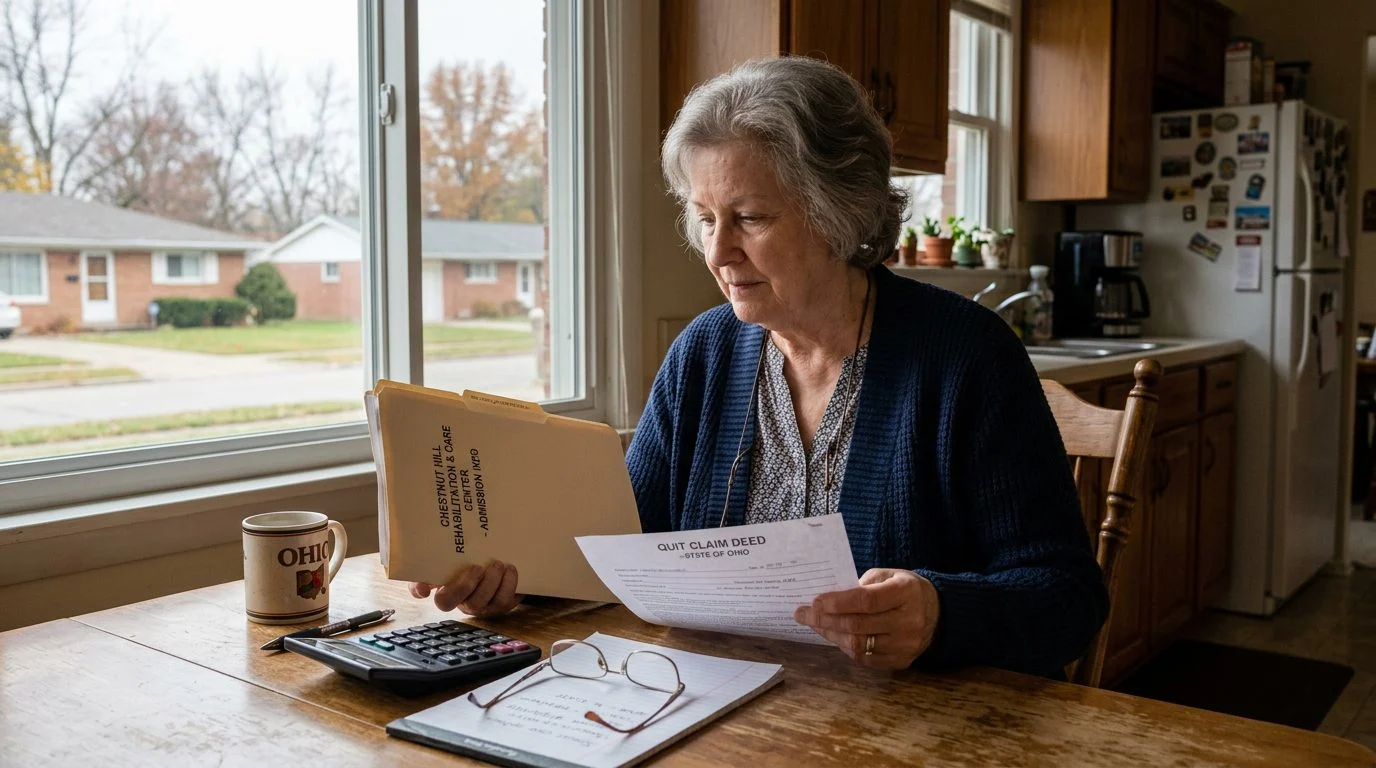
Nursing home planning in Ohio
Deciding when your spouse needs a nursing home? You don't have to work it out alone.
Jarvis Law Office helps Ohio couples weigh care, cost and the home they share, one step at a time.
By Timothy Jarvis · Published November 24, 2026
You may be asking when to move your spouse into professional care because you are the one doing the caring, day and night. There is no single date that fits every family. The right time depends on your loved one’s safety, care needs and what your household can keep up.
Money, paperwork and timing matter too. These decisions are easier to make calmly, before a crisis forces the choice.
Why this decision feels impossible when you are the one doing the caring
If your spouse has Alzheimer’s or dementia, you may be watching them almost every hour. Moving them to professional care can feel like a betrayal, even when you can see the home is no longer enough.
You don’t have to work out every part of this alone. The firm and its team work as a trusted guide, helping families step by step through aging, illness and care decisions. The firm is in Lancaster, Ohio, and serves families in Fairfield, Franklin, Licking, Pickaway, Perry and Hocking counties.
Instead of a calendar date, look at three things: the person’s needs, their safety, and what your family can realistically keep doing. Those answers change over time, and it helps to revisit them.
If you're caring for a spouse with Alzheimer's at home and don't know when or how to make a move, you don't have to work it out alone. The firm can talk it through with you. Talk it through with Jarvis Law Office — the first discovery call is free, confidential, and carries no obligation.

Signs that round-the-clock home care may no longer be safe
Round-the-clock home care may no longer be safe when constant supervision still doesn’t keep your loved one safe. Watch for these warning signs:
- Wandering out of the house or getting lost nearby
- Falls or near-falls at home
- Unsafe cooking, or a stove or water left running
- Missed or doubled doses of medication
- Agitation or aggression you cannot calm
- Needing watching day and night, with no real break for you
Start a simple daily log. Write down what you do each day, when your loved one needs watching, and where the safety gaps are. Bring it to your loved one’s physician and ask for an assessment of care needs.
When the time comes, our Care Navigators can help your family find a path through the health care system on your loved one’s behalf. They are not lawyers and do not give legal advice.
Protecting your own health while you care for your spouse
Your own health is a real reason to change the care plan. Caregiver exhaustion can show up as lost sleep, constant worry, new illness, and pulling away from friends. If your health is failing, the care plan needs a fresh look.
A move to professional care is not a failure of love. For many families, it is how the person stays safe and the family keeps going. Guilt about earlier commitments is normal, and you don’t have to carry it alone.
Respite care can give you a real break. Short stays in a facility and adult day programs let you rest. They also show you what professional care looks like before you make any permanent decision.
Nursing home or memory care: what the choice can look like
A nursing home is a residence with nursing staff for people who need daily medical and personal care. Memory care is a setting built around the routines and safety needs of people with memory loss. Either can fit, depending on what your loved one needs now.
For a person with dementia, daily life often depends on routine, familiar belongings and a calm setting. Ask the setting how it handles those needs:
- How much staff supervision is there during the day and at night?
- What does a typical day look like?
- Can familiar furniture, photos and belongings come along?
- What are the visiting hours, and can family join meals?
- How does the setting respond when needs change?
Nursing home residents have federal protections. Ask the facility to walk you through National Consumer Voice’s residents’ rights and how it applies there.
Visits, a trial day and talks with the care team help you judge whether a setting feels right for your loved one.
What a move can mean for the house and savings
Medicaid counts a couple’s assets, and those assets can shape when Medicaid starts paying for care. Before anything is moved or sold, we look together at what the family owns and what care will cost. It also looks back at past transfers, so giving assets away without advice can affect eligibility.
For 2026, Ohio’s home equity limit is $752,000, and it rises every January. The limit does not apply when your spouse is lawfully living in the home, under the Ohio home equity rule.
The 2026 maximum community spouse resource standard is $162,660, per CMS’s 2026 Medicaid standards. Under the Ohio community spouse rule, either spouse can request a resource calculation at any time, and can request a state hearing if the amount seems insufficient.
For example, imagine a couple, Ray and Lois. Ray needs nursing home care, and Lois wants to stay in their home. With five years or more before care is needed, planning can often protect a family’s assets from both the spend-down and the estate recovery lien. When care is needed now, families can often still protect a significant part of what the rules say must be spent down. Every family’s situation is different, and the outcome depends on its facts.
Ohio’s estate recovery law lets the Medicaid program pursue adjustment or recovery from the estate of a permanently institutionalized person, but not while that person’s spouse is alive. Ohio’s estate recovery rules also protect the home while certain relatives who meet the law’s conditions lawfully live there, such as a brother or sister who lived in the home for at least one year immediately before the nursing home admission and has lived there continuously since; these exceptions are something we can walk through with you.

Paperwork to review before the move, and the next step
Before any move, gather the key papers. These include powers of attorney, wills, trusts, deeds, account statements, insurance policies and benefit letters. Check who is authorized to make decisions and handle money right now.
In our plans, we include a general durable power of attorney for finances, so a trusted person can handle money matters if you cannot. A medical power of attorney is a separate document, as the ACTEC end-of-life checklist explains. Confirm whether these papers still fit your situation.
The firm concentrates its practice in elder law, Medicaid planning and estate planning, including powers of attorney, guardianship and estate matters.
Common questions
When should your spouse move to a nursing home?
There’s no single date. The right time depends on safety, care needs and what you can keep up.
Can I keep the house if my spouse goes into a nursing home in Ohio?
Possibly.
Does Medicare pay for long-term nursing home care?
Medicare’s skilled nursing facility coverage has limits, so many families plan for long-term costs.
If you’re caring for your spouse at home and don’t know when or how to make a move, you don’t have to figure it out alone. Book a free discovery call, which is confidential and carries no obligation to continue.
How we guide your family
Care decisions come first
Whether the next step is home care, assisted living or a nursing home, we help you weigh each choice against what your spouse wants and what your family can realistically manage.
Plans built on sound paperwork
Our plans include a financial power of attorney, a health care power of attorney, a living will and a HIPAA release, so the right person can act if your spouse cannot.
Care Navigators on your side
When the health care system feels fragmented, our Care Navigators can help your family find their way through it. They are not lawyers and do not give legal advice.
Clear answers, no pressure
We explain each option in plain words, so you decide with clear information rather than under the pressure of a sudden hospital stay.
Planning ahead gives you more room to choose
Nothing here means you must act today. It means you can look at your options before a hospital discharge forces the decision.
Questions to talk through with our team
Is the home still safe for your spouse?
Falls, wandering, missed medications and sleepless nights can signal that the home no longer meets your spouse's needs.
Can you keep up with the care?
Your own health, your work and your other responsibilities matter as much as your spouse's needs when you weigh the next step.
What will the choices cost?
We look at income, savings and the home together, so you can see what each option would mean for your household.
What does your spouse want?
Your spouse's wishes belong at the center of the decision, for as long as your spouse is able to share them.