
Medicaid and estate planning | Ohio families
Already have a will and trust? Your plan may still need a Medicaid review.
Documents written years ago were drafted for other rules and another season of life. Here is how to tell whether yours still fit.
3
Ohio offices: Lancaster, Dublin and St. Clairsville
By Timothy Jarvis · Published November 27, 2026
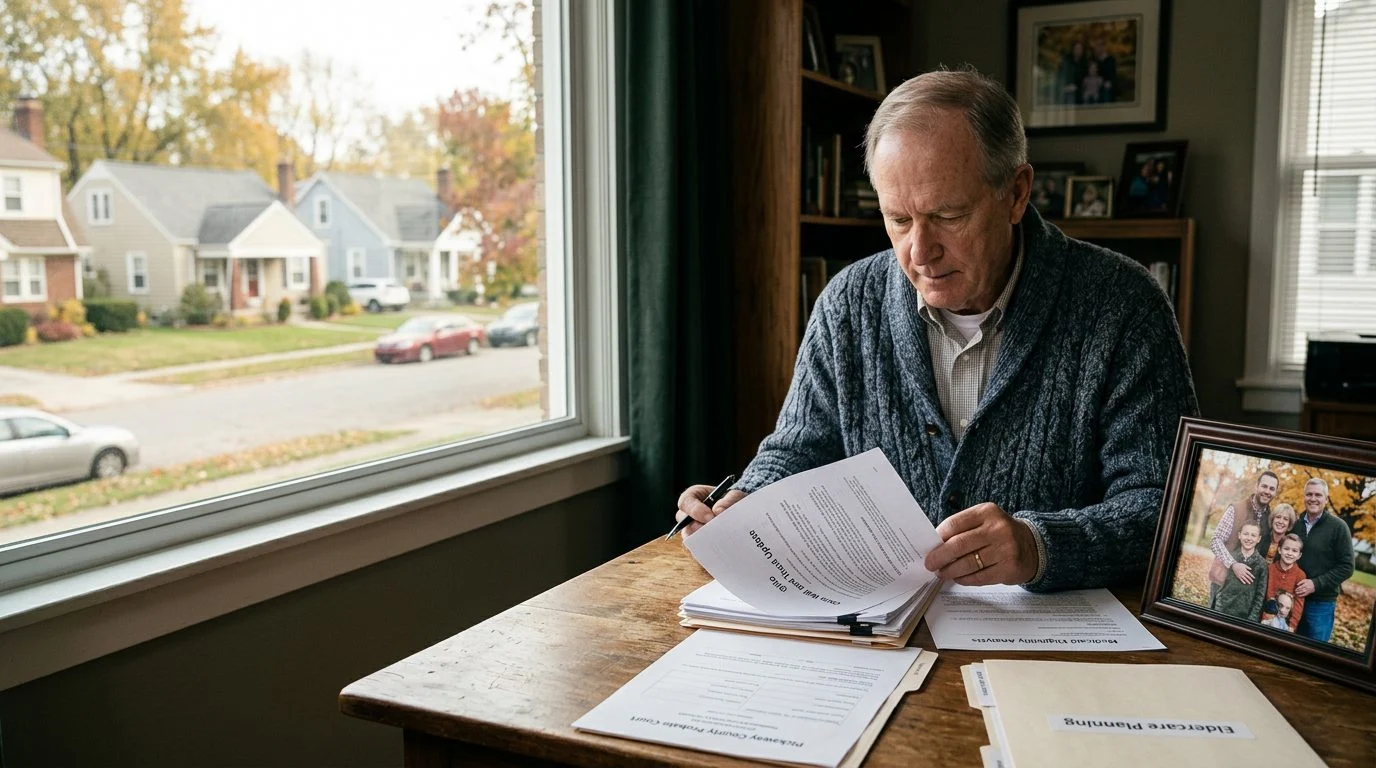
If your parent already has a will and trust, you may wonder whether Medicaid planning still matters. In many cases it does. An existing will and trust is a useful starting point for Medicaid planning in Ohio, but those documents were written to answer a different question than how long-term care gets paid for.
This page explains what your parent’s documents already do, where they may fall short, and why timing and asset titling matter. You do not have to work through these questions alone. Staying on top of the rules is our job, and we guide families through each step.
Why an existing will and trust is a good starting point
Your parent did something responsible by making a will and a trust. Those documents are worth building on, not setting aside.
A will and a trust mainly answer what happens after death: who receives property and who steps in to manage it. Paying for care is a separate question. It asks how the family covers costs while your parent is alive, and which assets Medicaid counts along the way.
You probably want three things: your parent’s wishes honored, the home and savings protected, and a plan the whole family understands before a crisis. An existing plan can be a real head start toward all three.
If your parent already has a will and trust, you do not have to sort out the Medicaid questions alone; our team can review those papers with you on a free discovery call. Talk it through with Jarvis Law Office — the first discovery call is free, confidential, and carries no obligation.

What your parent’s documents already do, and what they may not
A will names who receives your parent’s property and who carries out its wishes. A revocable trust holds assets during life and passes them under the trust’s terms. A successor trustee is the person who steps in to manage the trust when the first trustee can no longer act, or after death.
Those roles are clear, but a trust is not an automatic shield.
For Ohio estate recovery, the estate includes assets in which the person had a legal interest at death, to the extent of that interest, including assets passed to an heir through a living trust, joint tenancy, or survivorship (Ohio’s estate recovery law).
Our team checks these common estate planning pitfalls when we review a plan.
So whether the documents help with nursing home costs depends on how they are written and which assets are really held in the trust. A sound document can still leave gaps. A missing financial power of attorney, or a home not titled the way the plan assumes, are common examples. A review can find each gap before a crisis forces the issue.
Why timing changes what planning can do
Timing matters because of something called the look-back.
Ohio looks back sixty months (five years) before the individual’s baseline date, and a transfer of assets for less than fair market value on or after that look-back date is presumed to be an improper transfer (Ohio’s rules on transfers of assets for Medicaid).
When care is needed now, the picture changes but does not close. A significant part of the spend-down amount can often still be protected, depending on the details of your family’s situation. Options usually remain after a family has waited, so do not assume it is out of time. A review, rather than a guess, shows what is possible for your parent.
What Medicaid planning can add to a plan that already exists
Medicaid planning usually works alongside the will and trust rather than replacing them. Its job is to add a strategy for care costs to what your parent has already done.
Titling is often where a plan needs a second look.
A home the individual lives in and considers the principal place of residence is an excluded resource only if the deed is in the name of the individual, the individual’s spouse, or the eligible child’s parent, or the home is deeded to a revocable trust while the trust’s principal remains a resource of the individual or spouse (Ohio’s rules on the home for Medicaid eligibility). For 2026, Ohio’s home equity limit is $752,000, and it rises every January.
We review how the home, bank accounts and other assets are titled. We also check whether beneficiary designations match the plan and whether the trust actually holds the assets the plan assumes. Each piece either supports the plan or needs attention.
For a married parent, planning can often keep the spouse at home financially secure, with the home still in the family and daily quality of life intact.
Paying for care: where Ohio Medicaid can help
Ohio Medicaid can help pay for nursing home care, for many (though not all) assisted living and memory care settings, and for care at home. You can read the basics on Ohio Medicaid eligibility rules. Federal rules for seniors also ask for documentation of financial resources, as KFF’s facts on senior Medicaid explains.
Staying home longer is possible for many families, and a later move to a care setting remains an option. When care decisions come up, our Care Navigators can help your family on your parent’s behalf as they work through the health care system. Care Navigators are not lawyers and do not give legal advice; our attorneys handle the legal planning.
Example: a son and his father’s plan
For example, imagine a son, Greg, and his father, Walt, in Chillicothe. Walt made a will and a trust years ago, but he never signed a financial power of attorney. When Walt began missing bills and needed help at home, Greg had no legal authority to pay them, and his brother and sister disagreed about what came next. A review helped the family see what Walt already had, which gaps to fill, and which Medicaid options might matter if care moved into a facility. Every family’s facts are different, so results vary, and this story is only an illustration.
Not sure what your next step is?
Talk it through with Jarvis Law Office — the first discovery call is free, confidential, and carries no obligation.
How Jarvis Law Office helps your family
Our work starts with a conversation, and your family does not have to face it alone. In that first conversation we learn what your parent has, what your family worries about and what your parent wants. Timothy Jarvis is the attorney responsible for this page’s content, and our team reviews the existing will and trust along with beneficiary designations and deeds.
A strategy meeting lets the family choose a plan. We then set up the documents and fund the assets so they match that plan, which takes more than paperwork. Our plans include a general durable power of attorney for finances, a health care power of attorney, a living will and a HIPAA release. In our planning, a strong financial power of attorney is a key tool for protecting assets.
Careful planning, with the right documents and assets titled to match, can also help a family avoid probate later. Probate is expensive, drawn out and stressful for a grieving family. Our fee is a flat fee with no recurring insurance-style fees, and we keep guiding your family as needs change.
Frequently asked questions
Does a will and trust stop Medicaid from counting my parent’s assets?
Not automatically. How the documents are written and how assets are titled decide much of it, and we review both with you.
Do we need to replace our parent’s trust?
Many existing plans can be coordinated rather than replaced. We look at what is already in place before suggesting any change.
Is it too late if my parent is already in a nursing home?
Options often remain even after care has started. A review shows what is possible for your parent, and we walk through any exceptions with you.
Do we need a power of attorney if there is already a trust?
They do different jobs. In our plans, a financial power of attorney is one of the tools we use so that a trusted person can help manage bills and banking if your parent can no longer do so.

Take the next step with the firm
If your parent has a will and trust but the bigger questions about care are still open, you are in a good place to start. Preparing for a first planning conversation usually means gathering family details, financial records and existing documents, as preparing for an initial meeting describes. Bring what you have to a free discovery call. The call is confidential and carries no obligation to continue, and we will look at the documents together.
How we look at an existing plan with you
We read what is already signed
We start with your current will, trust and powers of attorney so we know what you have before suggesting anything.
We check how assets are titled
We look at which accounts, deeds and beneficiary forms sit inside it and which sit outside.
We plan around your family's care
Your goals for your spouse, your parent or your children come first. We talk through them in plain words, step by step.
Care Navigators can help along the way
When the health care system feels fragmented, our Care Navigators can help your family find the right support. They do not give legal advice.
Do not assume an older trust is still doing its job
A trust that was set up but never fully funded may not hold the home or the bank accounts you expected. Before you rely on it, check how your assets are titled.
What to bring to your free discovery call
Your current documents
Bring the will, trust, powers of attorney and any health care documents you already have, even if you are not sure they are current.
A list of major assets
Note your home, bank and investment accounts, and any life insurance or retirement accounts with named beneficiaries.
Your family's situation
Tell us who is involved, whether a spouse or parent needs care now, and what you hope to protect for the people you love.
Your questions
Write down what worries you most. We will walk through each question with you, and we will explain the rules that matter for your decisions.