
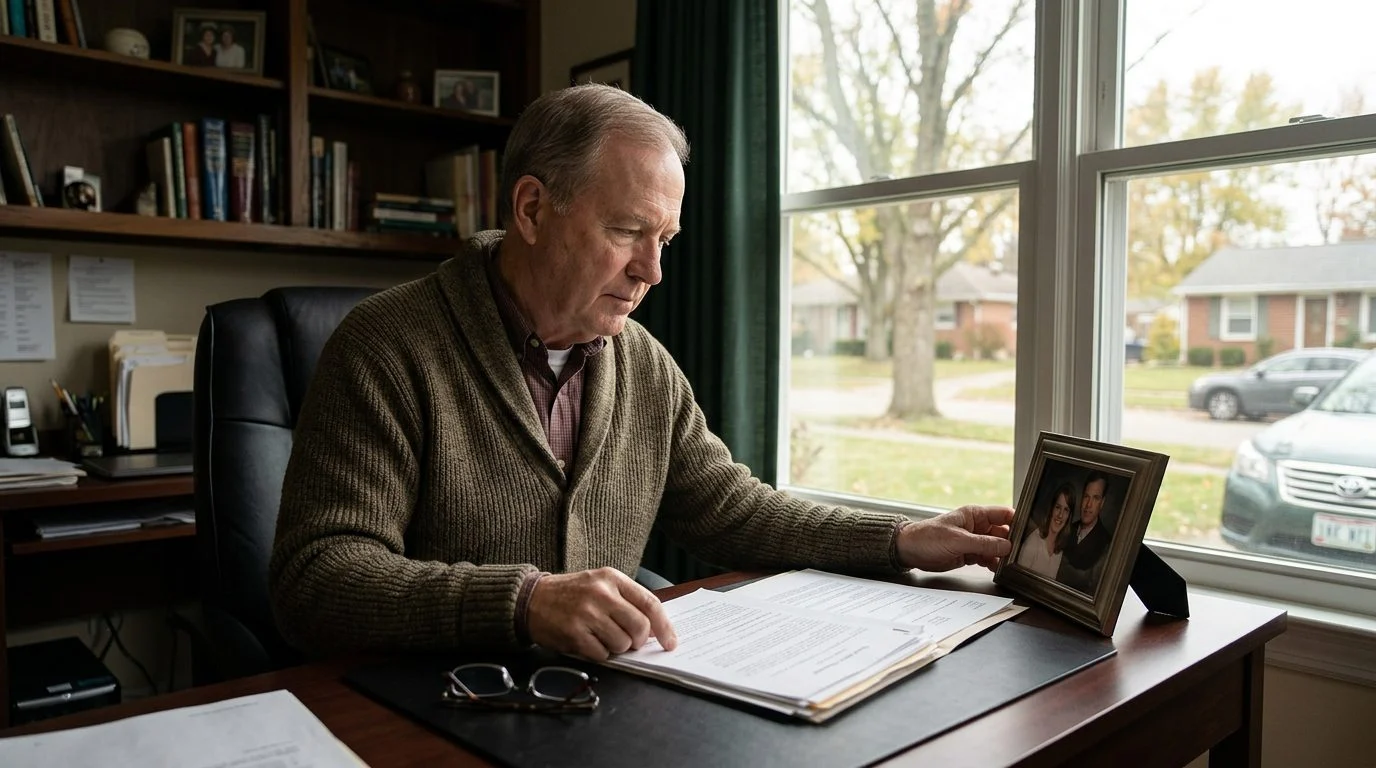
Medicaid planning for Ohio families
Medicaid Planning for a Spouse Caring for Dementia at Home
You do not have to work out the bills, the rules and the timing alone. We guide you through each step, at a pace you can manage.
Serving Ohio families from three offices
3
Offices in Lancaster, Dublin and St. Clairsville
Every county
We serve families throughout Ohio
By Timothy Jarvis · Published November 19, 2026
If your spouse has dementia and you are now the one caring for them at home, you may not know when or how to move them to professional care. Medicaid planning can help a caregiving spouse protect the home and savings while the person you love gets the care they need.
Caring for your spouse at home: where you stand
Caring for a spouse with dementia at home is hard, and you do not have to decide the next step by yourself.
Spouses in your position often share four worries:
- a loved one who is isolated or neglected in a facility
- their own health failing under caregiver strain
- savings used up with nothing left for the children
- one paperwork mistake that costs Medicaid eligibility
Those worries make sense, and you do not have to answer them alone. Keeping on top of Ohio’s rules is the firm’s job, and our team guides your family step by step. The Alzheimer’s Association Ohio caregiver data describes the physical and mental health strain dementia caregivers can face, so your own health belongs in the plan. This page speaks to what you want: a safe, familiar setting for your spouse, time to rest, a protected home and savings, and the paperwork in place. We cannot tell you how your family’s story will end, but careful planning can move you toward those goals.
If you are weighing when and how to move your spouse to professional care, you do not have to work it out alone; book a free discovery call and we will walk through your home, savings and documents with you. Talk it through with Jarvis Law Office — the first discovery call is free, confidential, and carries no obligation.
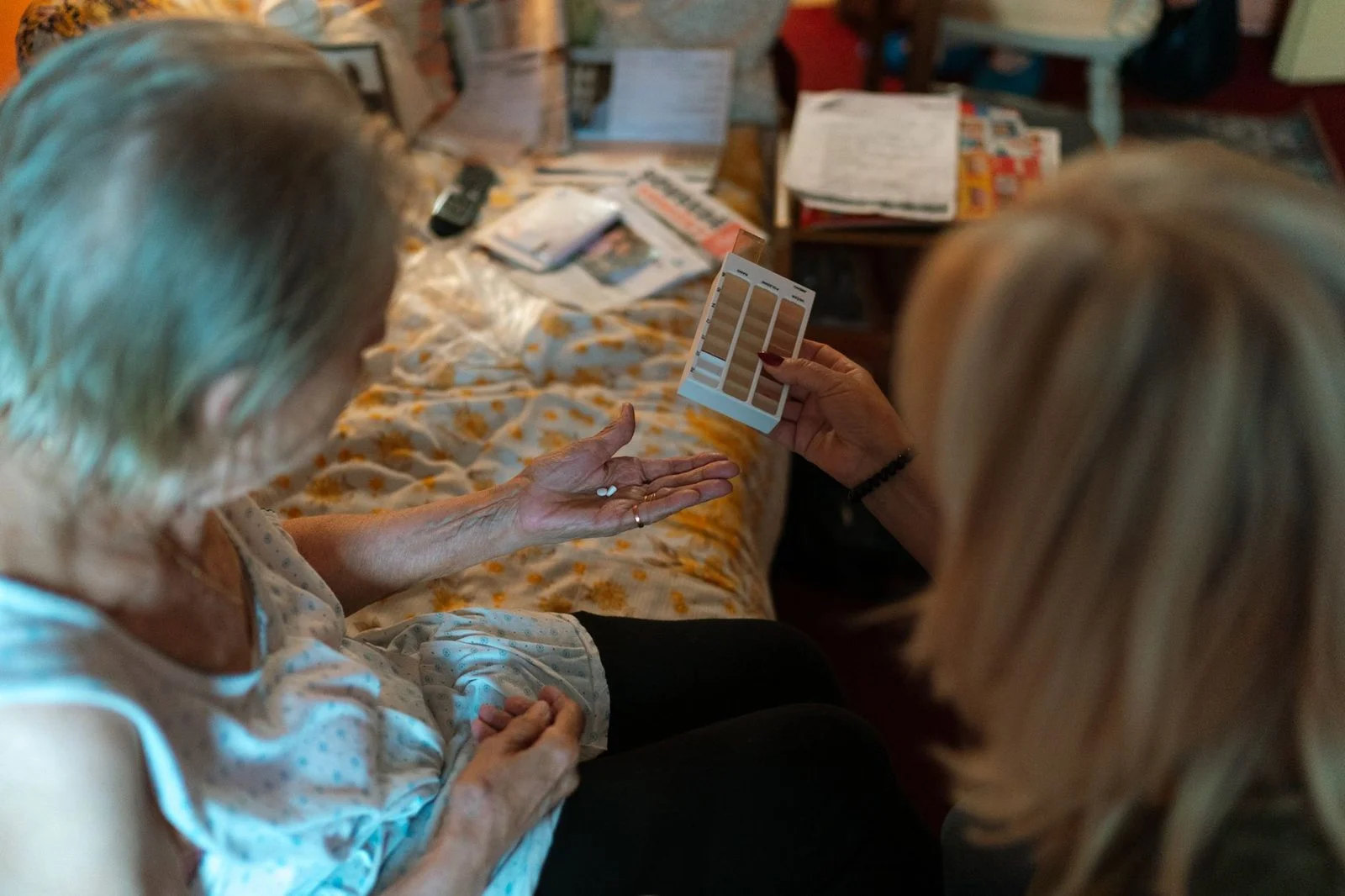
For example, imagine a couple in Hocking County
Here is one way planning can look for a caregiving spouse.
For example, imagine a couple, Ray and Dolores, in a small town in Hocking County. Ray has cared for Dolores at home since her dementia made it unsafe for her to be alone for long. He is worn out, his own health has started to slip, and he wonders whether a nursing home would frighten her. He fears the savings will vanish and the children will inherit nothing. When they meet with the firm, they learn what Medicaid can help pay for and how the rules protect the spouse who stays home. They see that care at home can continue for now, and that a move remains possible later. They take the next steps at their own pace, together.
Every family’s facts are different, so your own path will look different too.
What this planning covers and who it is for
This planning covers your money, your home, the timing of any care move and the documents that support them. We start with the whole picture: your income, savings, home and other property, and how each is titled. We explain how Medicaid counts them, plan the timing of any move to a care setting, and prepare the documents the plan needs.
Every plan we prepare includes a general durable power of attorney for finances, a health care power of attorney, a living will and a HIPAA release. In our plans, a strong financial power of attorney is one of the tools we use to protect your family’s assets. It names a trusted person to handle money matters if you cannot.
This planning fits a spouse who is at home now, a couple expecting a move to care soon, and a couple who wants to prepare before care is needed.
Where Ohio Medicaid can help pay for your spouse’s care
Ohio Medicaid can help pay for nursing home care, many assisted living and memory care settings, and care at home. Not every facility accepts Medicaid, so ask each setting how it works with Medicaid residents before you decide. The Ohio Medicaid nursing facility benefits page explains how income and a personal needs allowance shape the cost of nursing home care.
Staying home longer is possible, and many families prefer it. The Administration for Community Living guide describes how much long-term care people may need and where it is provided. A move to a care setting later remains an option, so the timing can be taken one step at a time. The timing and the setting are decisions you make with our help.
Care Navigators can help with the care side. They help families find their way through a complicated health care system on the family’s behalf, including care decisions, home care and respite questions. They are not lawyers and do not give legal advice, so the legal side stays with the firm.
How planning can protect your home and savings
Planning can often help the spouse at home keep the house and enough savings to live on, though how this works depends on your family’s facts. When one spouse needs long-term care paid by Medicaid in a medical institution, a home and community-based services waiver, or PACE, and the Medicaid resource limit applies, Medicaid first deducts the community spouse resource allowance (CSRA) that the spouse at home is allowed to keep from the couple’s combined countable resources.
The community spouse may keep a share of the couple’s countable resources, called the community spouse resource allowance, and that allowance is the greatest of several amounts set by Ohio’s rule (Ohio Adm.Code 5160:1-6-04).
For 2026, the maximum community spouse resource standard is $162,660, according to CMS guidance. Planning starts by working out where your couple stands against those figures. Ohio’s home rules are a major part of this picture.
Other situations also keep the home excluded, and we will walk through them with you (Ohio’s Medicaid rule on the home).
Here is the current limit for a couple planning ahead:
For 2026, Ohio’s home equity limit is $752,000, and it rises every January.
Estate recovery is the other piece families ask about.
Ohio will not seek estate recovery from the estate of a permanently institutionalized person while that person’s spouse is still alive (R.C. 5162.21).
How much planning can protect depends on each family’s own facts, and we will go through those facts with you, step by step. When care is needed now, we will look at which options are still open for your family’s situation, and that conversation is a good place to start. A costly mistake is moving or giving away assets without advice, or signing papers that do not match the plan. We walk through the look-back details and their exceptions on the free discovery call.
How the planning process works, step by step
Planning with us moves through six steps, from the first conversation to ongoing help. We start with a first conversation to understand your family’s situation. At a strategy meeting, we choose a plan together. Then we set up the plan documents, and we fund and coordinate your assets so they match the plan, which takes more than paperwork. If care is involved, we prepare the Medicaid application. Ongoing guidance continues as your needs change.
Each step builds on the one before, so you always know what comes next. We move at a pace that fits your family. For a caregiving spouse, the early steps usually focus on the home, the savings and the documents, so care stays the priority.
Not sure what your next step is?
Talk it through with Jarvis Law Office — the first discovery call is free, confidential, and carries no obligation.
Common questions from caregiving spouses
These are questions a caregiving spouse may ask, with short answers.
Will I have to sell the house to pay for my spouse’s care?
Planning can often help you keep the home, and we look at your own details first.
Can I keep caring for my spouse at home and still get help?
Yes, staying home longer is possible, and Care Navigators can help you find home care and respite support.
What happens if we wait?
Options often remain, and planning that starts sooner can open more choices.
Does planning help my family avoid probate?
A plan set up and funded correctly, with the right documents and assets titled to match, can help a family skip probate later. Probate is the court process for settling a person’s estate.
What should I bring to the free discovery call?
Bring basic facts about your income, savings and home, plus any documents you have already signed. We will guide you through anything else that matters.

How Jarvis Law Office helps you and the next step
Jarvis Law Office concentrates its practice in elder law, Medicaid planning and estate planning. We serve families in every Ohio county from our offices in Lancaster, Dublin and St. Clairsville. We aim to be a trusted guide through the aging process, walking with you step by step. You do not have to figure this out yourself, and our team keeps track of the rules so you don’t have to. Our Care Navigators can also help with the health care side when you need them.
The first discovery call is free, confidential and carries no obligation to continue.
If you are weighing when and how to move your spouse to professional care, book a free discovery call and we will talk through your home, savings and documents together.
Why spouses at home come to us
Protect what you built together
We look at your home, savings and income so you can see what planning may help you keep.
Keep your spouse's wishes at the center
The care plan starts with what your spouse wants and what you can sustain at home.
A flat fee, not recurring fees
You will know the cost of your plan up front, with no insurance-style fees that keep coming.
Help as your needs change
Care needs shift over time, and we stay available to guide you through each change.
Talk with us before you move money or property
Giving away the house, moving savings into a child's name or retitling accounts can change what Medicaid counts. Please call us first so we can walk through your options before you make a move.
Questions to bring to your free discovery call
Can we keep the house?
Bring your deed and recent property details. We will look at how Ohio's home equity rules apply to your home.
What can the at-home spouse keep?
Bring recent bank and retirement statements and your monthly income so we can look at the figures together.
Who can act if my spouse cannot decide?
We will explain the financial power of attorney and the health care power of attorney in your plan, and who should hold them.