
Ohio Medicaid planning for adult children | Serving families in every Ohio county
Caring for your parent is hard enough. Let us handle the Medicaid rules.
You can stay close to your mother or father while a plan is built around their wishes, their home and their savings.
By Timothy Jarvis · Published November 21, 2026
You’re probably watching a parent slow down while you juggle your own kids and your job. There may be no power of attorney, no plan, and no clear idea how care would be paid for. Medicaid planning answers that worry by getting your parent’s wishes, documents and assets in order while they can still take part.
When your parent starts to slow down, you may be juggling your own children, your job and their needs, and the question of long-term care can come sooner than you expected. Planning ahead gives your family more choices when that time comes.
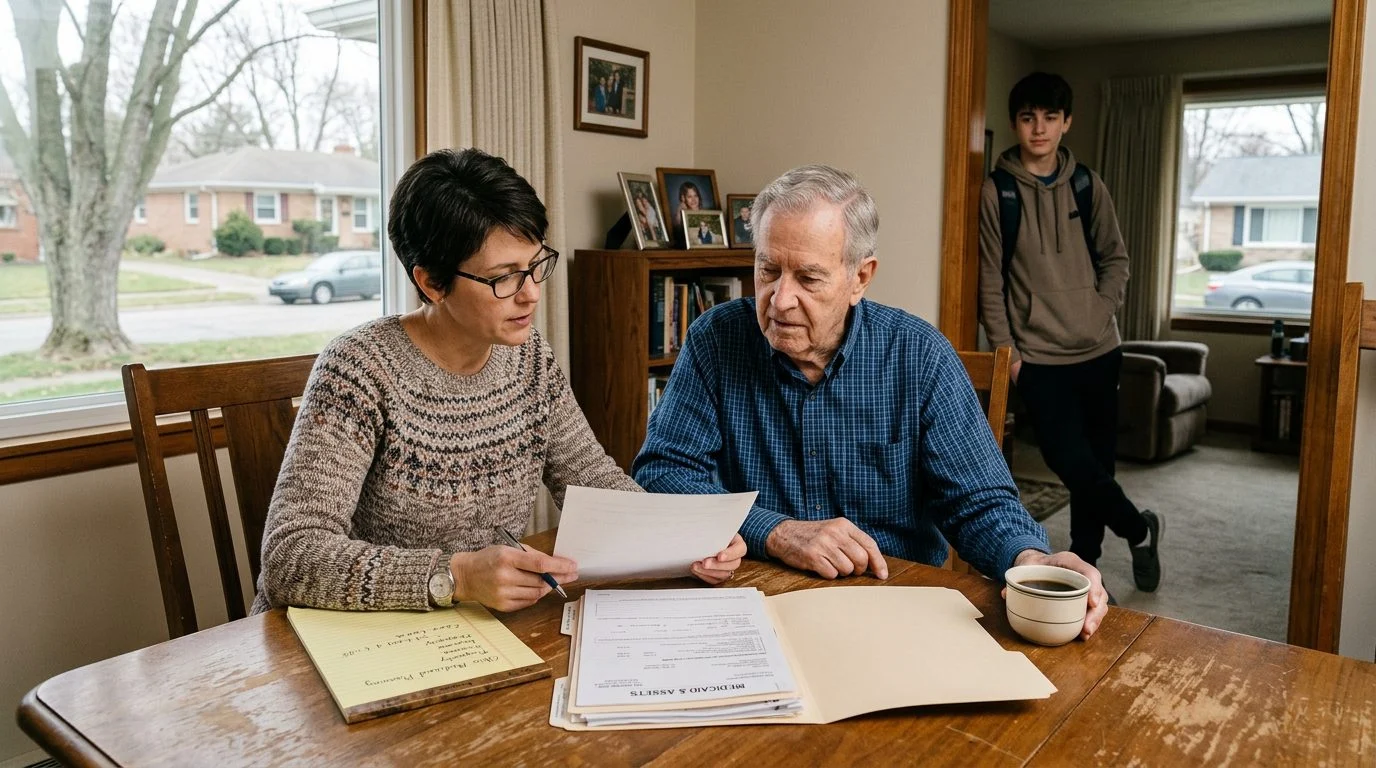
For example, imagine Dana, who works full time in Newark and has two teenagers at home. Her father, Walt, still lives alone, but his memory has started to slip and the bills are piling up. Dana has no power of attorney, so the bank won’t discuss his account with her, and her brother Mark disagrees about what Walt would want. A meeting with a planning attorney helped them see that Walt could still share his wishes and sign documents. Every family’s facts are different, so your family’s results will vary.
Why planning now matters more than planning later
Planning now lets your parent state their wishes and sign documents while they can still make those choices. A crisis moves fast, and the decisions move with it. A hospital stay or a change in memory can make signing anything much harder. Planning first keeps your parent in charge and spares you from guessing what they wanted.
Planning ahead can give your family several things at once: your parent’s wishes written down, the home and savings protected, good care when it’s needed, and a plan everyone understands before a crisis. You don’t have to work out these rules alone. Staying on top of them is our job, and we guide you step by step.
If you're planning for your parent's care while still sorting out their wishes, you don't have to do it alone. Book a free discovery call with our team to talk it through. Talk it through with Jarvis Law Office — the first discovery call is free, confidential, and carries no obligation.

What Medicaid planning covers for your family
Medicaid planning brings the documents, the assets and the care choices into one plan that matches your parent’s wishes. Every plan we prepare includes a general durable financial power of attorney, a health care power of attorney, a living will and a HIPAA release. In Ohio, the health care power of attorney and the living will are the advance directives, the documents that speak for your parent’s medical care. We also review how your parent’s assets are titled and coordinate them with the plan. That is more than paperwork, because it decides what the plan can actually do.
The Ohio Department of Aging says Medicaid may help eligible older adults with limited income and resources pay for certain home care and assisted living through waiver programs. Ohio Medicaid can also help pay for nursing homes, many (though not all) assisted living and memory care settings, and care at home. Staying home longer is possible, and it is what most families prefer. A move to a facility later stays an option. The Ohio Department of Medicaid explains how income and allowances affect the cost of nursing home care. A Medicaid application enters the plan only when your parent needs or may soon need paid care, and we walk you through it then.
The fears you are carrying, answered plainly
Losing the family home is often the first fear. Gifts and transfers made before care starts matter. For a parent who is institutionalized, giving away or selling assets for less than fair market value during the five years (sixty months) before the baseline date is presumed improper and results in a restricted coverage period (Ohio Adm.Code 5160:1-6-06). A restricted Medicaid coverage period is the time when Medicaid will not pay for long-term care because an institutionalized individual improperly transferred an asset (Ohio Adm.Code 5160:1-6-06.5).
Planning done well before care is needed can often shield assets from the spend-down and from estate recovery, which is the state’s claim against an estate after a death. When care is needed sooner, a significant part of the spend-down amount can often still be protected. These are possibilities, not promises.
Ohio also sets a home equity limit that matters when a parent owns a home.
For 2026, Ohio’s home equity limit is $752,000, and it rises every January.
If your parent is married and the spouse is still at home, planning can often keep that spouse in the home, financially secure, with quality of life intact.
Being the one who provides or pays for care is heavy. Our Care Navigators can help your family find their way through a fragmented health care system when you need that help. They are not lawyers, and they don’t give legal advice. We walk through the exceptions and how they fit your parent’s facts in the conversation itself.
Why a financial power of attorney comes before the crisis
A financial power of attorney lets a trusted person act for your parent with money matters, and it should be signed while your parent can still choose that person. In our plans, a strong financial power of attorney is one of the main tools we use to protect a family’s assets. Without one, an adult child may struggle to pay bills, speak with the bank or keep the house running. In a hurry, that gap costs time and money. The Ohio Attorney General’s seniors resources also cover financial exploitation and scams, which is one more reason to choose the person carefully.
Siblings often see a parent’s wishes differently. A written plan that the whole family understands cuts down on guesswork and on arguments about what your parent would have wanted. We help the family talk through roles, while the decisions stay with your parent. Bring your parent’s own words into the first conversation, so their wishes are on paper while they can still say them.
Keeping your family out of probate
Careful planning can help a family skip probate later. Probate is the court process for settling a person’s estate after death, and it can be expensive, slow and stressful for a grieving family. A plan with the right documents, and with assets titled and coordinated to match, is what helps families avoid it. These are possibilities, not promises, and each family’s facts shape the outcome. Our part is getting the planning right now, so your family isn’t left sorting through court papers during a loss. We’ll also talk through what happens to your parent’s home under the plan.
How the planning process works, and how we help
Planning with us moves through six steps, from your first call to ongoing help. The first is a free discovery call, where we learn about your parent’s situation and yours. Next comes a strategy meeting to choose a plan. We then set up the plan documents, and we fund and coordinate the assets so they match the plan, which takes more than paperwork. If your parent needs paid care, we handle the Medicaid application at that point. After that, we give ongoing guidance as needs change. The pace depends on your parent’s health and how soon they can take part. The fee is flat, with no recurring insurance-style fees.
Our offices are in Lancaster, Dublin and St. Clairsville, and we serve families in every Ohio county. You don’t have to do this alone. Our team guides you step by step, and the first step is simply a conversation about your parent’s situation.
Not sure what your next step is?
Talk it through with Jarvis Law Office — the first discovery call is free, confidential, and carries no obligation.

Questions adult children ask before they start
Here are short answers to the questions adult children often ask first.
Do I need my parent’s permission to start planning?
Your parent’s wishes should lead the plan, so it helps when they take part from the start. You can talk with us first, and bring your parent in when they’re ready.
Can I plan if my parent is already in a nursing home?
Planning may still help. We review your parent’s facts with you on the free discovery call.
Will planning mean my parent has to give up the house?
Planning looks at the home and your family’s goals together. The choices about the house stay with your family.
Is the first conversation free?
Yes. The first discovery call is free, confidential, and carries no obligation to continue.
Do my siblings need to be involved?
Not always, but shared understanding helps. We can help your family talk through roles, while the planning decisions stay with your parent.
If your parent is still at home and you’re not sure where to begin, you don’t have to figure it out alone. Book a free discovery call with our team, and we’ll help you see the options one step at a time.
How Jarvis Law Office helps adult children and their parents
We work with the whole family
Many plans start with one adult child who notices a change first. We invite your parent into the conversation when they are ready, so the plan reflects what they want.
Plain-language planning documents
Every plan we prepare includes a financial power of attorney, a health care power of attorney, a living will and a HIPAA release, so the people your parent trusts can act when they cannot.
Protecting what your parent has built
Careful planning can sometimes protect part of the home and savings from long-term care costs. Every family's facts are different, and we review them with you before anything is decided.
Care Navigators when you need them
Our Care Navigators can help your family find a way through the health care system on your parent's behalf, whenever that support would help.
Talk with us before moving money or property
Gifting savings, retitling a home or changing accounts in a hurry can affect Medicaid eligibility later. Call us first so we can look at the options together.
What to bring to your free discovery call
Your parent's current situation
Where your parent lives now, their health needs and whether care at home, assisted living or a nursing home is being considered.
A rough picture of their finances
The main bank accounts, retirement income, the home and any insurance or care costs you are already paying.
Existing papers
Any will, trust, power of attorney or health care documents your parent has signed, even if they are old or incomplete.
Your questions
What worries you most, what your parent has asked for and what you are not sure how to decide. We will take them one at a time.