
Will a Social Security Raise Cost a Spouse Medicaid in Ohio?
By Timothy Jarvis · Published November 22, 2026
If your spouse has just moved into a nursing home, a Social Security raise can feel like one more thing to figure out. A raise is income, and Medicaid looks closely at income, so it can change the monthly numbers and the timing of an application. Whether it changes eligibility turns on the whole household picture, and we review that picture with you before anything is filed.
Will a Social Security raise change Medicaid coverage for a spouse in an Ohio nursing home?
The raise is one piece of the picture, not the whole answer. Your spouse’s check, your own income, your savings and your home all work together. A raise can help pay for care, but a raise reported late, or an application built on old numbers, can slow things down or complicate it.
This page explains how the raise is counted, what protects the spouse at home, how planning addresses the biggest fears, and how Jarvis Law Office helps. You want your spouse’s care paid for, your home kept, enough income to live at home, and an application that moves without avoidable delays.

For example, imagine a couple in a small Ohio town
Here is how the question can look for one family, told as an example.
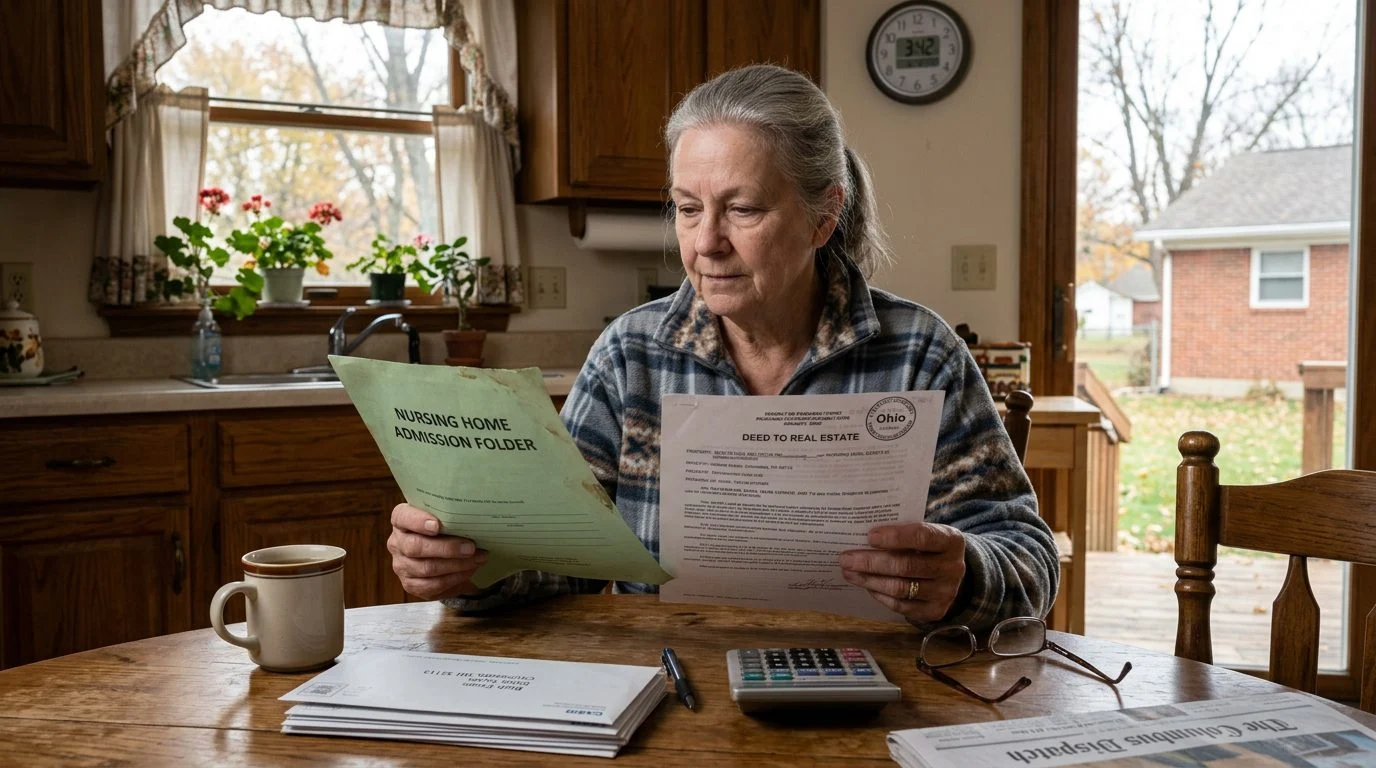
Imagine a couple, Ruth and Walter Pryor, in a small town in Perry County. Walter’s memory and balance had declined for years, and when he moved into a nursing home, Ruth stayed in their house. Weeks later, a cost-of-living raise increased Walter’s Social Security check, and Ruth worried it would undo the savings she had built. She feared running out of money and being forced to sell the home. A planning review showed her which numbers mattered, how the raise would be counted, and what she could protect for herself. Every family’s facts are different, so how things turn out for any family is shaped by its own situation.
How a Social Security raise is counted when a spouse needs nursing home Medicaid
For a nursing-home resident who does not have a MAGI-based eligibility category, Ohio totals the resident’s gross monthly earned and unearned income, subtracts a personal needs allowance of seventy-five dollars and other allowed deductions, and reduces its payment to the facility by the remainder, which is the patient liability (Ohio Adm.Code 5160:1-6-07).
The spouse at home is treated differently.
While your spouse is eligible for long-term care services in a medical institution, your own income is not considered available to your spouse (Ohio Adm.Code 5160:1-6-04).
We review this difference first, because it decides how much income stays with your household.
Timing and accuracy matter. A raise that is not reported correctly, or an application filed on outdated numbers, can cause delays or a denial that the family then has to fix. Gather the award letter for each increase, recent bank statements and the nursing home’s monthly bill before we meet.
Ohio Medicaid can help pay for nursing home care. Ohio Department of Medicaid explains who qualifies. Staying home longer is often possible, and a move to a facility later remains an option. Coverage varies by facility and by the family’s situation.
Protecting the at-home spouse’s home and income
Planning can often keep the spouse at home in the home, financially secure, with quality of life intact. That is a possibility that rests on your family’s facts, not a promise.
The federal government publishes yearly standards for the income and savings a spouse at home may keep. The 2026 CMS spouse standards are the current figures.
For a nursing-home spouse who does not have a MAGI-based eligibility category, Ohio deducts the community spouse resource allowance from the couple’s combined countable resources, and if the remainder is two thousand dollars or less, that spouse is resource eligible (Ohio Adm.Code 5160:1-6-04).
The home is handled differently from other assets.
When a nursing-home resident leaves the home with no intent of returning, the home stays an excluded resource as long as a spouse or dependent relative keeps living in it while the resident receives long-term care services (Ohio Adm.Code 5160:1-3-05.13).
The rules also treat the home as an excluded resource, regardless of its value, when it is the principal place of residence and the other conditions are met. For 2026, Ohio’s home equity limit is $752,000, and it rises every January.
Home equity is the part of a home’s value you own after any debt secured by it.
We review the spouse at home’s income and savings alongside the raise. That way you can keep enough to live on at home. In our view, the needs of the spouse at home belong in the plan, not only the nursing-home bill.
What families fear most, and what careful planning can address
Careful planning can address each of the biggest fears, though no result is promised.
- Savings running out. When care is needed now, planning may protect a significant part of the spend-down, the savings that must be used for care first. Options often remain even when years were not planned ahead.
- Losing the house after your spouse dies. Many families worry about estate recovery, the claim against a Medicaid recipient’s estate after death. Medicaid estate recovery strategies describes how this works. Planning can often help protect the home from it, based on the family’s circumstances.
- A costly application mistake. Accurate numbers, correct timing and the right documents help avoid a denial or a penalty. We check these before anything is filed.
- Nothing left for the children. A plan set up and funded correctly can help what you built pass to your family. Careful planning also helps families avoid probate, which is expensive, slow and stressful for the people left behind.
How Jarvis Law Office helps you through this
You do not have to work out these rules alone. Staying on top of them is our job, and our team guides your family step by step.
The first step is the free discovery call, where we learn your family’s situation. Next, a strategy meeting helps you choose a plan. We then prepare the plan documents. In our plans, we include a general durable power of attorney for finances, a health care power of attorney, a living will and a HIPAA release. The financial power of attorney is one of the tools our planning uses to protect assets.
We then coordinate titles and assets to match the plan, which takes more than paperwork. We prepare the Medicaid application and keep guiding you as income changes.
When your family needs help finding a way through the health care system, our Care Navigators can help. Care Navigators are not lawyers and do not give legal advice.
We serve families in every Ohio county from our offices in Lancaster, Dublin and St. Clairsville. We work on a flat fee, with no recurring insurance-style fees.
Frequently asked questions
Does a Social Security raise always hurt Medicaid eligibility?
A raise changes the numbers, so we review it with the whole household picture. We do not assume it helps or hurts.
Will the spouse at home lose the house?
Planning can often help the spouse at home stay in the home. No result is promised, and every family’s situation differs.
How much of my spouse’s Social Security goes toward care?
For a nursing-home resident who does not have a MAGI-based eligibility category, Ohio totals the resident’s gross monthly earned and unearned income, subtracts a personal needs allowance of seventy-five dollars and other allowed deductions, and reduces its payment to the facility by the remainder, which is the patient liability.
Should we wait until after the raise to apply?
Timing matters, so we review the current numbers before anything is filed instead of guessing.
Does the firm handle probate?
Our focus is planning that helps families avoid probate, not probate work itself.

Take the next step with a free discovery call
Watching a spouse move into a nursing home while a raise and household bills arrive is a lot to carry. You do not have to face it alone.
Start with a free discovery call. It is confidential and carries no obligation to continue.
On that call, we can look at the raise, the monthly cost of care, the spouse at home’s income and home, and when an application should be filed. If you are ready to talk through these numbers, book a free discovery call with Jarvis Law Office.