
Inherited Money in a Nursing Home: What Ohio Medicaid Does
By Timothy Jarvis · Published November 27, 2026
I just inherited money, and my husband is in a nursing home. Will Medicaid take it, and could I lose the house?
Yes, an inheritance can change how Medicaid treats your husband’s care, so it should be reviewed before any money is spent or moved. How the money is held, when it arrives and how it is used often makes a real difference. You do not have to work through this alone. We guide families through each step.
Can an inheritance affect your husband’s Medicaid in Ohio?
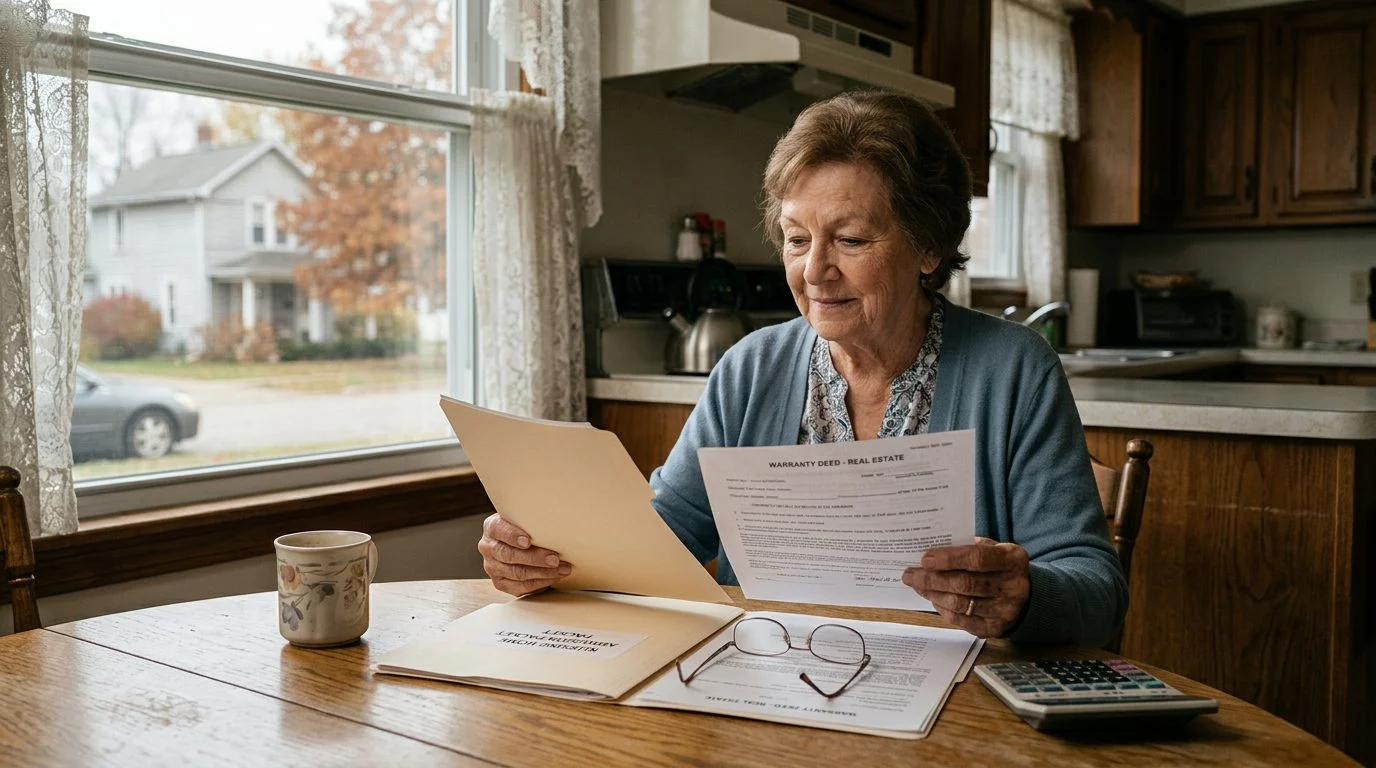
Timing, titling and use are what shape an inheritance’s effect on your husband’s Medicaid. For example, imagine a couple, Ruth and Dale, in a small Ohio town. Dale moved into a nursing home, and Ruth stayed in their house, afraid the bills would force her to sell it. Then Ruth received a modest inheritance from her brother, and she did not know whether to deposit it, use it for repairs or set it aside. Talking through the timing and the titling helped her see her options before she made any move. Every family’s facts are different, so results vary.
We look at these questions with you early and step by step, so the money is not spent or moved before you understand what it means.

What Medicaid looks at when your husband needs nursing home care
Medicaid looks at the couple’s combined countable resources and the income of the person receiving care, and it lets the spouse at home keep a protected share called the community spouse resource allowance (CSRA). Ohio Medicaid can help pay for nursing home care, and your family’s own facts decide what counts and what remains.
The at-home spouse keeps a protected share of the couple’s countable resources, called the community spouse resource allowance, which is at least the minimum resource standard that CMS sets each year (Ohio Adm.Code 5160:1-6-04).
For 2026, the maximum community spouse resource standard is $162,660, according to federal Medicaid guidance. Federal limits for the protected share are set each year, so that number is worth knowing before the inheritance is added to the total. Your savings, your income, your home and the new money should all be looked at together.
Protecting your home while your husband is in the nursing home
Your home can often stay protected while your husband is in care, depending on the facts. For 2026, Ohio’s home equity limit is $752,000, and it rises every January.
That figure is one of the first questions we review, because it shapes what a family can keep. Careful planning can often keep you in the house, financially secure, with your quality of life intact. Many families find that staying home longer is possible. A later move also remains an option if your husband’s needs change.
What is Medicaid estate recovery in Ohio?
Estate recovery is the process families worry about most after a loved one dies. Ohio’s estate recovery rules allow recovery to be sought only after the death of the individual’s surviving spouse, if any, and they include further conditions that we walk through with each family.
Transfers of assets for less than fair market value made on or after the look-back date are presumed improper and result in a restricted Medicaid coverage period, and the look-back date is sixty months (five years) before the individual’s baseline date (Ohio Adm.Code 5160:1-6-06).
Even when the timing is shorter, a significant part of the spend-down amount can often still be protected. Options usually remain open, so it is not too late to look. How these possibilities fit your family is decided by your own facts.
Keeping your income and the house you live in
Your own income and the inheritance are reviewed together, so you can keep enough to live at home. That review looks at what comes in each month, what is in your name, and what your husband’s care costs. Our aim is to plan toward your keeping the house and enough income to live on, built from your own numbers rather than a formula.
Ohio also offers help at home for older adults through programs such as the PASSPORT waiver. Whether a program like this fits your husband’s needs is one of the questions we would walk through with you.
Avoiding probate and leaving something for the children
A plan set up and funded correctly can help a family skip probate, the court process that settles a person’s estate after death. Probate is often expensive, drawn out and stressful for a grieving family. The right documents, with assets titled to match the plan, are what make skipping it possible. Getting that planning right is our part of the work.
In our plans, we include a financial power of attorney, one of the key tools we use to protect a family’s assets. You may hope something is left for your children and grandchildren rather than going to the nursing home or the state. Careful planning can work toward that goal, but no plan can ensure a particular result.
How Jarvis Law Office helps families in your position
We guide you step by step, from the first conversation through ongoing help. First, we learn your situation: your husband’s care, your savings and income, your home and the inheritance. Next comes a strategy meeting, where your family chooses a plan. We then prepare the plan documents, and we fund and coordinate your assets so they match the plan, which is more than paperwork.
Where Medicaid applies, we help prepare the application with you. Our guidance continues as your husband’s needs change. Our fee is a flat fee, with no recurring insurance-style fees. Our Care Navigators can help you find your way through the health care system on your husband’s behalf when that help is needed. They are not lawyers and do not give legal advice. We work from offices in Lancaster, Dublin and St. Clairsville and serve families in every Ohio county.

Your next step: a free discovery call
The next step is a free discovery call, held before any money is moved, retitled or spent. If your husband is in a nursing home and an inheritance has just reached you, the timing and titling matter now.
Can money in my name count against my husband’s Medicaid?
Once the institutionalized spouse is determined eligible for Medicaid, no resources of the at-home spouse are counted as available to the institutionalized spouse, for as long as eligibility continues without a break in coverage.
Can the state take the house after my husband dies?
Ohio can seek estate recovery from a Medicaid recipient’s estate only after the death of the recipient’s surviving spouse, if there is one. The way your home is titled is one of the first things we review.
Our free discovery call is confidential and has no obligation to continue. Reach out before the money moves, and we will review your husband’s care, the inheritance and your home with you. Request your free discovery call.