
Ohio Medicaid Planning for Your 401(k) and Nursing Home Care
By Timothy Jarvis · Published November 20, 2026
If your spouse has just moved into a nursing home, you may be asking whether your savings, your 401(k) and your house can get through the bills. Medicaid planning can often protect part of what a couple has built while one spouse receives care. You do not have to work out the Medicaid rules alone. Staying on top of them is the firm’s job, and we guide you step by step.
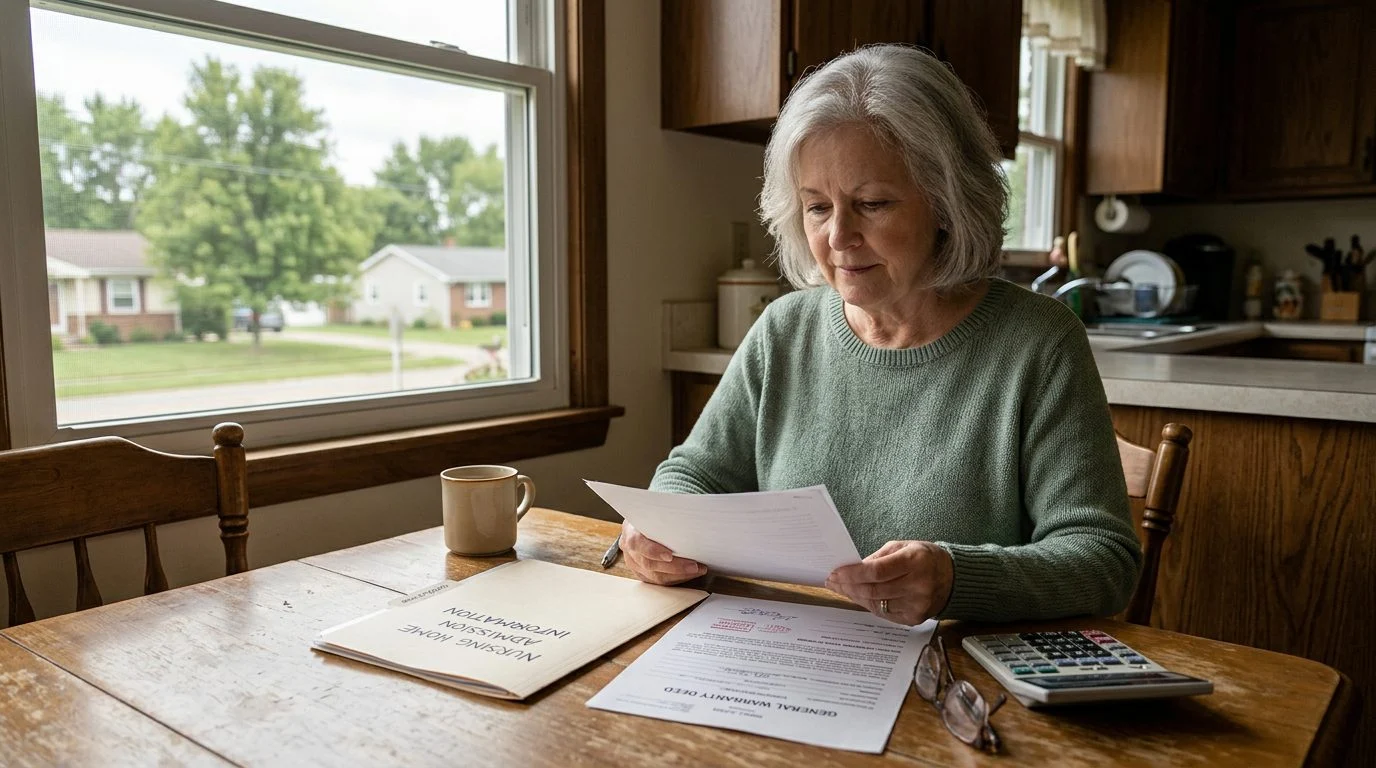
For example, imagine a couple, Dale and Carol Mercer, in Zanesville, Ohio. Dale moved into a nursing home after years of slow decline, and Carol stayed in their house with a growing stack of bills. They had savings and a 401(k), and Carol feared she would have to sell the house to pay for Dale’s care. When they sat down with a planner, they learned which assets count, which may not, and how the timing of each choice changes the picture. Every family’s facts are different, so results vary, and the steps that helped the Mercers may not fit yours.
Who this planning is for, and what it covers
This planning is for a spouse at home whose husband or wife needs nursing home care and who wants to keep the home, the savings and enough income to live on. It covers savings, retirement accounts such as a 401(k), the home and the Medicaid application. We plan these pieces together, not one at a time.
Ohio Medicaid can help pay for nursing facility care. Many families prefer to stay at home longer when that can be arranged, and a move to a care setting later stays an option. Ohio Medicaid may also help eligible older adults pay for some home care through waiver programs described by the Ohio Department of Aging.
You want your spouse’s care covered, your home kept, enough income to live at home, and no costly mistakes along the way. Those are the goals we plan around with you.

Why the monthly bills put your savings at risk
Nursing home bills draw down savings until a couple qualifies for Medicaid, and timing decides how much can be protected. These bills can run many thousands of dollars a month, so savings can shrink fast.
The look-back reaches five years (sixty months) back from the baseline date, a date Ohio’s rules define, not simply the day care starts, so gifts or sales for less than fair value in that window can lead to a waiting period before Medicaid pays for care, and we walk through how that applies to each family’s situation (Ohio’s Medicaid transfer rules).
That is why moving money around without a plan can backfire, and why we review every transfer before it happens. Planning started more than sixty months (five years) before the individual’s baseline date can often shield more assets, because transfers made before the look-back date fall outside the review period.
If care is needed now, planning can still help. A significant part of the spend-down amount can often still be protected, and options remain well before everything is spent.
What planning can look like for you at home
Planning can often keep you in your home, financially secure, with your quality of life intact. Federal figures set the amounts used to decide how much a community spouse may keep. For 2026, the maximum community spouse resource standard is $162,660, according to the CMS bulletin on 2026 spousal standards.
Ohio lets the spouse at home keep a protected share of the couple’s savings, and the spouse in the nursing home can qualify only when what is left above that share is no more than two thousand dollars (Ohio’s rules on savings when one spouse needs care).
In practice, the plan works through what you and your spouse own together, and how much of it stays with you. The home is often the biggest worry, so it gets its own look.
For 2026, Ohio’s home equity limit is $752,000, and it rises every January.
When the person who needs care has a husband or wife still living in the home, the home equity limit does not apply (Ohio’s home equity rules).
Whether your home stays protected depends on the plan and your family’s facts. We look at those facts with you before any decision is made.
Your 401(k) and the savings in the plan
Your 401(k) is handled according to how it pays out, so the plan starts there.
We check how the account pays out, who owns it and what it can be converted into, one account at a time. Your spouse’s income and your own savings belong in the plan too. The aim is to keep you financially secure at home, not to empty the household to pay a bill.
Planning can often coordinate how each asset is titled and used so it serves the plan. In our plans, a strong financial power of attorney is one of the tools we use to protect a family’s assets.
How the process works, step by step
The process starts with a discovery call and moves through six steps. The discovery call is free, confidential and carries no obligation to continue.
- Discovery call: we hear your family’s situation.
- Strategy meeting: we choose a plan together.
- Plan documents: we prepare them for your family.
- Assets funded: we title and coordinate assets to match the plan, which is more than paperwork.
- Medicaid application: we prepare it with care for your spouse’s care.
- Ongoing guidance: we stay with you as needs change.
The timeline depends on your family’s facts, and the strategy meeting is where we set it out. Our fee is a flat fee, with no recurring insurance-style fees.
What happens to the house after your spouse dies, and the documents in every plan
Many spouses ask whether the state can reach the home after a Medicaid recipient dies. That question belongs in the plan from the start, not after a loss.
Probate is the court process for settling an estate. It can be expensive, slow and stressful for a grieving family. A plan set up and funded correctly, with the right documents and assets titled to match, is how families can often skip probate later.
Every plan we prepare includes a general durable power of attorney for finances, a health care power of attorney, a living will and a HIPAA release.
Care Navigators can help you find your way through the health care system when you need that help. They are not lawyers and do not give legal advice. They focus on care decisions while we handle the legal plan.

How Jarvis Law Office helps, and the questions families ask
Jarvis Law Office concentrates its practice in elder law, Medicaid planning and estate planning. We have offices in Lancaster, Dublin and St. Clairsville, and we serve families in every Ohio county. Timothy Jarvis is the responsible lawyer for this page.
We start by listening to what you and your spouse are facing, then sit down with you to choose a plan. We prepare the documents, make sure the assets match the plan, and prepare the Medicaid application when your spouse’s care calls for it. We stay with you as needs change.
Will we lose the house?
Whether the house is at risk depends on the plan and your family’s facts. Planning is how we look at those facts before any decision is made.
What if Medicaid denies the application or imposes a penalty?
Careful review before the application is filed is part of our role. We cannot promise any particular outcome, but we look for problems early.
Do we have to figure this out ourselves?
No. Staying on top of the rules is our job, and the first step is a conversation with us.
If your spouse has just entered a nursing home and you are still researching, you do not have to decide anything today. When you are ready, you can book a free discovery call with our team.