
Medicaid and long-term care planning
Planning for Parkinson's before a nursing home stay becomes urgent
A calm, step-by-step way to understand your Ohio Medicaid options while your loved one can still take part in the decisions.
By Timothy Jarvis · Published November 20, 2026
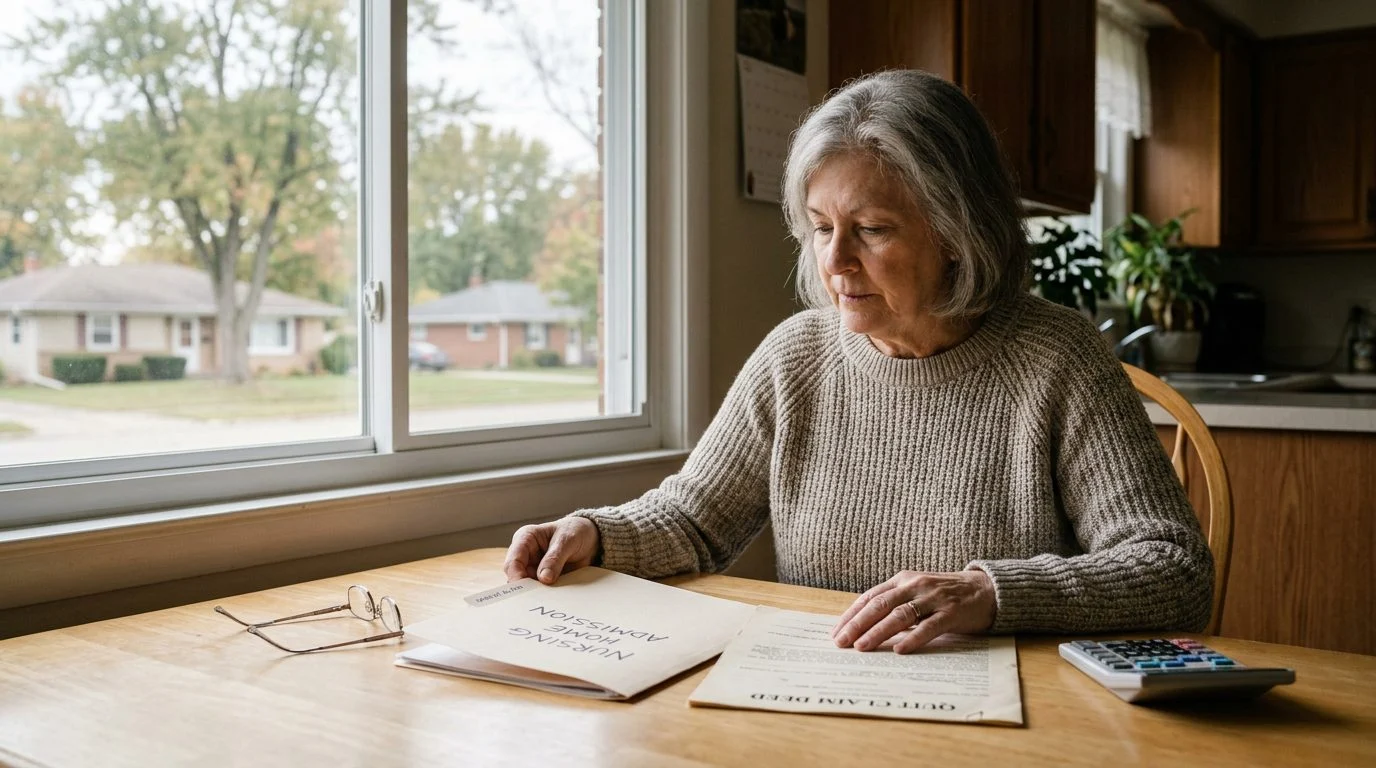
If your spouse has Parkinson’s disease and is moving into a nursing home, the bills and the house are probably weighing on you. Ohio Medicaid can help pay for nursing home care, and planning for the spouse who stays home can often protect that spouse’s income and home.
Where you are right now, and what this page answers
You didn’t choose this. If your spouse has Parkinson’s and the illness is getting worse, a nursing home bill may have already arrived or may be on its way, and you may be wondering whether the savings will last and whether you will have to sell the house. This page answers the question you came with: how Medicaid planning for Parkinson’s disease in Ohio can help pay for care while protecting the spouse who stays home.
You don’t have to work out Medicaid’s rules alone. Staying on top of them is our job, and our team guides families step by step, starting with the facts of their own situation. The sections below explain the key points in plain words, so you can see what’s possible before you decide anything.

Imagine a couple: how planning changed the choices at home
For example, imagine a couple, Ruth and Dale Kimble, in Newark, a city in Licking County. Dale’s Parkinson’s worsened over two years, and his care needs grew past what Ruth could safely manage at home. When Dale moved into a nursing home, Ruth feared the monthly bills would drain their savings and force her to sell the house. Ruth sat down with a lawyer to look at her options. The plan looked at what Ruth could keep in her own name, how the income would be handled, and what the house could mean for her future.
Every family’s details are its own, so what planning shows for one household may look different for another. Planning like this usually starts with two questions: what the spouse in the nursing home needs covered, and what the spouse at home needs to live on.
What Ohio Medicaid can help pay for, and where planning fits
Ohio Medicaid can help pay for nursing home care. It can also help pay for many, though not all, assisted living and memory care settings, and for care at home. Ohio Medicaid can help pay for nursing home care, for many (though not all) assisted living and memory care settings, and for care at home. Which setting fits your spouse is a question we work through with you.
Many families want to stay home longer, and that is often possible. A move to a care setting later remains an option.
Here’s the key rule for savings:
Medicaid cannot approve financial eligibility for the spouse in the nursing home until the couple’s combined countable resources are equal to or less than the community spouse resource allowance plus two thousand dollars, when that spouse is subject to a resource limit (Ohio’s Medicaid rule on resources for married couples).
Income works differently.
In any month the spouse in the nursing home is eligible for long-term care services in a medical institution, none of the at-home spouse’s income is counted as available to the nursing-home spouse (Ohio Adm.Code 5160:1-6-04).
The community spouse resource allowance is not a fixed number: it is worked out from the couple’s combined countable resources and a federal figure that CMS sets each year, so the amount the at-home spouse may keep depends on the family’s own numbers. Your family’s own numbers will be different, which is why the first conversation matters.
Many families ask how Ohio treats the value of the home, and the home equity limit is part of the answer. For 2026, Ohio’s home equity limit is $752,000, and it rises every January.
Timing: the look-back, the spend-down and estate recovery
Timing can change what planning can protect, so it helps to understand the look-back first.
Transfers of assets for less than fair market value made on or after the look-back date, which is sixty months (five years) before the baseline date, are presumed improper and bring a restricted medicaid coverage period, unless an exception applies, such as a transfer between the spouses (Ohio’s look-back rule for transfers of assets).
The spend-down is the stretch when savings go toward care before Medicaid helps pay. Planning can often protect part of those savings. Even when care is needed now, a family can often still protect a significant part of the spend-down amount.
Estate recovery is different. Whether it reaches your family’s home comes down to your family’s facts.
It isn’t too late for many families. Options often remain well before everything is spent, and we’ll walk through the timing with you in plain terms.
Your fears, answered plainly
Each fear you may have has a plain answer, and none of those answers is a promise.
Savings running out. Planning looks at income and assets for the spouse at home, so that spouse has something to live on. This is a possibility to explore with your attorney, not a result we can promise.
Losing the house. The house is often the biggest fear. Here is the rule that protects a home lived in by a spouse:
When the spouse in the nursing home leaves the home with no intent of returning, the home can stay an excluded resource while the at-home spouse keeps living there, as long as the home and its ownership meet Ohio’s conditions, which we review with you (Ohio’s Medicaid rule on the home).
Whether that protection fits your family comes down to how the house is titled and who lives there.
A Medicaid mistake. Applications are detailed, and timing matters. We walk you through the paperwork so that it is complete before it is filed, but no one can ensure an approval.
Nothing left for the children. Careful planning can help a family keep more of what they built for their children and grandchildren, rather than paying it toward care costs.
Probate after a death. Probate is slow and costly for a grieving family. A plan with the right documents and assets titled to match can help a family skip probate later.
How the process works, step by step
Our process starts with a free discovery call, a confidential conversation where we listen to your family’s situation. From there, a strategy meeting helps you choose a plan, and our team sets up the plan documents. Next, we fund and coordinate your assets so they match the plan, which takes more than paperwork. When your spouse’s care calls for it, we prepare and guide the Medicaid application, and we stay available for ongoing guidance as needs change. How long each stage takes varies, and we’ll explain the timing for your family early on.
Every plan includes a general durable power of attorney for finances, a health care power of attorney, a living will and a HIPAA release. In our plans, the financial power of attorney is a key tool for protecting a family’s assets, so we pay close attention to how it’s written.
Our Care Navigators can also help your family find a way through the health care system on your spouse’s behalf, when that help is needed. They are not lawyers and do not give legal advice. Our fee is a flat fee, and we do not charge recurring insurance-style fees.
Why families bring this to Jarvis Law Office
Jarvis Law Office serves families in every Ohio county from offices in Lancaster, Dublin and St. Clairsville. The firm concentrates its practice in elder law, Medicaid planning and estate planning. Timothy Jarvis is the responsible lawyer for this page, and our support staff keep the paperwork moving from start to finish.
What you want is likely what many families want: your spouse’s wishes honored, the home and savings protected, good care in place, and no costly mistakes. We can’t promise any particular outcome, but we can build a clear plan around those goals.
Questions families ask before they decide
Can Ohio Medicaid pay for my spouse’s nursing home care?
Ohio Medicaid can help pay for nursing home care, and eligibility is decided one family at a time.
Will we have to sell the house?
When the spouse in the nursing home leaves the home with no intent of returning, the home remains an excluded resource for as long as the at-home spouse keeps living there while the nursing-home spouse receives long-term care services.
Planning can often help you keep the house, though the details matter.
Can we still plan if my spouse is already in the nursing home?
Yes, planning may still help, and we’ll look at the timing with you in the first conversation.
Does my own income count toward my spouse’s nursing home bill?
In any month the spouse in the nursing home is eligible for long-term care services in a medical institution, none of the at-home spouse’s income is counted as available to the nursing-home spouse.
Do we have to spend all our savings before applying?
Timing is one of the first things we work through with you, so you aren’t left to guess.

The next step: a free discovery call for you
You may be at home now, caring for your spouse, worried about the bills and the house, and not ready to hire anyone. That is a reasonable place to be. When you’re ready, you can book your free discovery call with us. The free discovery call is confidential and carries no obligation to continue, so you can ask anything before you decide.
Your goals are a plan that honors your spouse’s wishes, protects your home and savings, and keeps care on track. We can’t promise an outcome, but the first step is simply a conversation.
How Jarvis Law Office guides your family
A first conversation, step by step
We start by listening to your family's situation, including what your loved one wants and what worries you most. From there, we map out the next steps together, one at a time.
Planning documents in place
Our plans include a general durable financial power of attorney, a health care power of attorney, a living will and a HIPAA release, so that trusted people can act when your loved one cannot. We also coordinate how assets are titled so they match the plan.
Care Navigators when you need them
Our Care Navigators can help your family find a way through the health care system on your loved one's behalf, from appointments to care options. They do not give legal advice; our attorneys handle the legal planning.
A flat fee and no surprise bills
We charge a flat fee for the planning work and no recurring insurance-style fees, so you know the cost before you begin.
Parkinson's changes at its own pace
Many families find the hardest decisions are the ones made in a hurry. Talking through your options while your loved one can still share their wishes often makes those choices easier, and it leaves more room to decide together.
What families often want to know first
Can staying at home be part of the plan?
Many families hope to keep their loved one at home as long as possible. We look at how that fits with Ohio Medicaid, so a move to a care setting later remains an option rather than an emergency.
What if my spouse still lives at home?
Planning can help the spouse who stays home stay in the home, financially secure and with their quality of life intact. We look at the full picture of your household's income, savings and home.
Which care settings can Medicaid help pay for?
Ohio Medicaid can help pay for nursing home care and care at home, and for many, though not all, assisted living and memory care settings. Which option fits depends on your family's facts, and we will walk through them with you.
Will my family have to go through probate?
Probate can be expensive, slow and stressful for a grieving family. A plan set up and funded correctly can help your family avoid it later, and we focus on getting that planning right.